Blueprints for a Better World: Radical Art Schools and the Making of Modern Art
Autumn Term
Choose how you’d like to attend:
On Campus: Tuesdays, 29 September to 1 December 2026 (£245)
Online: Wednesdays, 7 October to 9 December 2026 (£245)
This autumn’s Showcasing Art History lectures trace the radical experiment of modern art education across a century and three continents.
Following WWI and the revolutionary upheavals that reshaped Europe and beyond, a new generation of art schools emerged with a shared ambition: to rethink not only how art was taught, but what art could do in the world.
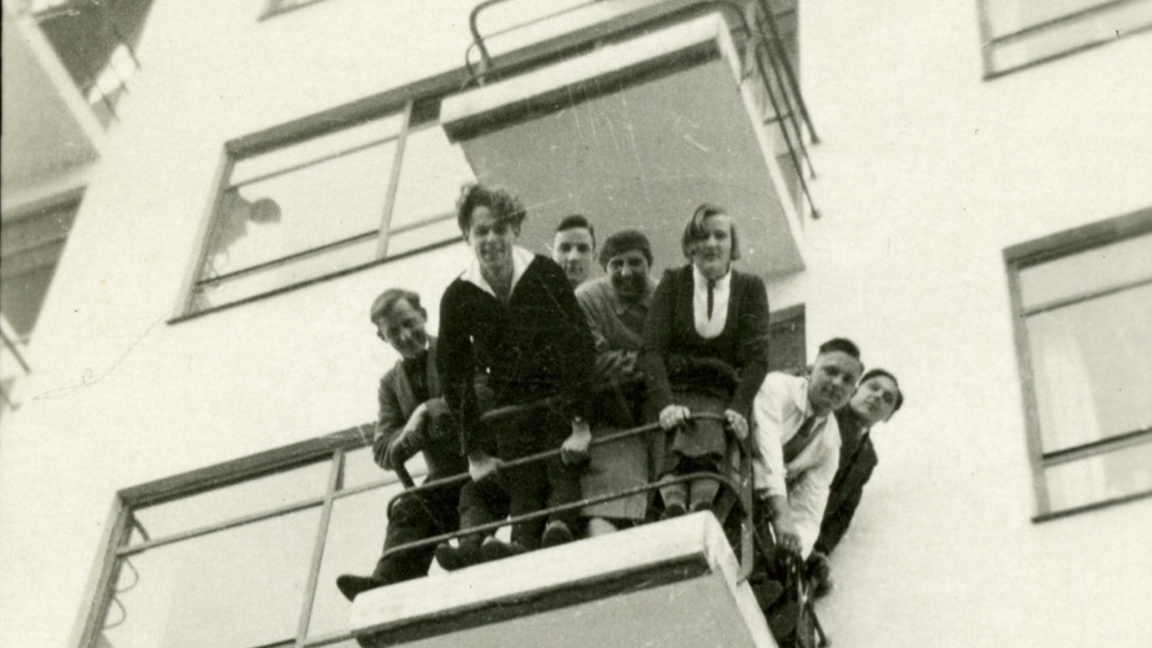
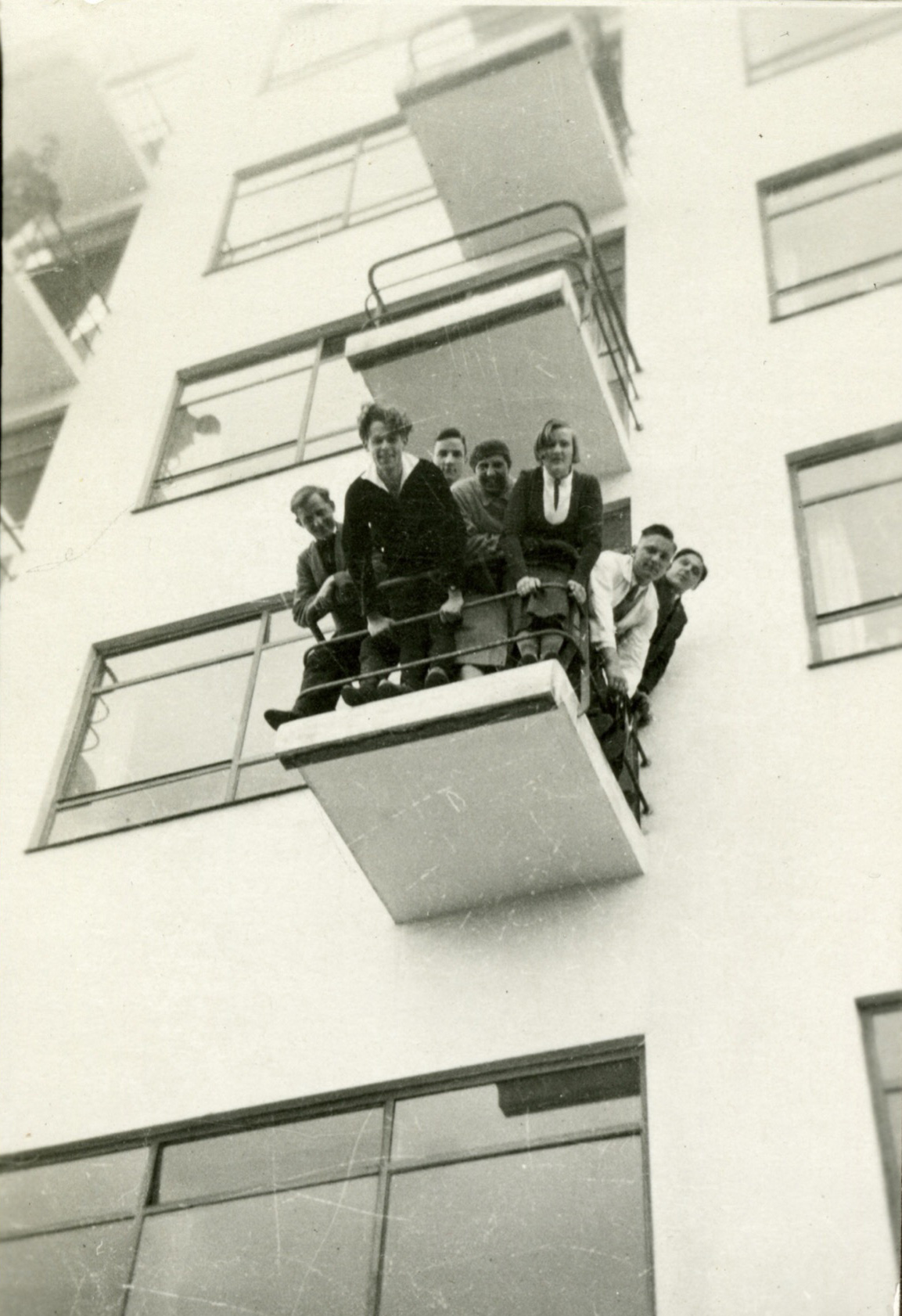
We begin in Germany in 1919, with Walter Gropius’ Bauhaus and its revolutionary curriculum of experimental, communal and workshop-based training in every category that could help reconnect the arts to everyday life: painting and the applied arts, the performing arts, design and architecture. We then move to Lenin-founded VkhUTEMAS (Higher State Artistic and Technical Workshops) in revolutionary Moscow – “the Russian Bauhaus” – where art was reimagined as a tool of industrial and political transformation and where three main avant-garde movements were fostered: Constructivism, Rationalism and Suprematism. Next, we move continents to focus on Nobel Laureate Rabindranath Tagore’s Kala Bhavana (Hall of Art) in West Bengal. Like the Bauhaus, with which it shares the year of foundation (1919), Kala Bhavana erased hierarchies between art and craft and sought to make an art with social purpose. Blending local traditions with international artistic practices, it produced an alternative, anti-colonial modernism that was specific to local culture.
Returning to Europe, we explore Amédée Ozenfant and Fernand Léger’s Académie Moderne in Paris with its distinctive Purist pedagogy championing an art of clarity, order and machine-age precision. The Académie Moderne was short-lived but influential, disseminating advanced Parisian artistic thought through outposts in London and New York. It was a key example, along with the Hans Hofmann School of Fine Arts (Munich, 1915–1930; New York City and Provincetown, Massachusetts, 1935–1958), of how art schools could foster transatlantic cultural connections, bridging European and an incipient American modernism. From 1933, Black Mountain College in North Carolina, where former Bauhaus teachers Josef and Anni Albers had found a new home, developed an experimental and interdisciplinary pedagogy that nurtured an astonishing generation of avant-garde American painters and poets, and included figures such as composer John Cage and dancer and choreographer Merce Cunningham among its faculty. Although it closed in 1957, it inspired several other radical educational institutions in the USA. Among them was CalArts (California Institute of the Arts), where we focus on the transformative early years of the 1970s, when John Baldessari’s Post-Studio Art programme challenged traditional assumptions about what an art school should teach, and Judy Chicago and Miriam Schapiro’s Feminist Art Program at nearby Fresno offered a new model of collective, politically engaged pedagogy.
Back in Europe, our series moves to London’s Royal College of Art in the 1950s and 60s, as the fulcrum of Pop Art, and to the Kunstakademie Düsseldorf, where Joseph Beuys brought a radically democratic, discursive and performance-based approach to his professorial tenure from 1961–72. His controversial classes blurred the boundaries between artistic practice and political activism in pursuit of an art capable of transforming society. By contrast to such fervent idealism, Goldsmiths College in New Cross, London, became the hotbed of a generation of young artists – the Young British Artists (YBAs) – whose brash entrepreneurial spirit helped them bypass the strictures of traditional art-world success. Our series ends with the reflections of a contemporary artist on their formation within the radical art school and its lasting impact on their work and philosophy. Throughout, we will encounter many of the most famous artists of the twentieth century and engage closely with artworks in various media, alongside fascinating archival materials including manifestos, curricula, photographs and correspondence. In doing so, we will examine how art institutions dissolved boundaries between art and craft, individual and collective, and artistic creation and social life – and how, in doing so, they became blueprints for imagining entirely different ways of being in the world.
Series conceived by: Dr Matthew Holman
Speakers: Professor Robin Schuldenfrei, Professor Christina Lodder, Dr Emilia Terracciano, Dr Matthew Holman, Dr Lucy Bradnock, Charles Darwent, Dr Daniel Spaulding and Christopher Page.
On-campus course delivery (29 September to 1 December) £245
Lectures are at our Vernon Square campus at 19:00, followed by discussion and drinks; the course fee includes pre-course and further reading, and handout materials on our Virtual Learning Environment.
Online course delivery (7 October to 9 December) £245
Pre-recorded lectures, released weekly over 10 weeks (Autumn and Spring terms) or 5 weeks (Summer term), and each lecture viewable until the end of the term; the course fee includes pre-course and further reading, handout materials and a discussion forum on our Virtual Learning Environment, and live Q&As for each lecture, delivered via Zoom on Wednesdays at 20:00 (London time).
| Booking option | Price | On campus delivery | Online delivery |
|---|---|---|---|
| Autumn + Spring | £460 (save £30) | Book on campus | Book online |
| Autumn + Summer | £345 (save £20) | Book on campus | Book online |
| Spring + Summer | £345 (save £20) | Book on campus | Book online |
| Full Year (Autumn + Spring + Summer) | £550 (save £60) | Book on campus | Book online |