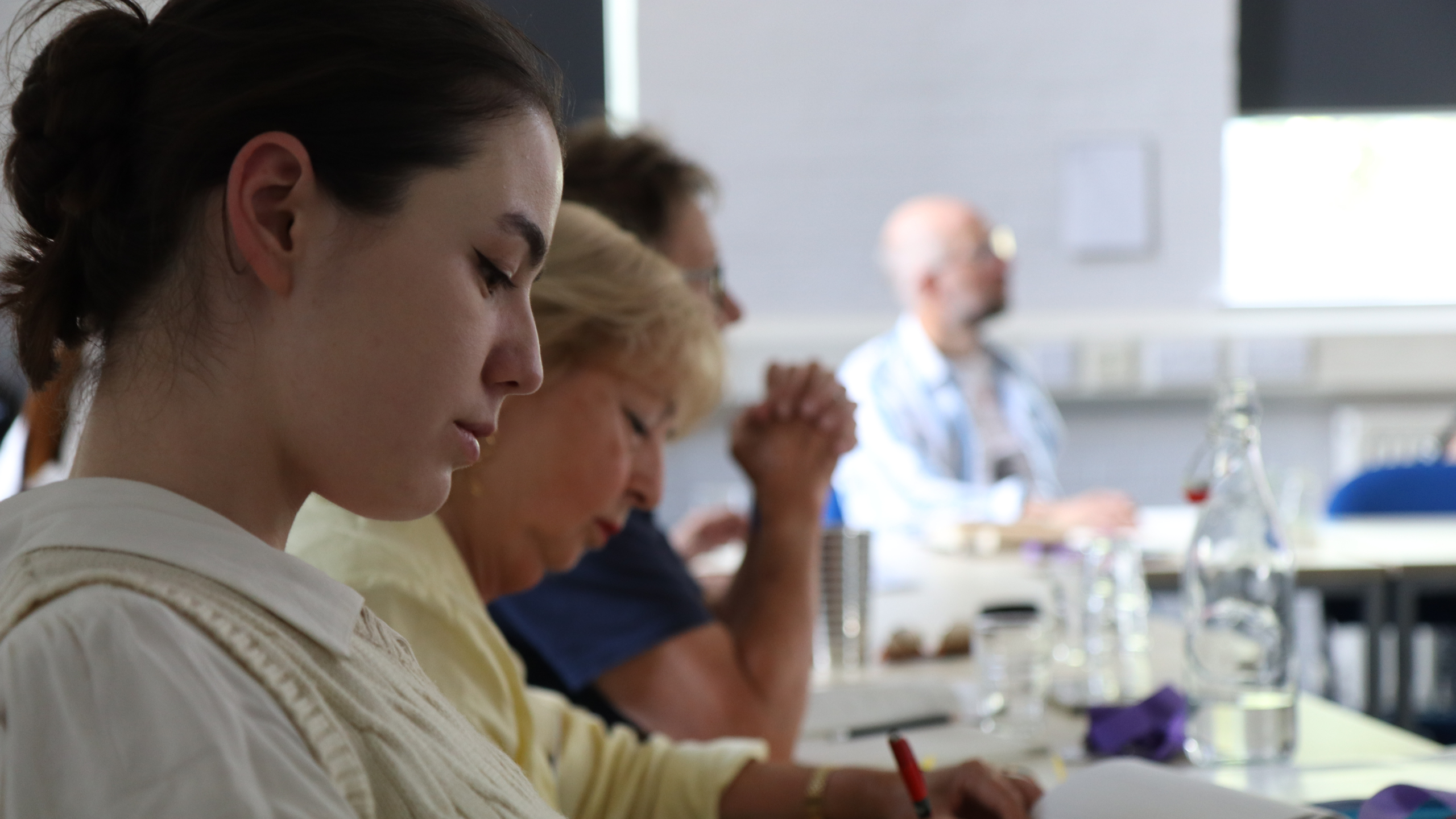
The Courtauld Summer School Essay Competition
The Summer of 2026 brought the second rendition of our Summer School Essay Competition. Our question this year created many engaging and innovative responses:
Should art respond to current events?
Students responded with enthusiasm, and we were able to select two runners-up and a final winner, whose entry you can read below.
You can also see our 2025 winner’s entry.
Summer School Essay Competition 2026 Winner: Chelsea He
Should Art Respond to Current Events?
The question ‘should art respond to current events?’ arguably misunderstands the relationship between art and the present, as the modal verb ‘should’ assumes that art remains outside historical conditions unless the artist chooses to address them. However, art is inherently reflective of its context, regardless of the artist’s intention. Claude Monet’s ‘Impression, Sunrise’ (1872) aimed to capture the transience of nature through atmosphere and light; yet the port of Le Havre in the painting’s background is equally filtered through the mist and sunlight conveyed through broken brushstrokes. Monet’s interpretation of nature thus indirectly documented France’s industrial growth in the 1870s, fusing modern life with the Impressionist project. As such, art demonstrates how reality was perceived, regardless of artistic intent. Hence, since art cannot avoid responding to its present, the question should instead ask how art interprets current events. Unlike reportage photography used in journalism, to which art could be compared in terms of how current events are communicated, art goes beyond the documentary to impact the conditions under which events are understood. This is suggested through ‘Ice Watch’ by Olafur Eliasson (displayed in 2018), a temporary installation that exposes the severity of global warming by collapsing the distance between viewers and current events. Whilst climate change is normally illustrated less as a discrete event than an ongoing historical process via statistics and maps, Eliasson’s 24 monumental blocks of ice, designed to melt outdoors in real-time, cultivated a bodily experience. The installation compellingly transformed a durational phenomenon into a current event, altering the form through which knowledge can be encountered. By turning the abstract global crisis of climate change into something immediate, Eliasson demonstrates how art can be a powerful tool in fostering critical reflection upon broader environmental issues. Thus, art arguably moves beyond responding to the present and engineers the viewer’s relation to current events. Art also imagines future consequences based on interpretations of the present, as emphasised through Magdalena Jetelová’s ‘Domestication of Pyramids’ (1992). This installation does not reflect a single, specific current event; instead, through placing a monumental pyramid fragment within the Museum of Applied Arts in Vienna, Jetelová suggests that if the commodification of art continues, perhaps even the world’s greatest monuments, embodied by the Giza pyramids, may be domesticated within an institution for art viewing. This sets up a conflict between the object and institutions’ desire to possess, classify and contain art. It can thus be argued that art imagines the possible trajectories of current events: in this case, the consumption of art in the Western tradition under the continued influence of institutions, which determine how such events are preserved, displayed, and understood. Ultimately, the question of whether or not art ‘should’ respond to current events arguably falls short of acknowledging art as a creative lens through which we can interpret the past, reflect upon the present and envision the future.
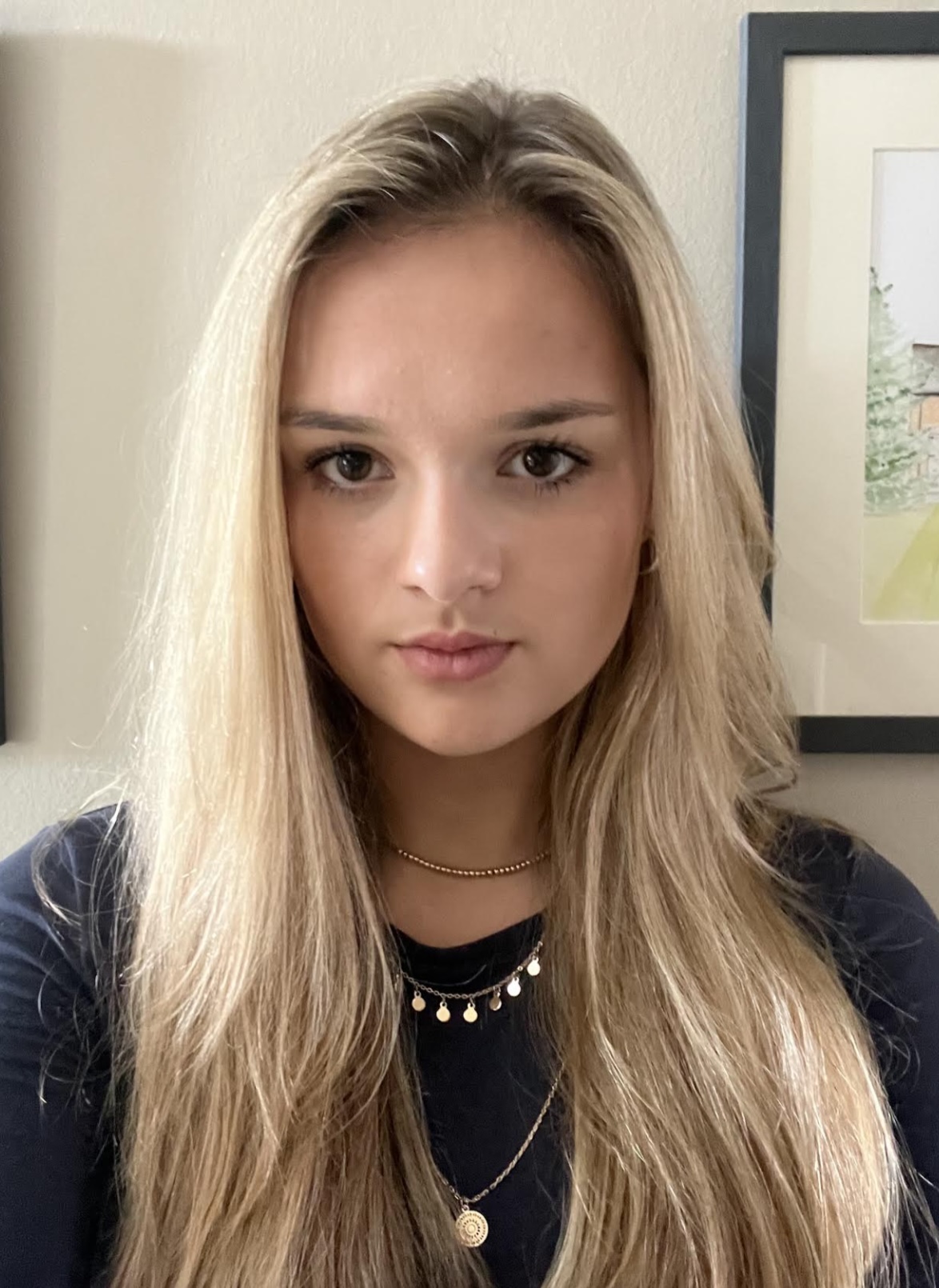
Summer School Essay Competition 2025 Winner: Emily Doswell
Is studying art history like Nero fiddling while Rome Burns? In other words: What Impact does the Study of Art History have on the World Today?
On the 24th February 2022, Russia invaded Ukraine. In October the following year, Hamas-led militant groups launched an attack on Israel, in which just under 1200 Israelis and foreign nationals were killed, triggering the Hamas-Israeli war. In September 2024, when famines were announced in Gaza and the Sudan, I began my A level study into History of Art. In the light of such world suffering, there is validity in questioning the relevance of such a course. However, it is precisely in such a context that the importance of Art and the study of Art History becomes more precious. The official website of Ukraine recognises, amid the struggle that Art generated during the conflict, conveys an important message and acts as a powerful tool to help Ukrainians share their emotions and personal narrative. A series of illustrations on the site, by a 15-year-old Ukrainian girl, depicts her family; a mother, a wife, a daughter, dealing with the loss of their son, husband and father; a Ukrainian soldier, a casualty in the war. His jacket, unworn, over the back of a chair depicts for future generations the human face of the suffering. It is a conduit to understand her loss. Over the centuries, Art has recorded human conflict and suffering. From the fractured chaos of Guernica to the impasto of Van Gogh, works that do not soothe; but act to expose frightful struggle; shared tragedy in art, acting as reminder to avoid repetition. Even within everyday education however, this study is increasingly important. As ChatGPT degrees and AI-generated images enter public use, the need for original thought fades. It’s not just the death of art that is at risk, it’s the very act of thinking. Where any book can be summarised and any equation solved, art remains the only thing in resistance to passive consumption. Art History teaches us to examine the visual, not just look. I am taught to confront, analyse and absorb pieces in ways that exhaust me. This act is something I am unable to cheat at. Art History is a window into power, resistance, pain, and most often, ecstatic beauty. Studying art is equivalent to empathising, an act where you look at the world through another’s eyes and feel as they would. Even our machines analyze the past to shape their algorithms and responses, therefore it’s naive to think we can face the future without learning from those who came before us. To confront human experience and live, we must hold on to what is innately human, and since that quality is increasingly rare today, we must turn to art.