Evening Study Online
Dr Livia Lupi
Course Description
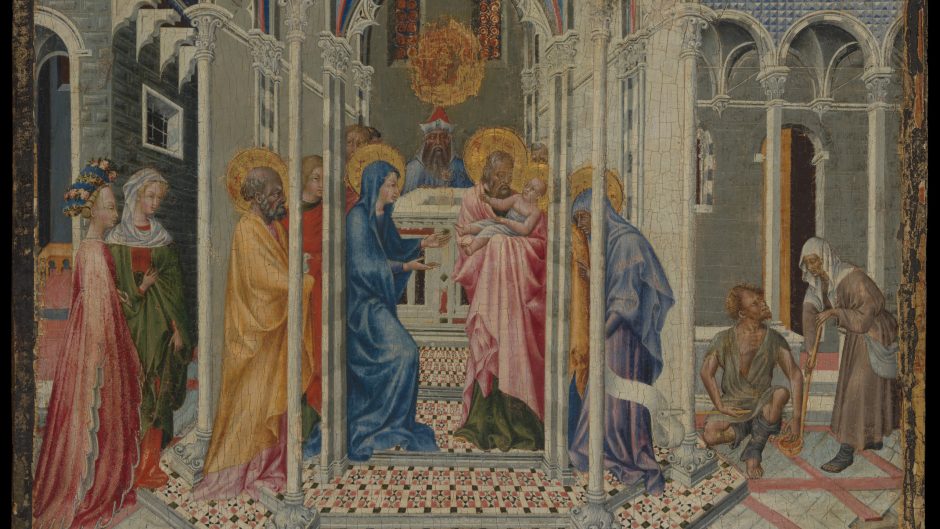
Why did artists include prominent architectural settings in their paintings and relief sculptures? Why did they labour over highly innovative structural solutions? Why did they endeavour to design original ornamental motifs which brought together sculptural, painterly, and architectural approaches, as well as showcasing their understanding of materiality?
This course explores the intersection of art and architectural practice. Although scholarship tends to treat architecture and the visual arts as separate, the two practices were interconnected, with many artists moving fluidly between painting, sculpture and building projects – most famously of all Giotto and Michelangelo.
Examining the work of key figures as much as considering lesser-known craftsmen, this course highlights the architectural imagination of artists and their contribution to architectural practice at a historical juncture that saw the emergence of the architect as a new professional figure. Reflecting on the social reverberations of this process, the course underscores architectural forms as a kind of cultural currency whose ascendancy intersected with the reinvention of antiquity. While the focus is on Italy, seminars on Northern European and Byzantine art will broaden the scope, giving an insight into exchanges across art and architecture as an international phenomenon.
Please note: Participants resident in the EU are charged £264.60, which includes EU VAT.
If you have any questions please email us at short.courses@courtauld.ac.uk
Lecturer's Biography
Dr Livia Lupi holds a PhD from the University of York (2016), is an associate tutor at the University of Warwick, and sits on the editorial board of academic journal Architectural Histories. She works on the intersection of art and architectural practice in late medieval and early modern Europe, with a particular focus on Italy. This is the subject of her first book, Painting Architecture in Early Renaissance Italy, and Beyond the Painter-Architect, her digital exhibition with the Sir John Soane Museum, London. Livia is particularly interested in the relationship between design and craftsmanship, the emergence of the architect as a professional figure, and the production of architectural knowledge. She is now tackling these issues through the lens of antiquarianism in the early modern Mediterranean, exploring the intersection of architectural theory, cultural identity and exchanges between Europe and the Ottoman empire.
Find out more about her publications and teaching on https://livialupi.com/