Course 21 – Summer School On Campus
Monday 13 – Friday 17 July 2026
Dr Mehreen Chida-Razvi
£695
Course Description
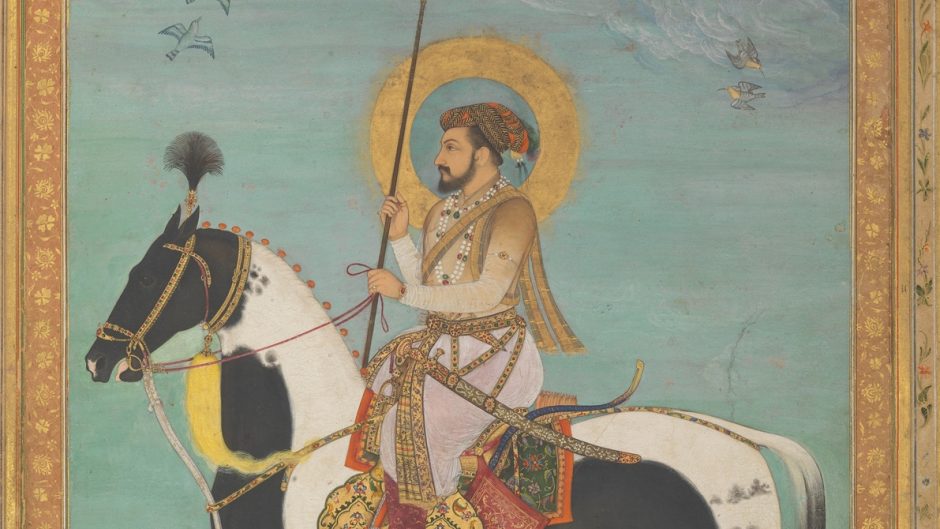
The Mughal dynasty (1526-1858), which at its peak ruled over almost the entirety of the South Asian peninsula, was renowned as having one of the most luxurious courts of the early modern era. It was known throughout Asia and Europe as a centre of wealth, magnificence, and opulence, a reputation enhanced by the sophisticated creations of its imperial workshops. Masters of their respective crafts, court artists produced paintings, jewellery, bejewelled objects, carpets, textiles, and architectural marvels which were not only beautiful, but which served to create and promote a visual language of power and prestige indicative of the Mughal emperors’ divine right to rule.
This course will explore and examine the arts of the Mughal empire, focusing primarily on courtly production of the sixteenth and seventeenth centuries. Covering great illustrated manuscripts and albums of paintings and portraits, intricately carved jade and emeralds, imperial palaces, the Taj Mahal, and the finest silks, muslins, and velvets, we will see how royal patrons and the artists in their employ worked together to create a legacy of beauty, luxury, and power.
Lecturer's Biography
Dr Mehreen Chida-Razvi is an art historian specializing in the art and architecture of Mughal South Asia. She teaches courses and lectures on Islamic and Indo-Islamic art at universities and museums in London and Oxford, is the Managing Editor for the Khalili Collection of Islamic Art and is an Assistant Editor for the International Journal of Islamic Architecture. She obtained her PhD from SOAS, University of London, has published extensively on aspects of Mughal art, architecture and urbanism, and has shared her academic expertise with wider audiences through programming on BBC, documentaries, literary festivals, podcasts, and as an expert lecturer on cultural tours.