Course 20 – Summer School On Campus
Monday 13 – Friday 17 July 2026
Dr Andrea Mattiello
£695
Course Description:
From the transformation of the Roman Empire in the late third century CE to the European discovery of the Americas in the fifteenth century, Byzantium mattered, and its legacy still matters today. The socio-political entity that developed from the foundation of Constantinople in 330 by Constantine the Great and ended with Constantine XI in 1453 is central to the history of the Eurasian and African continents and determined their societies, religions, and cultures.
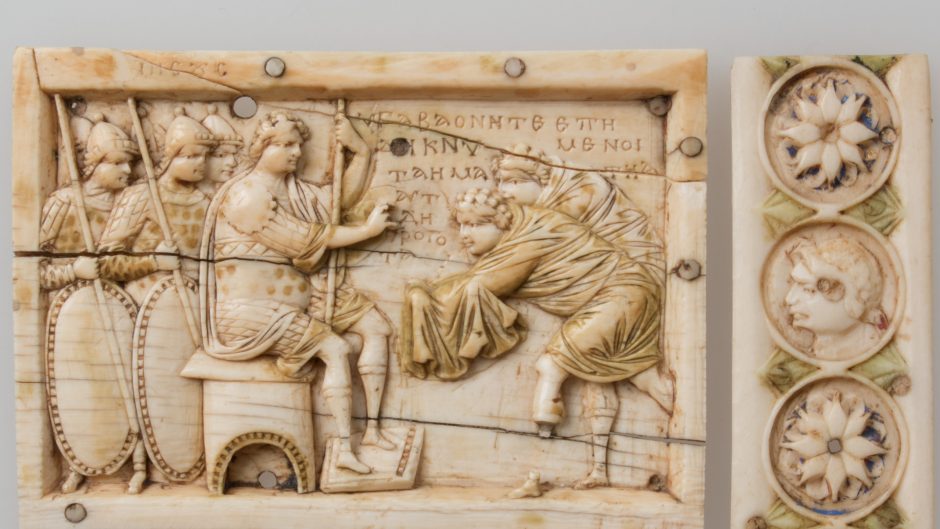
This course will journey through different eras, regions, and artefacts of the Byzantine Empire to chart and highlight the achievements and importance of its rich artistic production. After introducing the timeline of the Byzantine Empire, this course will examine the visual and material culture pertaining to diverse social and religious agents of the East Roman Empire. The course will discuss major Byzantine architectural landmarks, from the early Christianisation of the Mediterranean to the Ottoman conquest – in cities like Rome, Ravenna, Jerusalem, Constantinople, Thessaloniki, Venice and Mystras – through a range of media: mosaic and frescoed cycles in monumental art; the authority and veneration of icons; the production and use of ivories; works in precious stone and metal; manuscripts and their illumination; and objects of everyday life including fashion and jewellery. The course will address Byzantine visual culture in relation to eastern and western polities and will also consider the agency of known historical figures and less regarded individuals, with a particular focus on women in Byzantine society. The course will include visits to relevant museums and collections such as the British Museum, the Victoria and Albert Museum, and the National Gallery.
Lecturer's Biography
Dr Andrea Mattiello holds a PhD in Byzantine Studies from the University of Birmingham, and a previous PhD in Theory and History of Contemporary Art from the School for Advanced Studies in Venice.
Andrea has researched, published, and lectured on medieval and contemporary art and architecture, art and homosexuality in antiquity, Greek-Italian exchanges in fifteenth-century humanism, and art and female agency in Byzantium. He has been a fellow and researcher at the Centro Internazionale di Studi di Architettura Andrea Palladio, the Massachusetts Institute of Technology, the Kunsthistorisches Institut in Florence, and with the Gerda Henkel Stiftung. Andrea has lectured at Università IUAV of Venice, Christie’s Education London, Università di Salerno, NABA Milan, Stanford in Florence and in the continuing education departments of the Courtauld and the University of Oxford. He co-edited the volume Late Byzantium Reconsidered: The Arts of the Palaiologan Era in the Mediterranean (2018) and is conducting research on the role of humanities for sustainability at the Fondazione Eni Enrico Mattei and at NABA Milano.