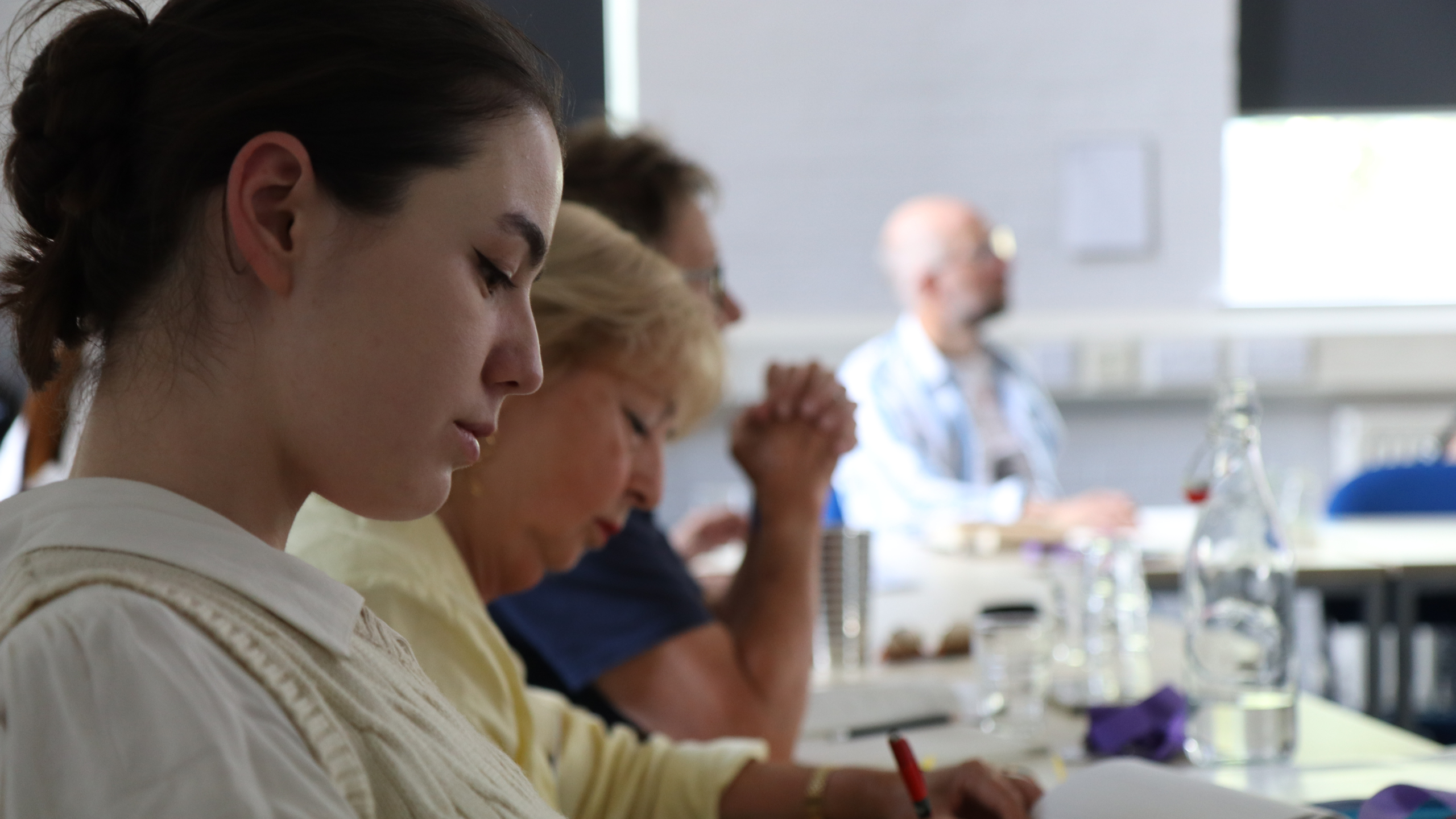
The Courtauld Summer School Essay Competition
In the summer of 2025, we decided to host an essay competition open to all Summer School students, and the question we put to our students was this one:
Is studying art history like Nero fiddling while Rome Burns? In other words: What Impact does the Study of Art History have on the World Today?
Students responded with enthusiasm, and we were able to select two runners-up and a final winner, whose entry you can read below.
We hope to run the essay competition once more in Summer School 2026.

Summer School Essay Competition 2025 Winner: Emily Doswell
Is studying art history like Nero fiddling while Rome Burns? In other words: What Impact does the Study of Art History have on the World Today?
On the 24th February 2022, Russia invaded Ukraine. In October the following year, Hamas-led militant groups launched an attack on Israel, in which just under 1200 Israelis and foreign nationals were killed, triggering the Hamas-Israeli war. In September 2024, when famines were announced in Gaza and the Sudan, I began my A level study into History of Art. In the light of such world suffering, there is validity in questioning the relevance of such a course. However, it is precisely in such a context that the importance of Art and the study of Art History becomes more precious. The official website of Ukraine recognises, amid the struggle that Art generated during the conflict, conveys an important message and acts as a powerful tool to help Ukrainians share their emotions and personal narrative. A series of illustrations on the site, by a 15-year-old Ukrainian girl, depicts her family; a mother, a wife, a daughter, dealing with the loss of their son, husband and father; a Ukrainian soldier, a casualty in the war. His jacket, unworn, over the back of a chair depicts for future generations the human face of the suffering. It is a conduit to understand her loss. Over the centuries, Art has recorded human conflict and suffering. From the fractured chaos of Guernica to the impasto of Van Gogh, works that do not soothe; but act to expose frightful struggle; shared tragedy in art, acting as reminder to avoid repetition. Even within everyday education however, this study is increasingly important. As ChatGPT degrees and AI-generated images enter public use, the need for original thought fades. It’s not just the death of art that is at risk, it’s the very act of thinking. Where any book can be summarised and any equation solved, art remains the only thing in resistance to passive consumption. Art History teaches us to examine the visual, not just look. I am taught to confront, analyse and absorb pieces in ways that exhaust me. This act is something I am unable to cheat at. Art History is a window into power, resistance, pain, and most often, ecstatic beauty. Studying art is equivalent to empathising, an act where you look at the world through another’s eyes and feel as they would. Even our machines analyze the past to shape their algorithms and responses, therefore it’s naive to think we can face the future without learning from those who came before us. To confront human experience and live, we must hold on to what is innately human, and since that quality is increasingly rare today, we must turn to art.