Courtauld announces new Contemporary Galleries at Somerset House
For press images, please visit: https://tinyurl.com/courtauld-contemporary-2026/
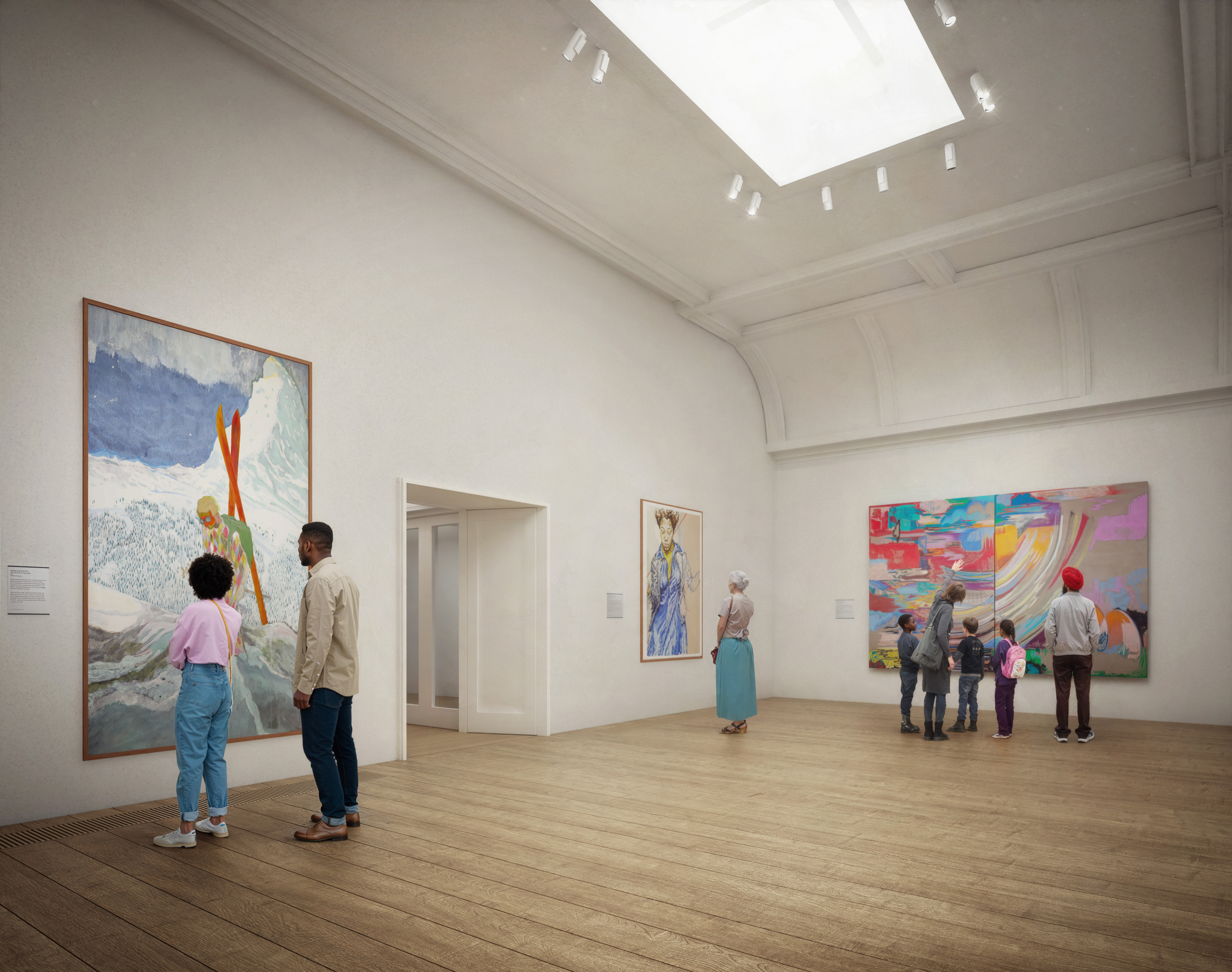
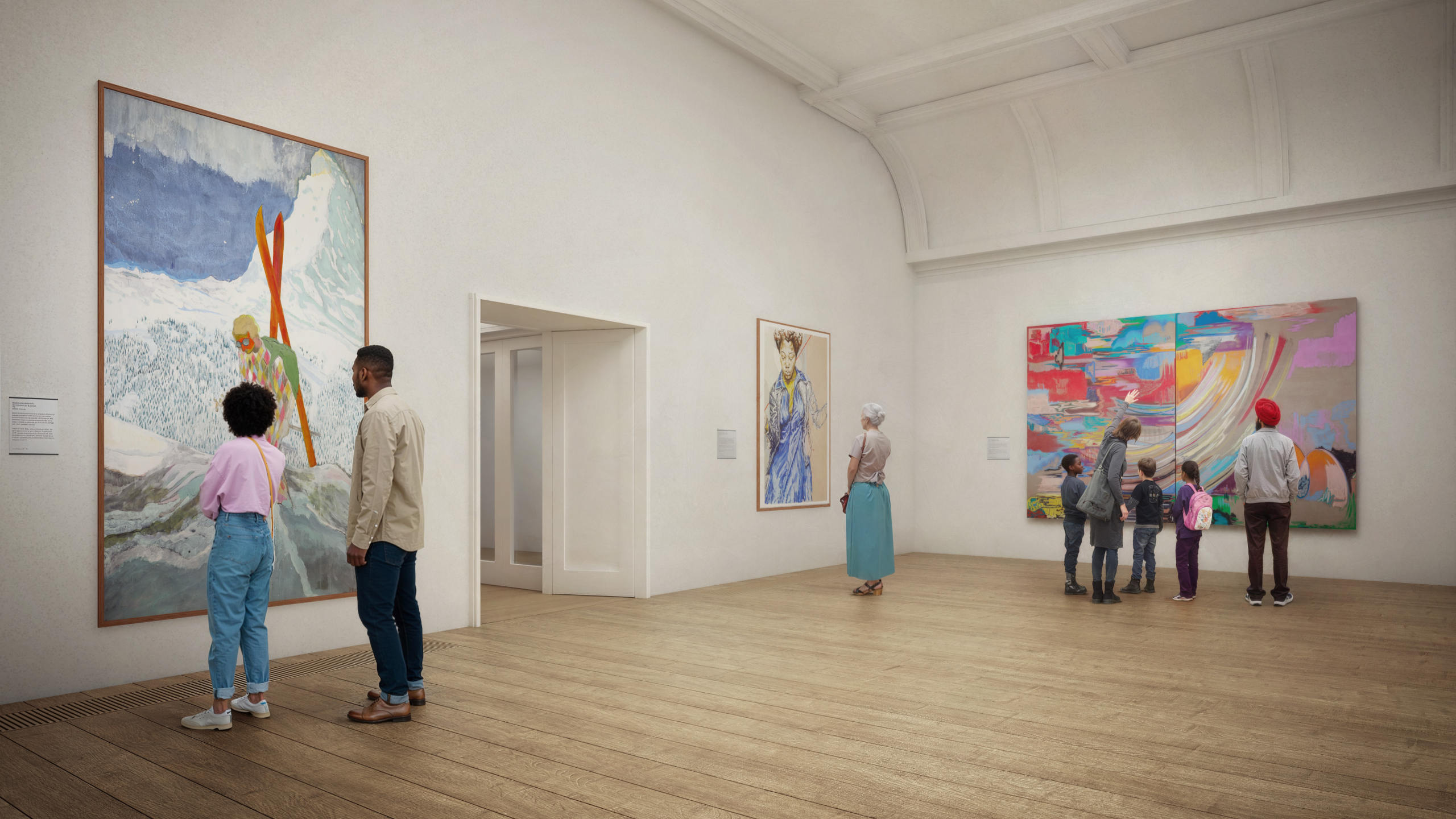
The Courtauld today announced a new gift from the Blavatnik Family Foundation — bringing the Foundation’s total support for the institution to £20 million — supporting the creation of two new galleries dedicated to contemporary art. The galleries are expected to open in 2029 as part of the development of the Courtauld’s new world-class campus at Somerset House.
The distinguished Blavatnik Family Foundation has supported the Courtauld for many years: in the words of Lord Browne of Madingley, Chair of the Courtauld’s Board of Trustees, “Sir Leonard and Lady Emily Blavatnik, and their Foundation, have been central to our recent history and success, and all of us at the Courtauld want to thank them for their exceptional and continuing generosity.” The Blavatnik Fine Rooms opened in 2021 as part of the major redevelopment of the Courtauld Gallery. This latest gift of £10m, which also includes the realisation of the Blavatnik Reading Room within the Courtauld’s remodelled library, builds on that longstanding partnership.
The Blavatnik Contemporary Galleries will provide a distinctive space for visitors and students to experience contemporary art through special exhibitions, commissions, and events. Located on the top floor of the North Wing of Somerset House within the new Courtauld Campus, the two new galleries restore a space designed in the 18th century as a display room for the Royal Society. They will be accessible to visitors via a dedicated entrance opposite the main Gallery entrance, providing full public access to the historic East Wing staircase. Since the transformation of its Gallery in 2021, completed by 2025 RIBA Stirling Prize-winning architects Witherford Watson Mann, the Courtauld has significantly expanded its offering of contemporary art, including successful exhibitions dedicated to Peter Doig and Claudette Johnson, and a major commission by Cecily Brown. An annual commission for The John Browne Entrance Hall launched in 2025 with a pair of new works by Rachel Jones. The first European solo exhibition of acclaimed New York painter Salman Toor will open on 2 October 2026.
The Blavatnik Contemporary Galleries, which form part of the Courtauld’s transformation of its historic Grade I listed building at Somerset House, will provide a space for working with
artists on new projects, championing original practice and offering fresh perspectives on the most compelling and influential developments in contemporary art. The galleries will also be a site for experimentation and collective learning for the students on the Courtauld Institute’s MA in Curating, who will play a significant role in delivering the programme.
The new Courtauld Campus, generously supported by the Reuben Foundation and other philanthropists, with a masterplan by Witherford Watson Mann and designed in collaboration with Purcell and Lawson Ward Studios, will see the creation of a flexible teaching, learning and creative environment which will reunite the Gallery, Institute and conservation studios under one roof and strengthen the Courtauld’s position as a leading global centre for the visual arts.
Mark Hallett, Märit Rausing Director of the Courtauld, said: “Sir Leonard and Lady Emily Blavatnik have been foundational supporters of the Courtauld for many years, and we are thrilled that they share our excitement about our expanded engagement with contemporary art. Thanks to their enlightened philanthropy, visitors to the Courtauld’s galleries will be able to enjoy the most exciting art of today alongside our extraordinary array of historic masterpieces.”
Elena Crippa, Senior Curator of Contemporary Art: Exhibitions and Projects at the Courtauld, said: “The new galleries will be a site of possibilities for artists to present exceptional artworks. These new spaces will help us connect past and present art and ideas, engage students and bring living artists to the core of our activities.”
Sir Leonard Blavatnik, said: “My family and I have taken great pride in our association with the Courtauld over the past decade. It has been a privilege to play a leading role in shaping the Gallery’s future. We congratulate all involved and look forward to many more years of close collaboration.”
Sir Antony Gormley, artist, said: “Wonderful to have, in such a lively intellectual context, a new place to look at, experience, and discuss the art of our time.”
Download Press Release
Bolton & Quinn
erica@boltonquinn.com +44 (0)20 7221 5000 | +44 (0)77 1169 8186
NOTES TO EDITORS
Courtauld
The Courtauld works to advance how we see and understand the visual arts, as an internationally renowned centre for the teaching and research of art history and a major public gallery. Founded by collectors and philanthropists in 1932, the organisation has been at the forefront of the study of art ever since through advanced research and conservation practice, innovative teaching, the renowned collection and inspiring exhibitions of its gallery, and engaging and accessible activities, education and events.
The Courtauld Gallery cares for one of the greatest art collections in the UK, presenting these works to the public at the Courtauld Gallery in central London, as well as through loans and partnerships. The Gallery is most famous for its iconic Impressionist and Post-Impressionist masterpieces – such as Van Gogh’s Self-Portrait with Bandaged Ear and Manet’s A Bar at the Folies-Bergère. It showcases these alongside an internationally renowned collection of works from the Middle Ages and the Renaissance through to the present day.
Academically, the Courtauld Institute is the largest community of art historians and conservators in the UK, teaching and conducting research on subjects ranging from creativity in late Antiquity to contemporary digital art forms – with an increasingly global focus. An independent college of the University of London, the Courtauld offers a range of degree programmes from BA to PhD in the History of Art, curating, art and business and the conservation of easel and wall paintings. Its alumni are leaders and innovators in the arts, culture and business worlds, helping to shape the global agenda for the arts and creative industries.
Founded on the belief that everyone should have the opportunity to engage with art, the Courtauld works to increase understanding of the role of art throughout history, across all societies and geographies, and to champion its importance in the present day. This could be through exhibitions offering a chance to look closely at world-famous works; events bringing art history research to new audiences; accessible short courses; digital engagement, innovative school, family, and community programmes; or taking a formal qualification. The Courtauld’s ambition is to transform access to art history education, ensuring as many people as possible can benefit from the tools it offers to better understand the visual world around us.
The Courtauld is an exempt charity and relies on generous philanthropic support to achieve its mission of advancing the understanding of the visual arts of the past and present across the world through advanced research, innovative teaching, inspiring exhibitions, programmes and collections.
The collection cared for by the Courtauld Gallery is owned by the Samuel Courtauld Trust.
Blavatnik Family Foundation
Led by Sir Leonard Blavatnik, founder of Access Industries, the Blavatnik Family Foundation promotes innovation, discovery and creativity to benefit the whole of society. Through the Foundation, the Blavatnik family has contributed over $1.3 billion globally to advance science, education, arts and culture, and social justice. The Blavatnik Family Foundation has also supported more than 180 leading cultural organisations, including the National Gallery, National Portrait Gallery, Royal Academy, V&A, Courtauld, Tate Modern, and English Heritage. www.blavatnikfoundation.org
About Witherford Watson Mann Architects
Witherford Watson Mann Architects started off their collaboration, more than twenty years ago, with a series of walks through the edges of London; since then, they have approached every project as an open-ended enquiry. Witherford Watson Mann Architects work with what they find, turning the constraints of inherited situations into surprising opportunities. They develop designs in conversation with their clients, helping progressive institutions do more of what they excel at. Combining imagination with collaboration has led to an exceptional level of ambition, the significance of which has been recognised with two RIBA Stirling Prizes: Appleby Blue Almshouse (2025), reimagining independent urban living for older people; and Astley Castle (2013), a bold entwining of past and present. Appleby Blue also won the 2025 RIBA Neave Brown Award for Social Housing and was the overall winner across all categories of the 2024 Housing Design Awards.
In addition, Witherford Watson Mann Architects’ re-imagination of the Courtauld Institute of Art in the Grade 1 Listed Somerset House and theatre for Nevill Holt Opera, built within the courtyard of an historic stable block, were shortlisted for the 2023 and 2019 RIBA Stirling Prizes respectively. Three of their projects won the ‘Stirling Prize People’s Vote’.
Witherford Watson Mann Architects have transformed existing buildings for Amnesty International UK, the Whitechapel Gallery, Arts Council England and Clare College, Cambridge. Strategic projects at the city scale include the Walthamstow Wetlands, Bankside Urban Forest and Olympic Park Legacy Plan. They continue to work with extraordinary institutions on re-imagining them in their buildings with the second phase of the Courtauld Institute of Art, Albany Theatre Deptford and Royal College of Art’s home in Kensington all underway.
About Lawson Ward Studio
Established in 2020 by Hannah Lawson and Georgina Ward, Lawson Ward Studio is a London-based architecture and design practice recognised for thoughtful and collaborative design. The studio works across cultural, educational and residential projects, from small-scale refurbishments to major new developments, with a particular focus on the reinvention of existing buildings through careful remodelling or dramatic intervention.
Clients include the Courtauld Institute of Art, The National Gallery, The Science Museum, The Natural History Museum, The Wallace Collection, the British Film Institute and the Warwick Schools Foundation, alongside a range of private clients and developers. Recent work includes the Roden Centre for Creative Learning at The National Gallery, which won an AJ Architecture Award in 2025, in the Cultural Project category.
Lawson Ward Studio is committed to delivering architecture that is collaborative, context-driven and rooted in ideas of place, space, material and light – resulting in work that is considered, meaningful and enduring.
About Purcell
Purcell is an international practice of architects, masterplanners and heritage consultants, trusted for its expertise in conserving and reimagining the world’s most significant historic places. Founded in 1947, the practice pioneered the post-war conservation movement and continue to champion adaptive reuse as a pathway to a sustainable, low-carbon future.
With a conservation-first mindset, Purcell combines design excellence with technical rigour to deliver inclusive, planet-positive solutions. Its award-winning portfolio includes the National Gallery’s Sainsbury Wing with Selldorf Architects; Manchester Town Hall; the Wallace Collection masterplan; and twice nominated for the Stirling Prize for National Portrait Gallery with Jamie Fobert Architects and the 2025 Stirling Prize-nominated Elizabeth Tower.
With 14 studios (10 across the UK and four in Asia Pacific) – Purcell is proud to be a Certified B Corporation®, ranked No.1 for Heritage in the World Architecture 100 and recognised for creating places that celebrate heritage while making space for new stories to unfold.