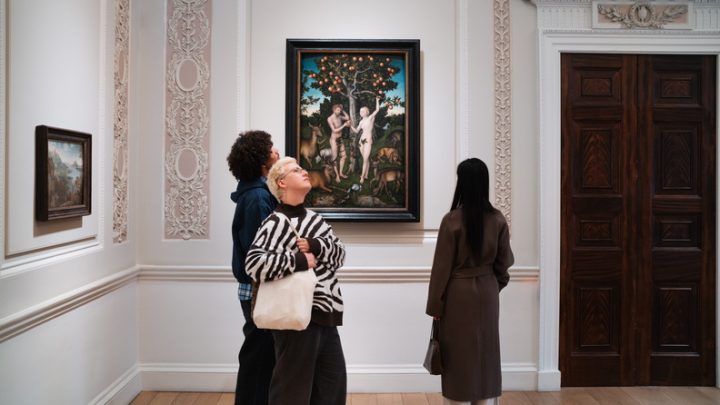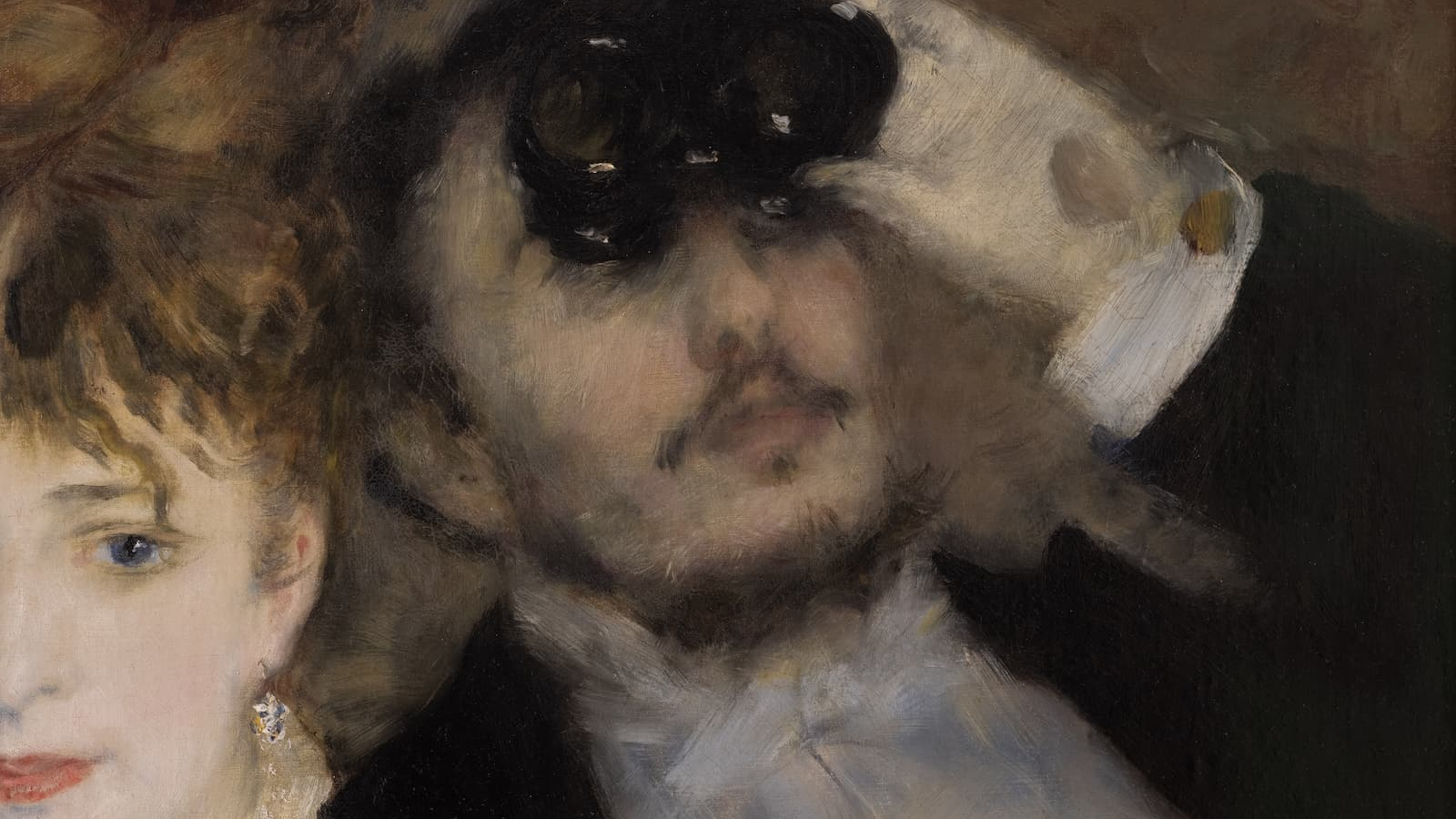
Twelve new stories by Courtauld scholars and curators invite people everywhere to take a closer look at art.
The Courtauld has launched The Art of Looking, in partnership with Google Arts & Culture, now available for everyone to see on the platform. Drawing on the expertise of the Courtauld’s faculty of art historians and curators, The Art of Looking invites people anywhere in the world to look more closely at art and to think differently about what they see.
At its heart are 12 new stories. Six, written by Courtauld academics, each take on one of the most fundamental questions we can ask about art.
- What does art mean?
Professor Dorothy Price FBA explores how Lubaina Himid uses imagination to rewrite history in her Le Rodeur series.
- What are art’s histories? Dr Esther Chadwick, Senior Lecturer in History of Art, traces how the meaning of Benjamin West’s The Death of General Wolfe has shifted over the centuries.
- What does art do? Dr Tom Nowicki Young, Senior Lecturer in Nineteenth Century Art Histories, reveals how imperial sketches were used as tools of power in 19th–century India.
- Who is art for? Dr Tom Stammers, Reader in Art and Cultural History, examines how Rosa Bonheur’s The Horse Fair challenged who could make and view art.
- Who is an artist? Dr Sujatha Meegama, Robert H. N. Ho Family Foundation Senior Lecturer in Buddhist Art History, uses a Sri Lankan masterpiece to challenge the myth of the lone genius.
- How is art made? Dr Jessica Barker, Senior Lecturer in Medieval Art History, follows the material life of a medieval ivory carving.
Six further stories by Dr Rachel Sloan, Associate Curator for Works on Paper, focus on the Courtauld Gallery’s renowned collection of drawings, spanning more than five centuries. They range from Wise Virgin (1493), an early drawing by the young Albrecht Dürer, and Michelangelo’s celebrated The Dream (Il Sogno), to Cézanne’s watercolour Apples, Bottle and Chairback (1904–06), in which the artist applied colour before pencil.
Others explore the role of music in Wassily Kandinsky’s art, the work of the ‘forgotten Vorticist’ Helen Saunders (1885–1963), and Claudette Johnson’s monumental Blues Dance (2023), made for her solo exhibition at the Courtauld Gallery.
Beyond the stories, The Art of Looking offers other ways into the collection, from looking closely and playing with works to uncovering what lies behind them. Visitors can zoom in on Seurat’s optical effects or see how Van Gogh used reed pens, piece together a painting as a puzzle, or decode the musical rhythms of a Kandinsky drawing. Art Projector lets them view works such as Cézanne’s Montagne Sainte-Victoire with Large Pine at actual size at home, while other features reveal what X-rays show about Seurat’s Young Woman Powdering Herself and why the moon in Turner’s Dawn after the Wreck was ‘corrected’. A short film goes behind the scenes with Professor Mark Hallett, Märit Rausing Director of the Courtauld, and Dr Rachel Sloan.
The Art of Looking reflects the Courtauld’s commitment to art for all and its ambition to transform access to art history education. Bringing together the research of the Courtauld Institute and the collection of the Courtauld Gallery, it is designed for anyone curious about art, from first-time visitors to lifelong learners. It complements the Courtauld’s public learning programmes, including short courses and the work of Open Courtauld.
Alongside the launch, the Courtauld and Google Arts & Culture are announcing an experimental six-month residency exploring how AI can support metadata work on the Courtauld’s photographic collections. The pilot will test whether AI can help transcribe the handwritten and typed information on the mounts of photographs in the Witt and Conway Libraries, such as artist names, titles and dates, with the results checked for accuracy throughout.
The Art of Looking is free to explore online and on the Google Arts & Culture app.
Professor Mark Hallett, Märit Rausing Director, Courtauld, said: “Looking closely at art can change how we see the world. The Art of Looking shares the questions our scholars explore with their students and the discoveries our curators make in the study room with anyone, anywhere, who is curious about art. We are delighted to be working with Google Arts & Culture to bring it to a broader audience.”
Amit Sood, Vice President, Google Arts & Culture, said: “Our mission has always been to help share the world’s culture to everyone. With The Art of Looking, we’re thrilled to build on our partnership with the Courtauld by pairing world-class scholarship with new digital storytelling. From capturing ultra-fine brush strokes with our Art Camera to exploring how AI can transform education and research, this next chapter gives audiences everywhere an interactive, closer look at the powerful human stories behind these masterpieces.”