By Aistė Bakutytė
Aistė (MA History of Art, 2024) works at an arts PR agency. With a particular focus on art from Ukraine, Moldova, Central Asia, Georgia, and the Baltic states, she promotes artists who have been considered “peripheral”, weaving conversations between different diasporic communities and the art they create. She sees this as a direct continuation of her studies at the Courtauld Institute, where she took the Special Option Beyond Utopia (now part of Culture Wars: Art in China, Eastern Europe and the Former Soviet Union). Alongside her work in PR, Aistė consults and advises collectors, galleries and institutions interested in decolonising their collections.
Aistė took a four-year break between her BA and MA studies. Her decision to study the MA History of Art was part of a career change that allowed her to establish herself professionally in the arts. She is still in touch with many of her course mates – due to their shared specialism, they sometimes end up working together, and support each other professionally. Aistė told us that Dr Maria Mileeva, the course leader, is their biggest cheerleader, and has fostered a community among her students, both in the UK and internationally.
It has become increasingly common to think of institutions, art fairs, and commerce when we hear the word ‘art’. As I was struggling in 2022 to turn my career towards ‘something more creative’, while hustling to earn money for my MA and working in fintech, my world was shaken by Russia’s brutal war unleashed on Ukraine. As I watched the horror unfold in real time, with women, children, men, everyone, even pets, slaughtered wherever Russian forces entered; I kept asking myself what a person in a position of relative privilege could do to assist Ukraine in this inhumane and unequal battle. How could I help it survive?
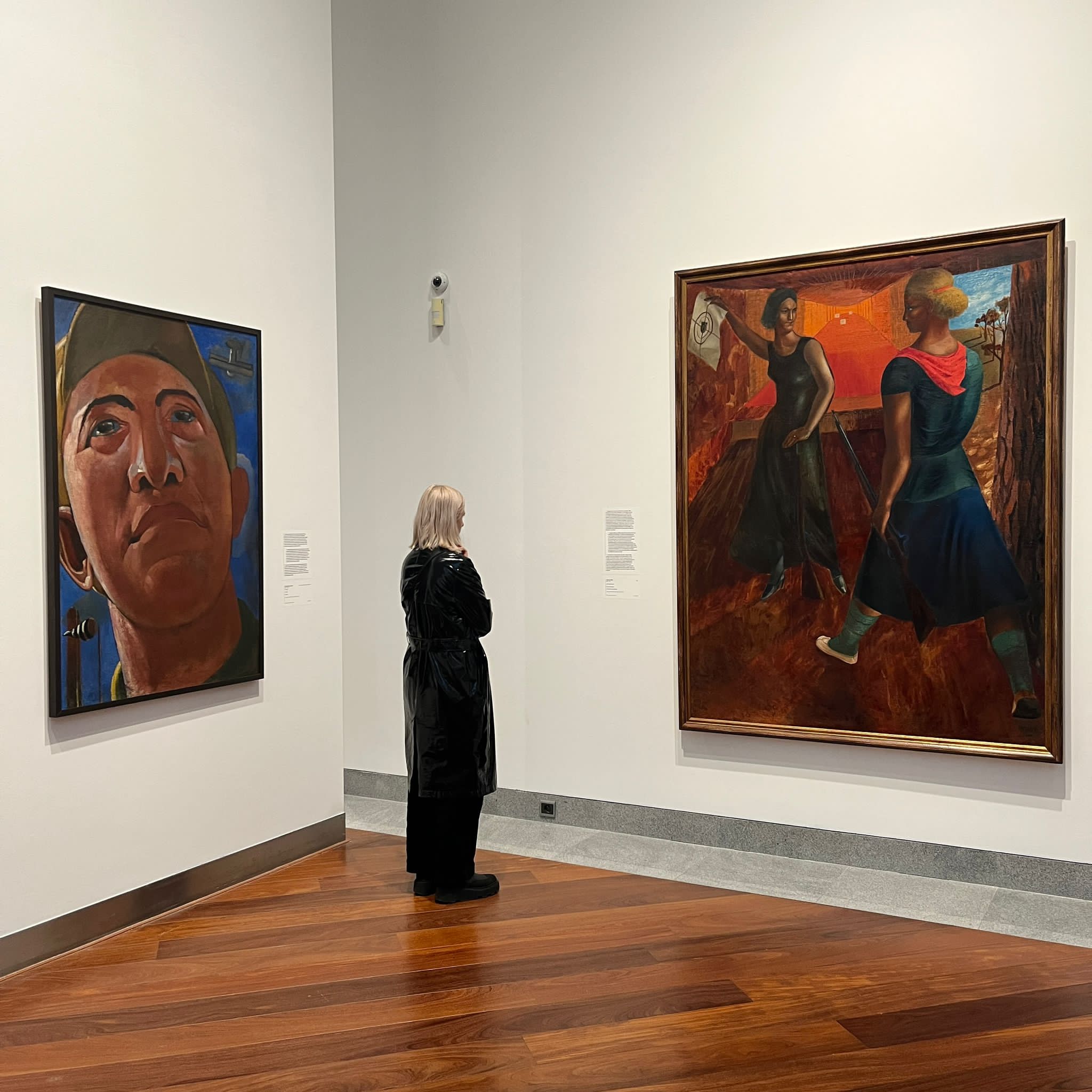
Maria Mileeva’s Beyond Utopia course was one of very few courses in the country that offered an opportunity to investigate the post communist space and its culture by removing the oppressor from the conversation. It felt fresh and compelling, and it was fascinating to learn about the Georgian avant-garde, the Lithuanian school of photography, and feminist artists from Kazakhstan. It was refreshing to position Russia as a state constantly lagging behind, constructing itself by erasing the cultures of the peoples and lands it annexed, unable ever to acknowledge them.
Beyond Utopia truly went beyond the usual, often exoticised view of the USSR and its artistic practices. By exposing students to pages of art history carefully hidden by the oppressive politics of the USSR and later Russia, it dismantled the simplistic view of an evil West and a benevolent communist Russia, instead positioning both powers as equally capable of oppression, racism, and colonialism. Because the course is taught through the lens of art history, imperialist arguments are communicated effectively through visual material, often employing socialist realist imagery and cinema. Most importantly, the course excavates art that has been deliberately mislabeled as Russian or Soviet and repositions it in a new anti-colonial light.
The structure of the course follows the chronological evolution of the USSR, tracing its artistic origins back to the Russian Empire while also investigating contemporary art in the Baltics, Ukraine, Georgia, and Central Asia. These artistic influences are juxtaposed with socialist art and architecture from around the world, from Angola to China.
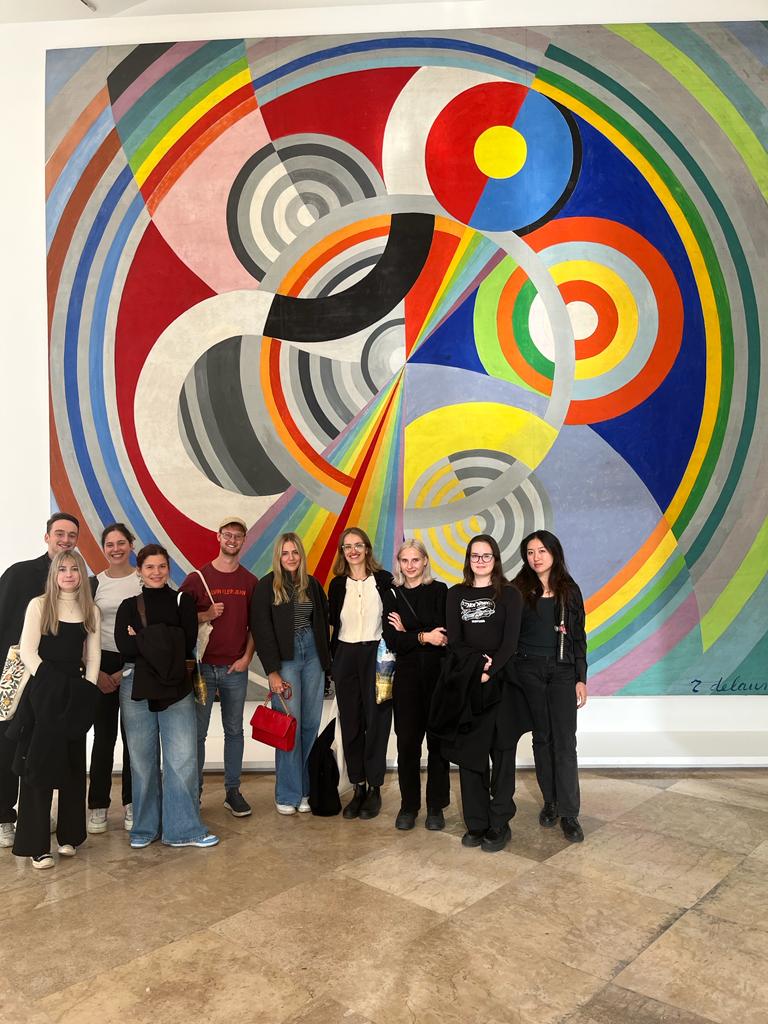
As part of the course, in October 2023 our class travelled to the Asia Now in Paris. Art Now is an art fair co-curated by Slavs and Tartars. It is one of the key voices promoting art from Central Asia and post-communist states, and its diaspora. It was remarkable to see contemporary Mongolian art presented abroad for the first time, as well as to discover galleries and artists from Kazakhstan and Uzbekistan rivaling traditional Western galleries and their offerings. For many of us studying this MA, it was our first real-life encounter with art from Central Asia.
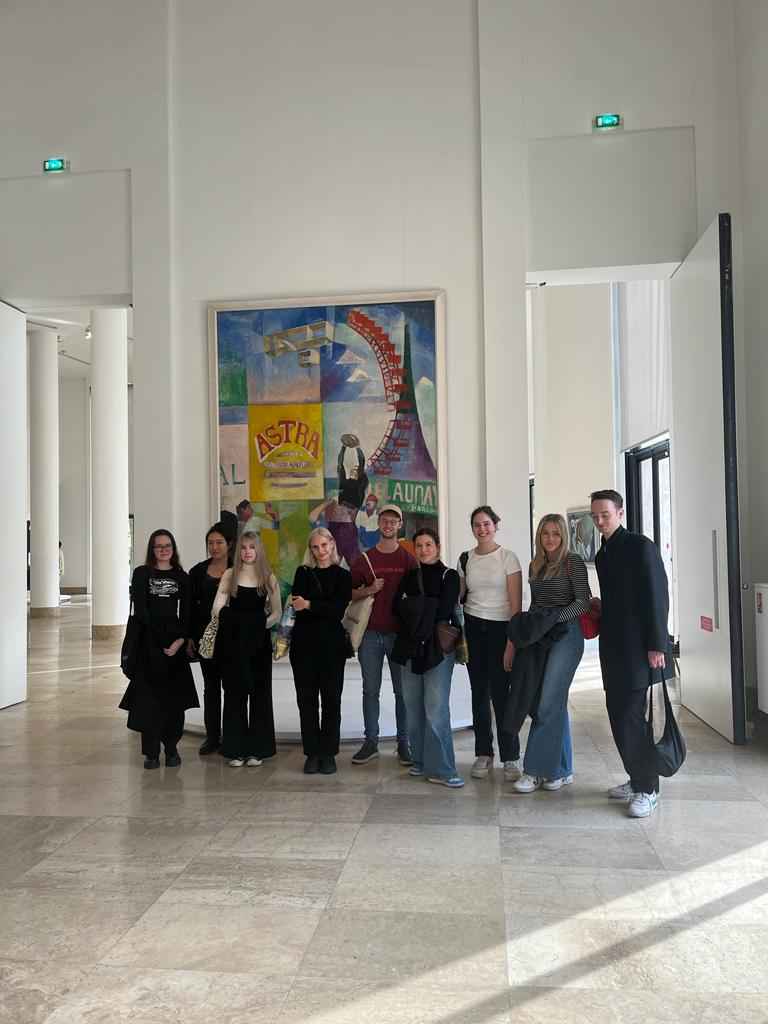
We were guided by Maria through Paris, with one of the most memorable moments being the first-ever exhibition of contemporary Mongolian art abroad. Lkham Gallery, based in Ulaanbaatar, presented White Milk Paints the Blue Sky, curated by Christianna Bonin. It was unlike anything I had seen before. Works by Baatarzorig Batjargal, Bekhbaatar Enkhtur, Chayodu, Nomin Bold, Nomin Zezegmaa, Nyam-Ochir Oyunpurev, Odonchimeg Davaadorj, and Zula Tuvshinbat captivated our entire class, with many of us returning to the exhibition throughout the year. Enkhtur’s works, often made entirely from beeswax, pushed me to think about relationships between East and East, and how, for example, the Baltics or Ukraine might weave dialogues of mutual empathy with Mongolia and West Asia through shared craft traditions such as beeswax sculpture and a deep appreciation of bees as sacred animals tirelessly working to protect their hive — their people and their culture.
After seeing the Asia Now exhibition, it became clear that this MA module was very different from any other. When we began writing our essays, we were constantly encouraged by Maria and by one another to dig deeper and challenge both our own understanding and the popular imagination surrounding regions formerly associated with the USSR and the Iron Curtain.
Our virtual exhibitions followed suit. Some were staged within socialist realist architectural monuments in East Africa; others occupied the Royal Academy; some (including mine) were staged in Newham, East London, home to the UK’s largest Eastern European population. Ukraine dominated our research, and we sincerely hoped that we would be the last class to engage with Ukrainian art through the lens of war. What we genuinely worked towards was removing the oppressor from the way we look at and understand art from the region. Let us talk about art in Estonia without ever mentioning Russia. Let us do the same when researching Tajikistan or Moldova — that was our mission.
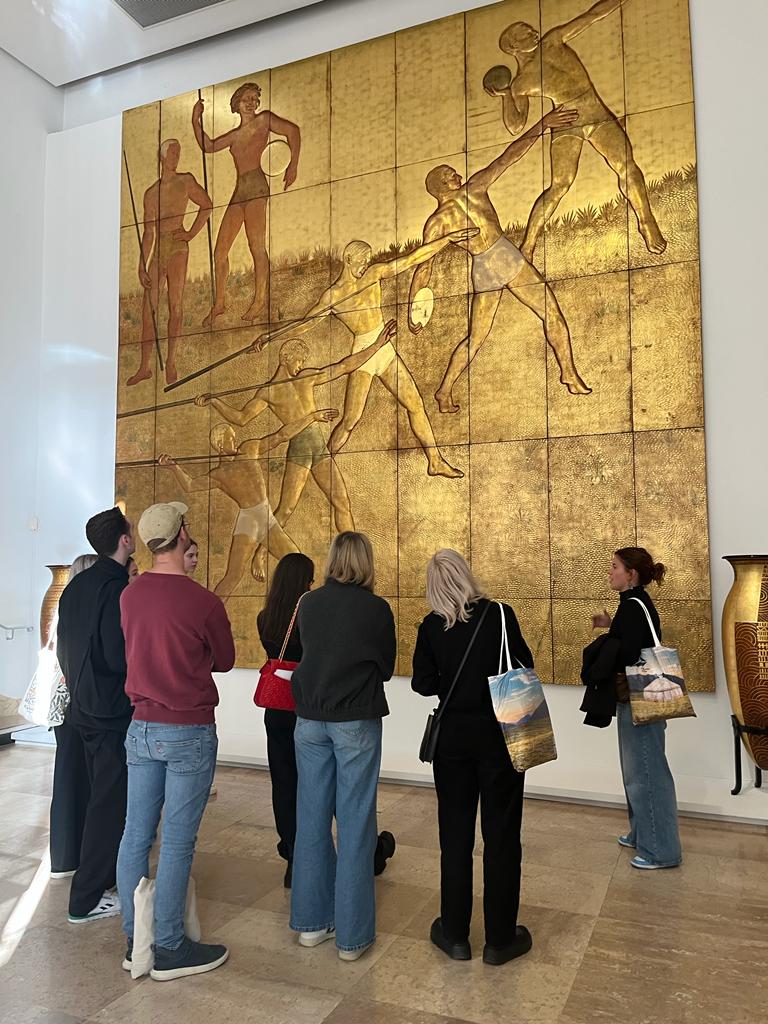
What I am trying to say is that this course brought together many intelligent and ambitious people who joined not because they owned a few Soviet propaganda posters and thought they were aesthetically interesting, but because we were genuinely concerned about the gaps in art history. Even as Master’s students, we worked hard to address those gaps, to search for truth, and to challenge established narratives.
Art from the region has always carried messages and often hidden desires to be understood. Whether in Anastasia Sosunova’s investigation of Russian-Lithuanian identity or Almagul Menlibayeva’s journey through Kazakhstan in search of those responsible for the destruction of the Aral Sea, this module truly opens your mind. You will leave a different person with a fuller head, but most importantly, a fuller heart.