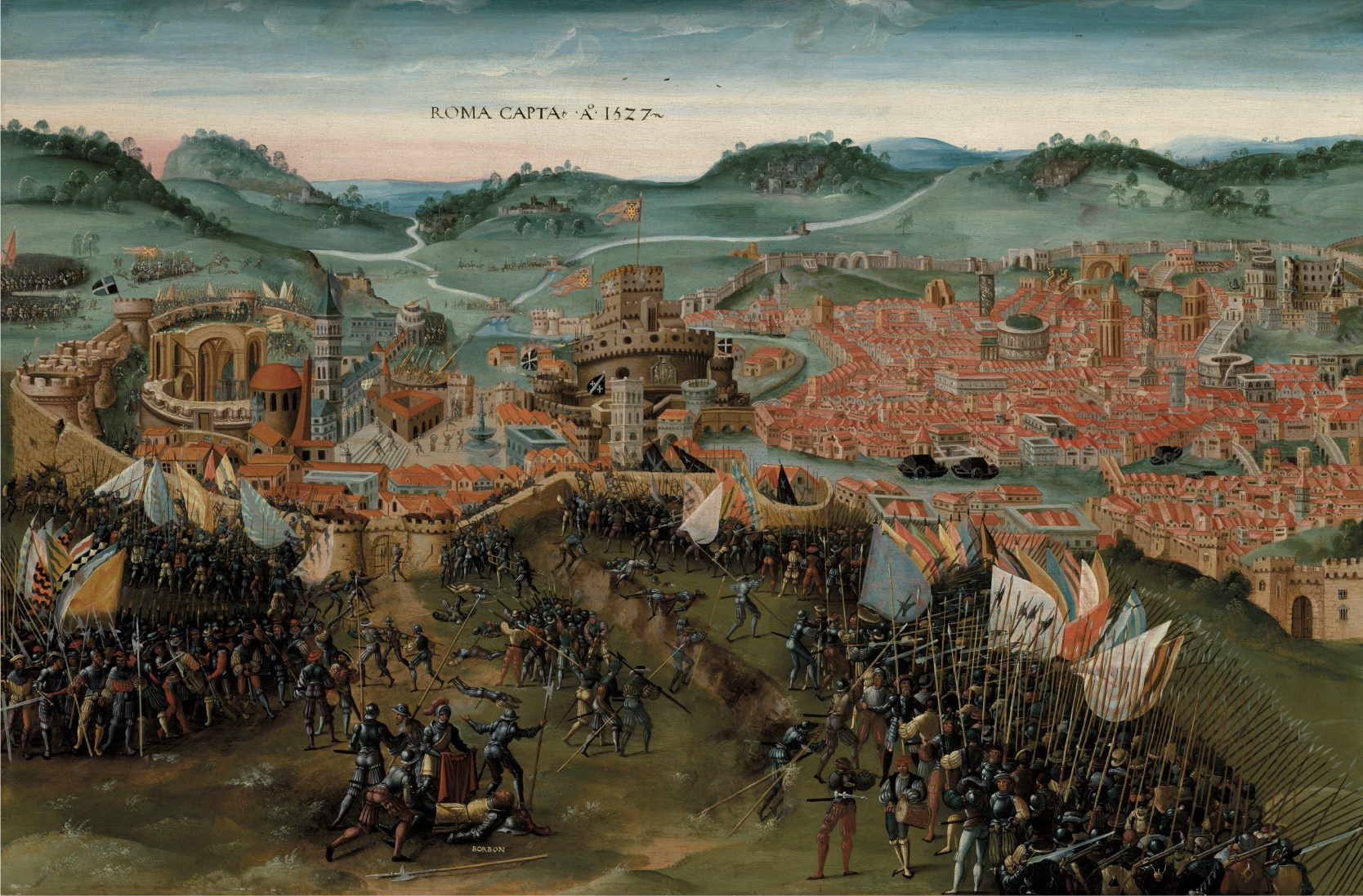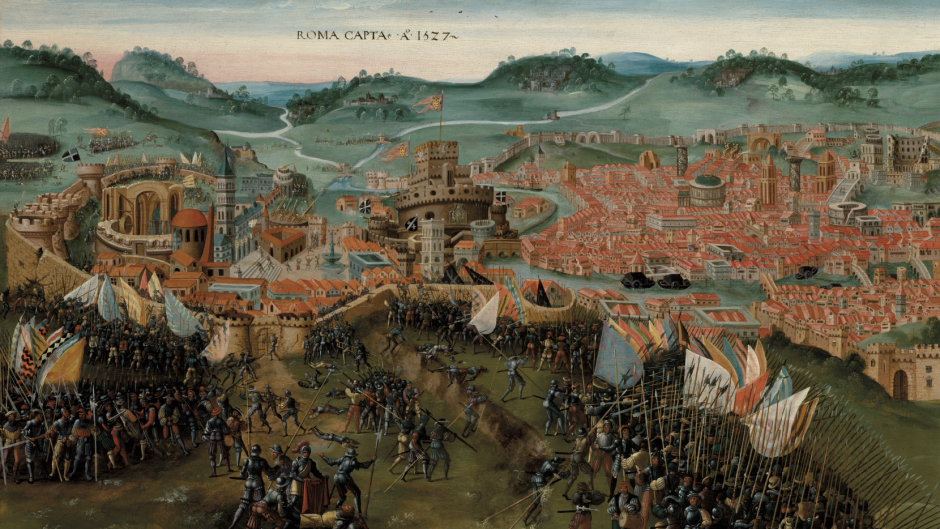
This lecture situates Professor Guido Rebecchini’s current research project on the material culture of the Sack of Rome in 1527 within the broader trajectory of his scholarly work. In its first part, the lecture will reflect on the core questions that have shaped Rebecchini’s investigations into artistic practices, patronage, and collecting in sixteenth-century Italy, as well as on the methodological reorientation prompted by his move to London in 2013. Approaching the Renaissance both as an exceptionally successful cultural project and as a contested field of inquiry marked by tension, conflict, and resistance, the lecture foregrounds a consistently critical methodological stance. Through philological reconstruction, this approach seeks to interrogate and deconstruct entrenched ideological assumptions surrounding power, progress, and identity.
The second part of the lecture will focus on Rebecchini’s current research on the Sack of Rome, which will culminate in an exhibition at the Scuderie del Quirinale in Rome in 2027 and in a monograph. Against a backdrop of radical reconfiguration in the relationships among objects, people, rituals, and beliefs—triggered by the collision of imperial and papal ideologies—the material culture that had long sustained the papal language of power was abruptly destabilised. Relics, liturgical furnishings, garments, silverware, jewellery, paintings, tapestries, and ancient sculptures were stripped of their symbolic and social meanings, becoming either commodities valued for their materials or targets of iconoclastic violence.
Drawing on art historical, historical, and anthropological methodologies, this lecture argues that the Sack of Rome exposed the ideological constructions underpinning the visual and material worlds that shaped the Italian Renaissance. It further suggests that, precisely because of its internal tensions and fractures, the Renaissance continues to function as a compelling historical laboratory for testing and challenging our understanding of the past, as much as of the present.
Guido Rebecchini, Professor of Renaissance and Early Modern Art
Guido Rebecchini joined the Courtauld in 2013. In 2000, he was awarded his PhD at the Warburg Institute. Since then, he has received fellowships awarded by the British Academy, Villa I Tatti, CASVA, and the Getty. His interests straddle art and history, anthropology and material culture and has published on sixteenth-century Italian art, patronage, collecting, court culture, especially in Mantua, Rome and Florence. His latest book is entitled The Rome of Paul III (1534-1549). Art, Ritual and Urban Renewal (Harvey Miller, 2020). Since 2019, he has co-curated two exhibitions focussed on Giulio Romano; one on Parmigianino’s drawings in the Courtauld Gallery; one on sixteenth-century notions of the natural world (September 2026); and one on the Sack of Rome (October 2027).