Monday 22 June- Friday 26 June 2026 (Full time, Monday-Friday)
On-campus (London)
Harvey Shepherd
£695
Course Description
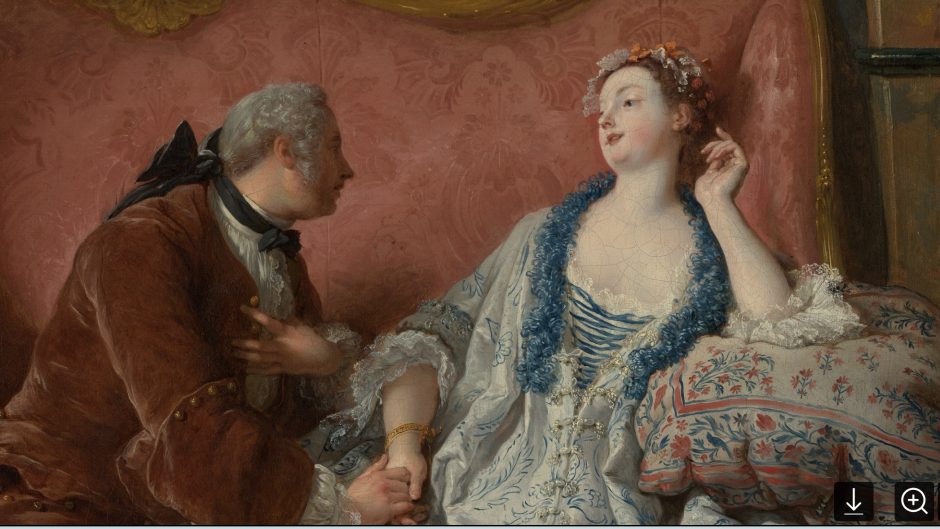
From the early triumphal years of Louis XIV’s reign to the aftermath of the 1789 Revolution, this course examines the different contexts of French art in a rapidly-changing and increasingly interconnected world. Students will encounter the roles that French artists such as Jean-Antoine Watteau, Jean-Honoré Fragonard, Elisabeth-Louise Vigée Lebrun and others played in shaping still-current ideas of luxury and taste, and envisaging radical futures.
The seminar classes consider French art of the long eighteenth century through a series of ever-widening geographical contexts. The opening sessions focus on the political and economic centres of France in the capital and at court, considering how artists like François Boucher, taste makers such as Mme de Pompadour, and thinkers like Voltaire and Rousseau forged the intellectual and cultural life of the Enlightenment. The course then moves to France’s periphery and its neighbours, examining the culture of cities like Lyon, Bordeaux, and Marseille, and both peacetime connections and wartime rivalries with European states such as Great Britain, The Netherlands, and the Holy Roman Empire. After this, classes encompass the global contexts of French art, examining interactions with a host of cultures from Russia to China, Senegal to India. The final seminar considers the later eighteenth century, as new cultural realities arose from the construction of national and imperial identities during the Revolution and the reign of Napoleon Bonaparte.