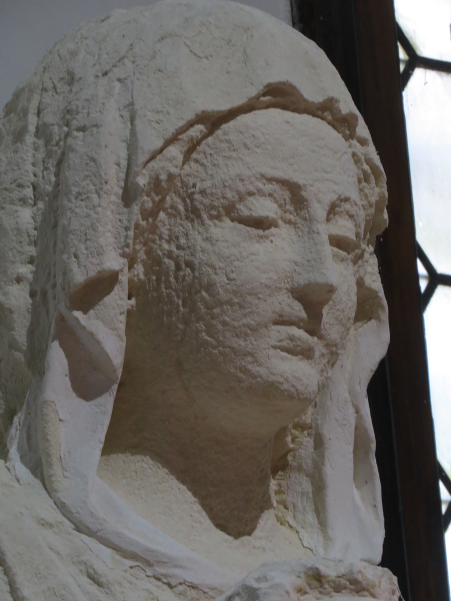
Miracle-working images raise fundamental questions about trust, both in their materiality and in the very legends surrounding their making. A long tradition of scholarship has centred not only on the relationship between image and divine prototype, but also on provenance and authorship—with icons often ascribed a holy artistry, either “not made by human hands” (acheiropoieta) or painted by St Luke the Evangelist. These attributions—known through written legends and oral tradition—cemented trust in the “power” of the image. Yet it is now widely acknowledged that throughout the Italian peninsula, beginning around the fourteenth century, many of the images credited with performing miracles were locally made, earlier works that did not necessarily, or at least initially, claim divine authorship or an ‘eastern’ and ‘ancient’ pedigree. The extent to which these works relate to wider visual culture and period notions of ‘art’ has generated a lively scholarly debate.
Focusing on two miracle-working sculptures in medieval and Renaissance Venice, this talk addresses a central preoccupation of both early modern writing and current scholarship: the aetiology or origins of miracle-working images. It excavates the making of these images and their originary legends—linked to their authorship, making and materiality—with particular attention to the unfinished (non finito in later art-historical terminology). Furthermore, it investigates cultic accretions and the visual arguments constructed at the shrines through the diachronic dialogue between images. Ultimately, it considers how different agencies worked together to generate knowledge and substantiate claims about the creation of these sculptures, challenging our understanding of the entanglements between artistic practices, aesthetics and devotion.
This event is organised by Dr Robert Brennan, Lecturer in Italian Art 1300-1500, as part of the Medieval Work-in-Progress Series. The series is generously supported by Sam Fogg.
Speaker:
Jessica N. Richardson is Lecturer in the Department of History of Art at the University of York. She previously held positions at the Centre for the Advanced Study of the Visual Arts, National Gallery of Art, Washington, in Florence at Villa I Tatti (The Harvard University Center for Italian Renaissance Studies) and the Kunsthistorisches Institut in Florenz. Recent publications include the co-edited volume The Aesthetics of Marble (2021) and a special issue of Res: Anthropology and Aesthetics titled Fashioned from Holy Matter (2021). Her current work focuses on miraculous images and the reworking of medieval images in Renaissance Italy.