A decade on from the inaugural provocation of British Art Studies Volume I, published in November 2015, in which art historians responded to the statement, ‘There’s No Such Thing as British Art’ a significant aspect of British art studies has involved reflection on the nature and boundaries of the field itself.
The expansion of the field’s geographic and intellectual perspectives has opened new avenues for further research. For instance, scholars have recognised the possibilities afforded to the study of British art when it is brought into dialogue with the arts of regions which have been marginalised in its discussion, including Ireland and former colonial territories. This introspection has instigated a re-examination of British collections, with major rehangs including at Tate Britain, encouraging fresh perspectives on canonical works of art and the emergence of lesser-known artists and histories from the archive. In 2025, the Courtauld Institute of Art announced the opening of the Manton Centre for British Art, a major new initiative in the field, and providing new contexts in which to explore the definition, scope and even relevance of the concept of ‘British’ art.
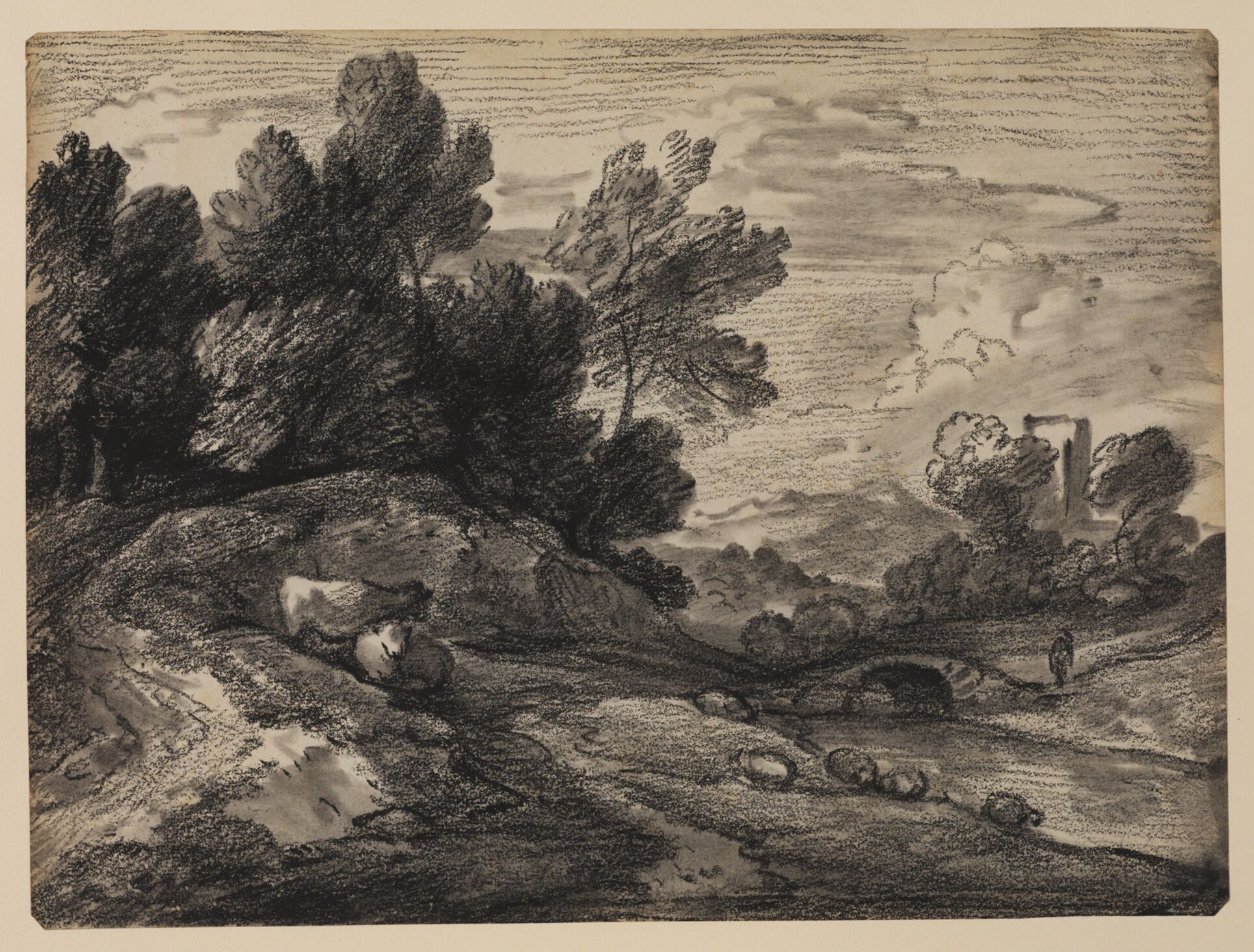
Centred around themes of a national taste, the construction of landscapes, visualisations of empire, and the fabrication of a ‘national’ identity, this symposium provides an interdisciplinary, cross-period forum for fruitful discussions by PhD and early career researchers on the role of visual and material culture in reinforcing, challenging and complicating the notion of ‘British.’
This symposium event is organised by Claire Ó Nualláin and Clara Shaw, supported by the CHASE Doctoral Training Partnership and the Manton Centre for British Art.
Programme Schedule:
09:30: Registration opens
10:00 – 10:10: Opening remarks
10:10 – 11:20: Session 1: Cultivating Taste
Chaired by Jelena Sofronijevic
Isobel Muir – ‘Art for the People’? An examination of the response to the ‘Modern Painters of To-Day’ exhibitions of 1942, curated by Lillian Browse.
Nam Huh – Whose Britain? Diasporic Moving-Image, Archives, and Contemporary Histories
Ella Nixon – The Arts Council Collection: Redefining British Art in the 1980s
11:20 – 11:35: Tea/Coffee break
11:35 – 12:45: Session 2: Constructing Spaces
Chaired by Jack Englehardt
Grace Fannon – Performing Britain in John Speed’s The theatre of the empire of Great Britaine
Eleanor Stephenson – Visualising Britishness in Industrial Landscapes of Wales
Méabh Scahill – Germinating ‘Britain’ in Ireland?: Centring Ireland in Decimus Burton and Richard Turner’s botanic architecture
12:45 – 13:45: Lunch break (provided for speakers and organisers only)
13:45 – 14:55: Session 3: Conceptualising Empire
Chaired by Alisha Ma
Abigail Spencer – The Maternal Image and the Visual Culture of Slavery c.1788–1814
Sarah Hutcheson – ‘Whose rich productions we so justly prize’: Naturalizing Catarina de Bragança in the Ceiling Paintings at Windsor Castle (1678 – 1688)
Shaheen Alikhan – Elephant and Castle: African Forts and Heraldry in the Shaping of British National Identity
14:55 – 15:10: Tea/Coffee break
15:10 – 16:20: Session 4: Creating Identities
Chaired by Emma Davis
Christina Childs – Free Unions Locked Up: The Paradox of Resistance and the Special Branch Confiscation of a British Surrealist Journal
Ed Kettleborough – Sunset on Stability: Class, Nation, and Masculinity in the Early Work of Derek Boshier
Amber Butchart – Fabric of Britain: Textiles, Affect and the Propaganda of National Identity
16:20 – 16:30: Closing remarks
16:30: Wine reception
Speakers
Isobel Muir
Dr Isobel Muir is Assistant Curator, 19th Century British Art at Tate. Her research has previously focused on the activities of Jewish women in the London art world in the nineteenth and early twentieth century, as art dealers and professional curators operating in a predominantly male field. During her PhD research, she discovered that the National Gallery played an important role in the careers of several Jewish women, who attempted to shape its collecting practices and establish themselves within its walls and without. She worked on a research project relating to the National Gallery’s first female curator in the 1940s and is a member of the Women and the Arts Forum and the British Art Network.
Nam Huh
Nam Huh is a UK-based curator and researcher working at the intersection of media art, diasporic identity, queer and postcolonial theory. Their practice explores experimental and community-driven forms of storytelling, often involving immersive technologies, sound, and socially engaged processes. They have curated exhibitions and events across the UK, South Korea, and Europe, and are currently pursuing a PhD in Communications and Media, focusing on experimental documentary films. Recent projects focus on the representation of queer and East/Southeast Asian migrant experiences through post-internet documentary and digital ecologies.
Ella Nixon
Dr Ella Nixon specialises in twentieth-century British art. She is currently a postdoctoral researcher at The Women’s Art Collection (Murray Edwards College, University of Cambridge) and a research assistant at Birmingham University and Northumbria University, and has previously been a research associate at the Arts Council Collection. Her doctoral thesis examined the representation of women artists in regional art galleries, in collaboration with the Laing Art Gallery in Newcastle-upon-Tyne
Grace Fannon
Grace is an AHRC-CHASE funded PhD student at the Courtauld Institute of Art, supervised by Dr Esther Chadwick and Dr Kyle Leyden. Her research focuses on land, landscapes, and geographies of early modern Ireland within the wider imperial Atlantic world, across a range of media, as reflections and constructions of transcultural colonial encounters, ideologies, identities, and processes. Before starting her PhD, Grace worked as an Assistant Curator of Ceramics and Glass at the Victoria and Albert Museum, and as the Curatorial Assistant at the Chitra Collection.
Eleanor Stephenson
Eleanor Stephenson is a Research Curator at the National Museum of Wales, Cardiff, and a lecturer at the University of Cambridge, where she recently completed her PhD on the visual and material culture of early British Jamaica. She has published on the art and science of the British Empire with the University of Wales Press, Princeton University Press, and the Huntington Library Quarterly, and curated related exhibitions at the Fitzwilliam Museum, the Science Museum, and the Watts Gallery.
Méabh Scahill
Méabh Scahill is an incoming PhD student researching the social and cultural history of Trinity East, a former industrial site in Dublin’s dockland’s now owned by the University of Dublin. (As of June 8th!) Méabh completed an MPhil in architecture and urban studies at the University of Cambridge, researching the early history of Dublin Zoo. She is broadly interested in Irish urban history, in particular connections with Britain and the wider empire in the nineteenth century.
Abigail Spencer
Abigail Spencer is a PhD student at the Courtauld Institute of Art, funded by the Manton Scholarship for Doctoral Research on British and Irish Art. Her research analyses the ways in which female bodies were visually appropriated to imperial aims in late-eighteenth-century Britain, with a particular interest in the material manifestations of this process in architectural culture and political prints. She is also working with several other researchers on a project at Glastonbury Abbey about the historical reception and interpretation of Mary Magdalene in Britain. Prior to beginning her PhD, Abigail completed both her BA and MA at the Courtauld, receiving the Courtauld Award for Outstanding Achievement for her MA dissertation exploring sympathy and the maternal image in the visual culture of abolitionism. Outside of academic research she works for the Athena Art Foundation to organise events with contemporary artists and curators.
Sarah Hutcheson
Sarah Hutcheson (she/they) recently finished a PhD in Architecture, Landscape Architecture, and Urbanism at Harvard University, with a focus on the political meanings of architecture in early modern Britain and the British Empire. Sarah’s dissertation research explores architecture, the royal body, and the body politic under Charles II. She is currently a lecturer at the University of Massachusetts, Amherst.
Shaheen Alikhan
Shaheen is a third-year doctoral candidate in Architectural History at the University of Virginia’s School of Architecture. Her work focuses on the maritime infrastructures of the transatlantic slave trade throughout the eighteenth century, on the Atlantic periphery and at sea. She centers the gaps in history: erased narratives, liminal spaces, and lost structure types.
Christina Childs
Christina Childs is a CHASE-funded PhD researcher at the Courtauld Institute, focusing on Surrealism, psychoanalysis and politics in the twentieth century. Her thesis, Covert Operations and Cultural Warfare: British Surrealism, Propaganda and Surveillance 1936-1960, centres on the relationship between the British Surrealist group and government propaganda, surveillance and cultural warfare projects.
Ed Kettleborough
Ed Kettleborough is a PhD candidate in History of Art at the University of Bristol and Chair of the Association for Art History’s Committee for Early Career Researchers. His doctoral research is sponsored by the SWW DTP consortium of the AHRC and co-supervised at the University of Exeter. Reconsidering the generation of artists who emerged from the Royal College of Art in the early 1960s, Ed’s thesis seeks to move beyond the conceptualisation of their work as “British Pop” to reveal occluded contexts and meanings. His writing has appeared in print with Visual Culture in Britain and Art History.
Amber Butchart
Amber Butchart is a CHASE-funded practice-based PhD researcher at the Centre for Curatorial Studies, University of Essex. Her research considers textiles as propaganda in both discursive and material contexts, and how the curation of propaganda objects involves a critical engagement with the intersecting space they occupy between multiple disciplines and dynamics. Her doctoral outputs include ‘The Fabric of Democracy: Propaganda Textiles from the French Revolution to Brexit’ at the Fashion & Textile Museum in London, and ‘The Synthetic Revolution’ for the British Textile Biennial in Lancashire, which considered the development of synthetic fabrics as a technology of Cold War propaganda.