Evening Study Online
Dr Barbara Furlotti
5 pre-recorded lectures with 5 Zoom seminars at 18:30, over 5 weeks from Thursday 12 November to Thursday 10 December 202
Course Description
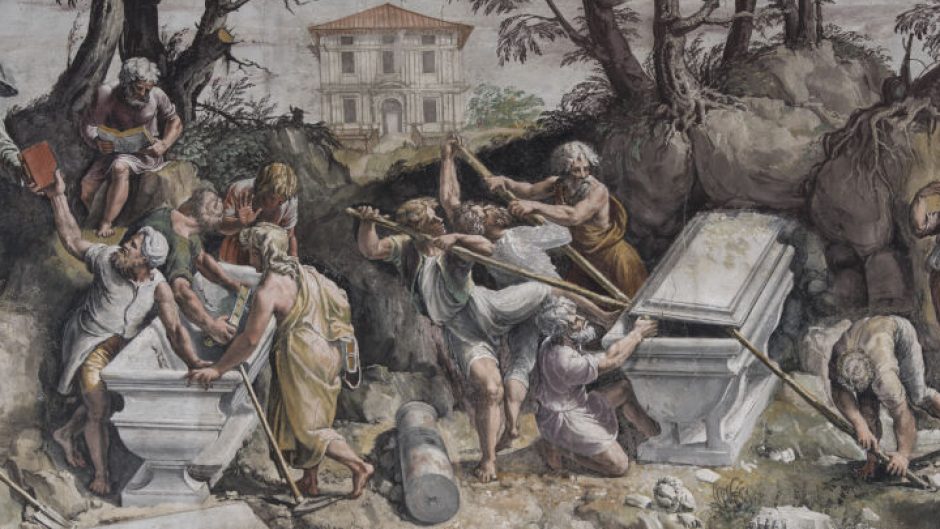
In his late sixteenth-century memoirs, the sculptor, restorer and – possibly – forger Flaminio Vacca recounts how, as a young child, he would wander with his father around excavation sites in Rome. In particular, Vacca vividly recalls the sight of a large sculptural group being dragged out of a “pit large as an abyss”. His memory is accurate: in the early-modern period, Rome and its surroundings were indeed a vast excavation site. In the countryside, urban vineyards and gardens, antiquities came to light almost daily either by chance during agricultural work or as a result of excavations sponsored by passionate collectors, who competed with each other to secure the best pieces. Meanwhile, in the city centre, relics of the first Christian martyrs were unearthed during building renovations of paleo-Christian basilicas, which were then placed in precious reliquaries and venerated, but also collected by pious individuals.
In this course, we will investigate how pre-archaeological excavations transformed subterranean objects, like Roman sculptures and paleo-Christian relics, into movable, marketable, and highly sought-after collector’s items. Led by primary and visual sources, we will (virtually) follow diggers down into excavation tunnels; we will learn how antiquarians procured the best pieces available on the market and negotiated a fair price; we will ask collectors to open their palaces for us and guide us through their assemblages of antiquities and relics. Meanwhile, restorers will teach us how they turned disfigured fragments into sensuous statues of Venus, and forgers how they created fakes that looked genuine and fooled even the best antiquarians of the time.