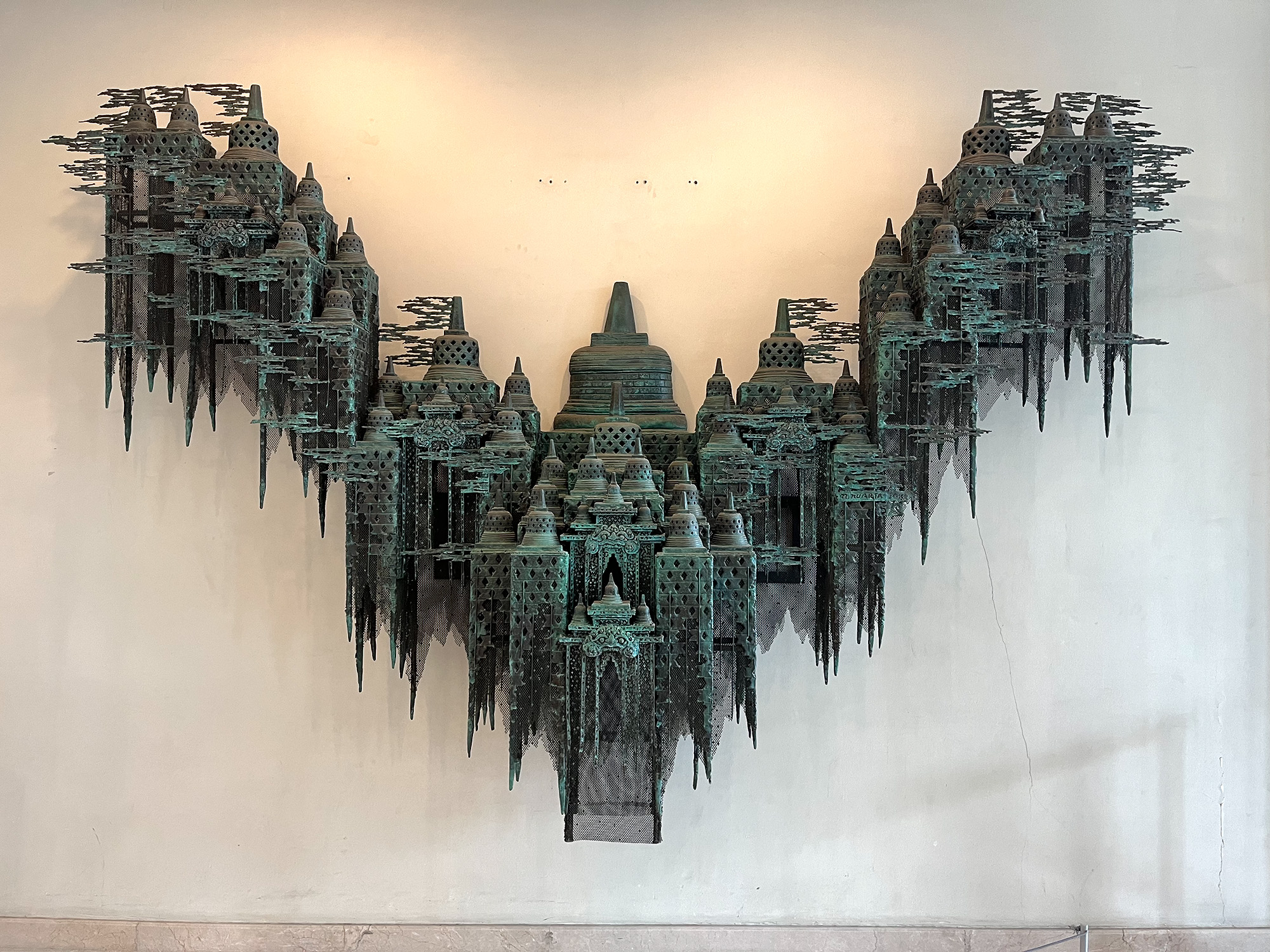
New efforts are being devised to install chattra, a tiered parasol, on top of Borobudur. While it is said to boost international tourism, the efforts spearheaded by both the Ministry of Culture and the Ministry of Religious Affairs have tried to frame them as an acknowledgement of Borobudur as living heritage. On the other hand, the question of chattra and its historical accuracy has lingered around Borobudur since its first restoration in the early 20th century. How do we understand this renewed attention to the chattra within the wider socio-religious context of Borobudur? Are there parallels with past interventions? What do we mean when we say Borobudur is a living heritage? I will discuss these questions through three pivotal moments in the historical life of Borobudur: its supposed discovery in the early 19th century, its first restoration by the Dutch East Indies Archaeological Service in the early 20th century, and its second restoration by the Indonesian government with the help of a UNESCO international campaign. I will then reflect on the newly conceived efforts to intervene in the life of Borobudur today to reconsider the possible futures for Borobudur.
Panggah Ardiyansyah is a Research Associate at the Digital Humanities Institute, University of Sheffield, working at the intersections of colonial collections, postcolonial museums, and digital mediations of art history. He completed his PhD at SOAS University of London, on a project to deconstruct Indonesian archaeology and art history by reconsidering ancient Hindu-Buddhist materials in early modern Java through the prism of kramat (or, sacred space). He also maintains an interest in object restitution and how the process might open pathways to decolonise the ways we think about art history from the field of Southeast Asian art.
Organised by Dr Sujatha Meegama, Robert H. N. Ho Family Foundation Senior Lecturer in Buddhist Art History, The Courtauld.