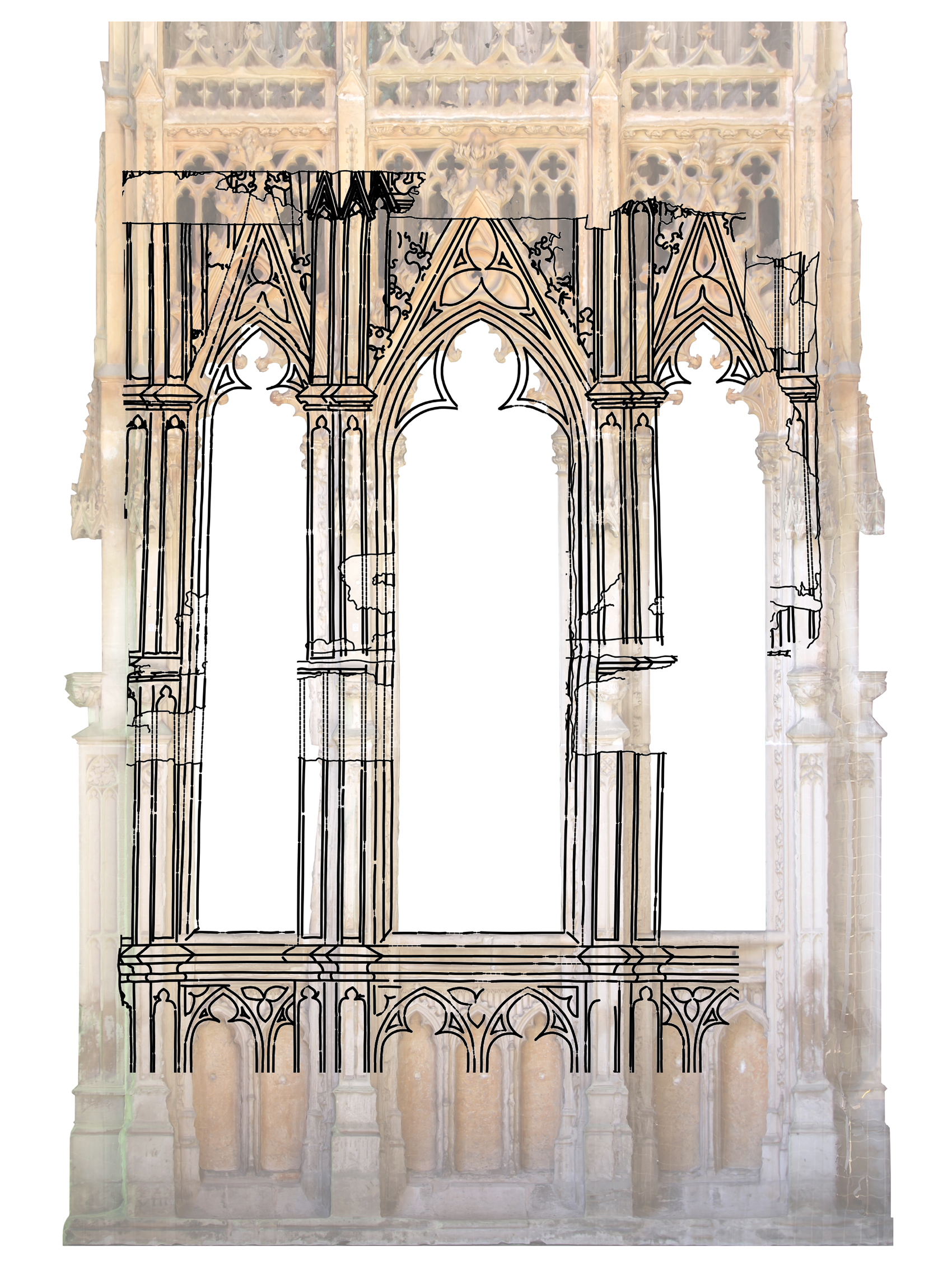
The lecture will present a parchment sheet with a presumed sketch of the canopy tomb of Pope Innocent VI from the Charterhouse in Villeneuve-lès-Avignon. In 1635, it was reused to bind a book belonging to the brotherhood of journeymen of the potters guild in Kłodzko (German: Glatz, now in Poland). The main thesis of the lecture is that the parchment originates from the cathedral workshop in Prague, led at that time by Peter Parler, and that the simplified, yet proportionally accurate depiction of the longitudinal elevation of the Avignon tombstone attests to the lively artistic and political contacts between the capital of the Kingdom of Bohemia during the reign of Charles IV of Luxembourg and the Provençal seat of the Roman Curia during the Avignon papacy. The lecture will demonstrate the significance of the Kłodzko drawing in understanding the processes of long-distance artistic transfer and the development of the Gothic style in fourteenth-century Europe.
Speaker:
Prof. Dr. Jakub Adamski (b. 1985) is an art historian and a medievalist. He graduated from the Jagiellonian University in Cracow (MA in 2009, PhD in 2011), and since 2012 has been assistant professor at the Institute of Art History of the University of Warsaw (associate professor since habilitation in 2019, full professor since February 2025). His main areas of research are the history of medieval, especially Gothic, architecture and sculpture. He is interested in 13th–16th-century church architecture in Poland, the German Empire, France and England, and especially its style, the history of rib vaulting and the development of spatial types in Late Gothic architecture. His research focuses especially on issues of “architecture around 1300.” He executed National Science Centre (Poland) research grants on “Silesian Gothic in its heyday. Urban religious architecture, 1300–1450,” (which results in a monograph redefining Gothic church architecture in Silesia, published in German in 2024) and “The Gothic Cathedral in Cracow and the European Architecture around 1300” (with a monograph published by Brepols in 2026). Additionally he served as Councillor in the European Architectural History Network (EAHN) in the term 2019–2021. Since 2025, he is member of the Historische Kommission für Schlesien (Historical Commission for Silesia), established in 1921. Currently he is the principal investigator in two research projects of the National Science Centre (Poland): “Medievalism in Gdańsk: The Builder Bartel Ranisch (1648‒1709) and the Beginnings of Scientific Research on Gothic Architecture” and “Fabrica Ecclesiae: Organisation of Church Construction in the Baltic Sea Region in the Late Middle Ages (13th–16th Century)”.