The Courtauld Medieval Postgraduate Colloquium (Friday 5 March 2027, London, UK)
Deadline for submissions: Friday 11 December 2026.
In societies driven by efficiency, convenience and information abbreviation, storytelling is slowly losing importance. Our eyes skim, our fingers swipe and our ears shut out external noise as our minds become easily saturated. However, storytelling has historically played an essential part in shaping humanity. It helps us explain our origins, our motives, our feelings, our actions, our faiths and our destinies. It allows us to moralise on human behaviour, celebrate our achievements and condemn our mistakes.
This need to tell stories is reflected in a wide variety of medieval art. Byzantine ivories stage miniature imperial processions, while monumental Italian frescoes depict triumphal entries. Jewish codices illustrate Moses receiving the Ten Commandments on Mount Sinai, whereas Islamic manuscripts picture Muhammad experiencing his first revelation in the Cave of Hira. Romanesque capitals warn against the Seven Deadly Sins, while German woodcuts tell cautionary tales of female seduction. How did medieval viewers interpret and experience such stories? How did narratives change through translation and adaptation? How were these stories transmitted to us?
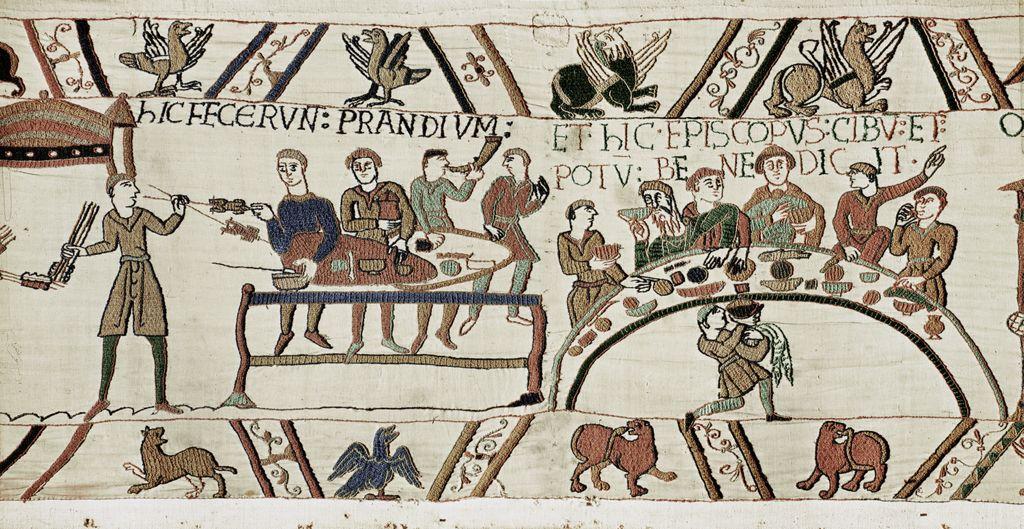
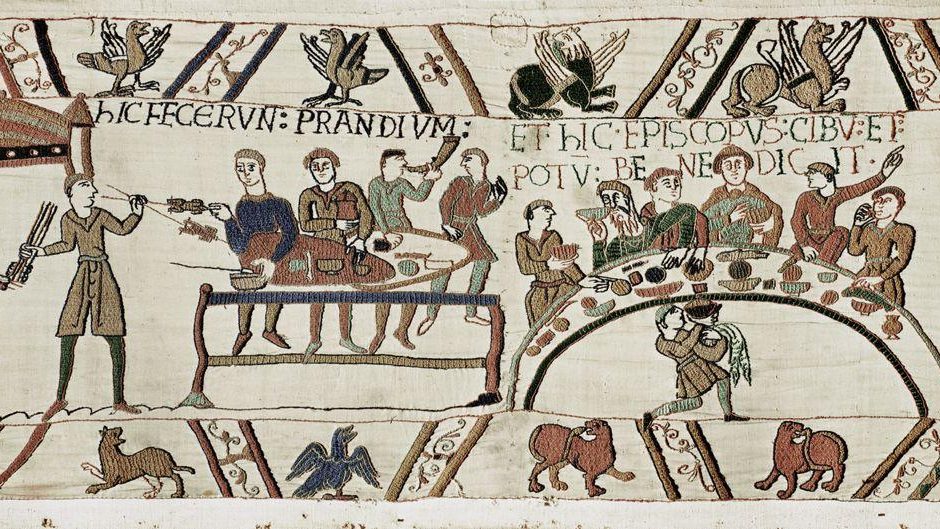
This colloquium seeks to emphasise the significance of storytelling to art historical practice. Coinciding with the historic exhibition of the Bayeux Tapestry at the British Museum, it will show that narratives of the past inspire and inform the narratives of today.
We invite submissions for 20-minute papers that investigate the traditions and legacies of storytelling in medieval art from Europe, Byzantium and the Islamic world. Respondents might consider themes including, but by no means limited to:
- narrative strategies for visual storytelling
- the transmission of fables, poetry, mythology and epic literature
- the relationship between text, image and object
- performance and orality
- the revisionism of historical events and political propaganda
- the modern afterlives of medieval legends.
PhD students interested in participating should submit a paper proposal of up to 250 words, a one-page CV, and a cover sheet including full name, email and institutional affiliation to Emma Bruckner (C2109808@courtauld.ac.uk) no later than Friday 11 December 2026.
There may be limited funding to support travel and accommodation costs for those without institutional support. If you require funding, please include a brief budget alongside your abstract.
Organisers: Emma Bruckner, Gabriel Christys and Mathilde Mioche