The Joseph Hage Aaronson & Bremen Exhibition: Hepworth in Colour
12 June – 6 September 2026
Book now
This summer, the Courtauld Gallery will present the first exhibition devoted to Barbara Hepworth’s lifelong fascination with colour, shedding light on an unexpected and unexplored aspect of the work of one of the most celebrated British artists of the 20th century.
Barbara Hepworth (1903 – 1975) is best known for her abstract sculptures inspired by nature and the rugged seaside landscapes of Cornwall where she lived and worked from 1939. Throughout her life she emphasised the primacy of direct carving and adhered to the ethos of ‘truth to materials’. Discussing her innovative use of colour with her son-in-law, the art historian Sir Alan Bowness, she said: “In a way my colour has been accepted but never understood.”
Bringing together some 20 sculptures and 30 drawings and paintings, The Joseph Hage Aaronson & Bremen Exhibition: Hepworth in Colour will be the first exhibition to focus on this important but often overlooked aspect of her work.
Hepworth’s early interest in colour dates to the mid-1930s, when she and her future husband, Ben Nicholson, formed part of the European avant-garde. When in 1939, days before the outbreak of the Second World War, she left London for Cornwall with her three young children, Hepworth took with her a single sculpture – her first study for a sculpture with colour. Over the coming years, the landscape of Cornwall inspired her to develop this initial experiment, taking her work in new directions and establishing a lifelong fascination with colour.
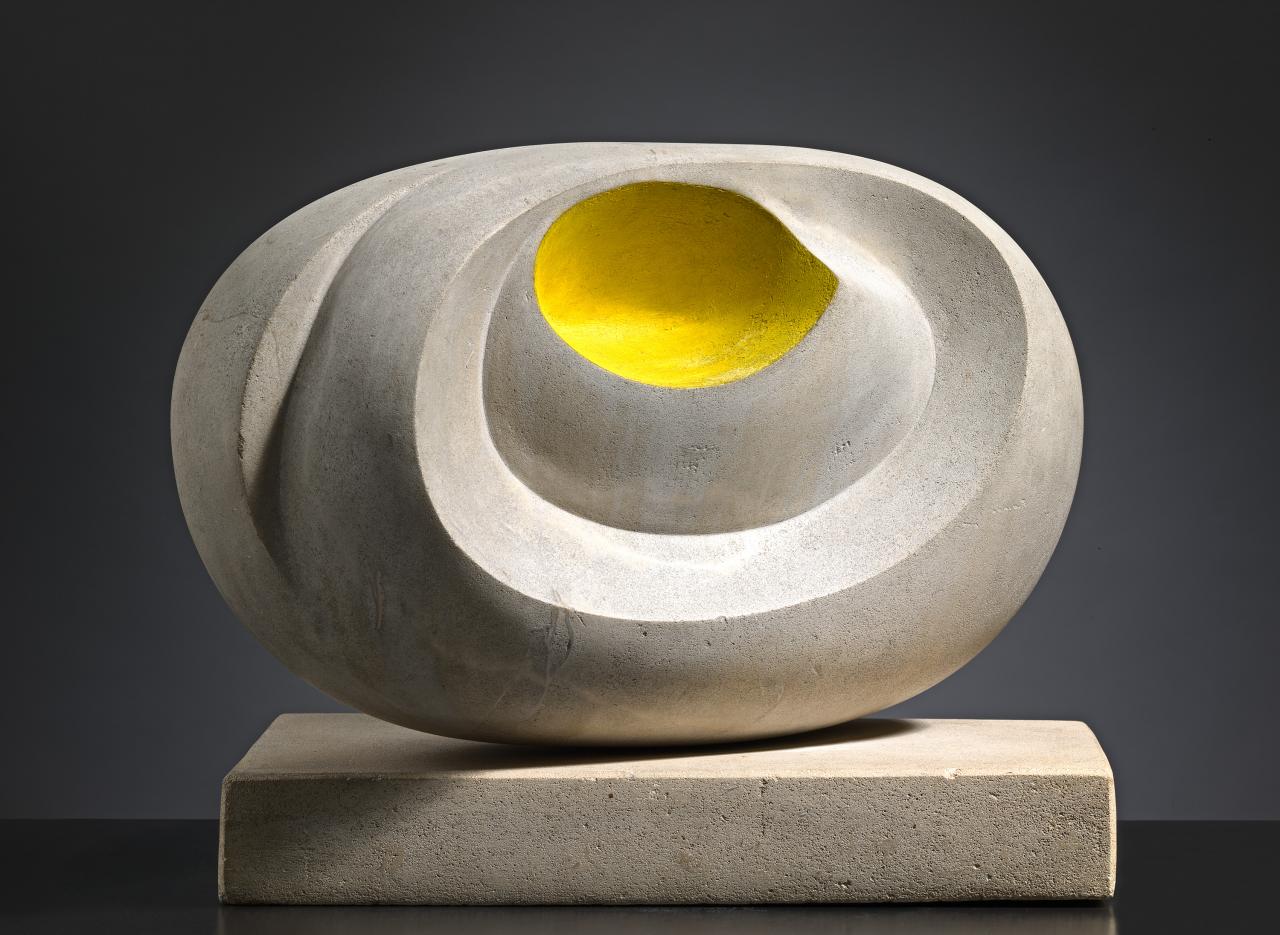
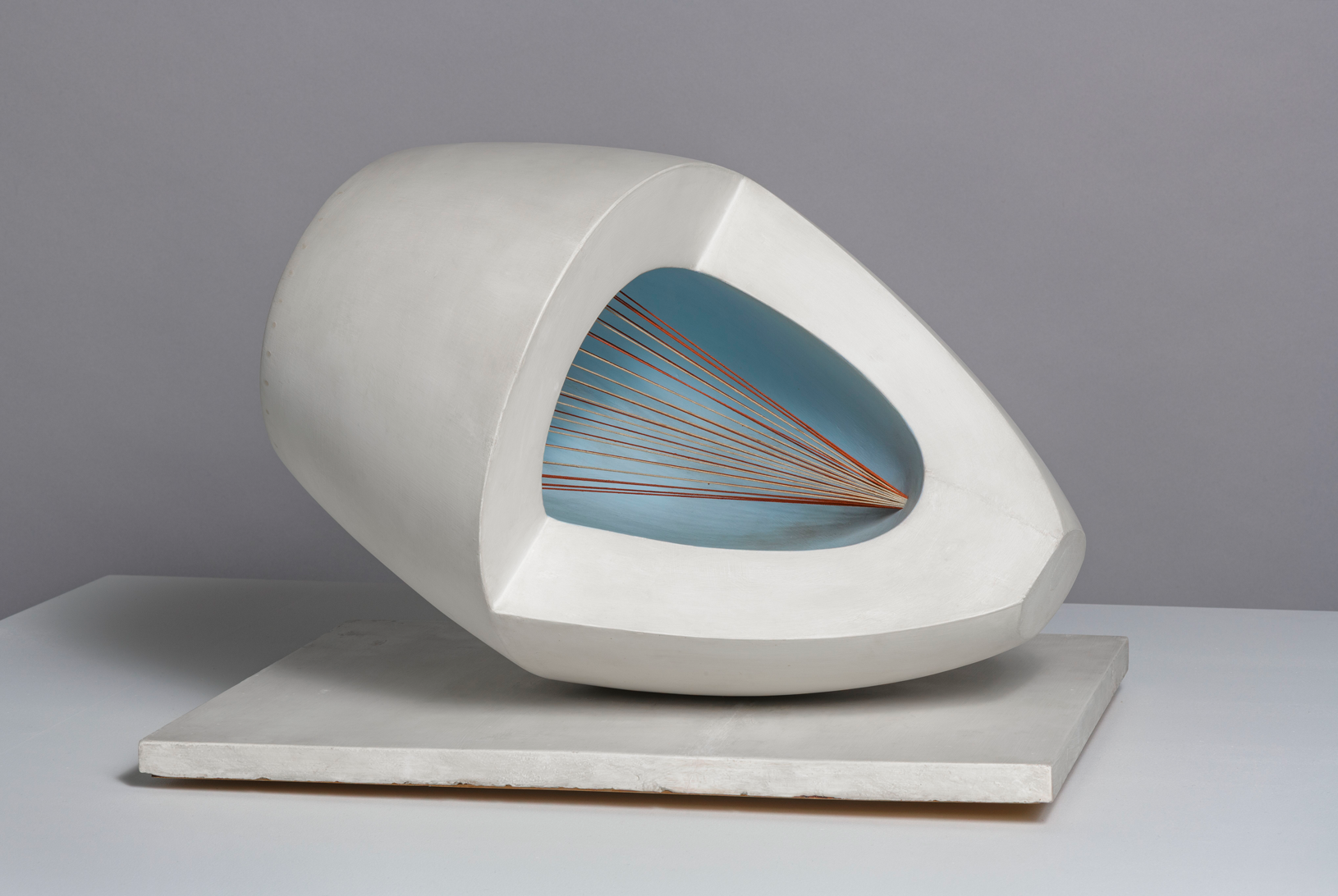
At the heart of the exhibition will be the remarkable group of painted sculptures which Hepworth made between 1940 and 1948. She later recalled how, “I used colour and strings in many of the carvings of this time. The colour in the concavities plunged me into the depths of water, caves or shallows…”. These early works include the boldly painted stone carvings Eidos (1947-8) from the National Gallery of Victoria in Melbourne, Australia and Eos (1946) from a private collection in Hong Kong. They are exhibited together in the UK for the first time since 1954.
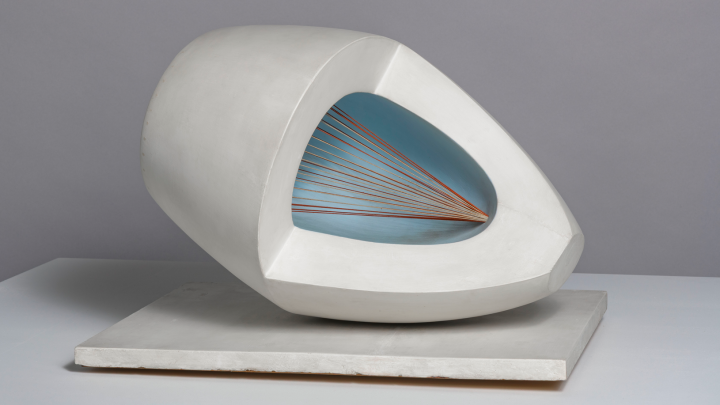
A major highlight of the exhibition will be the painted wood carving, Sculpture with Colour (Oval Form), Pale Blue and Red (1943), which was acquired for the nation by The Hepworth Wakefield in 2025 following the successful national fundraising campaign in collaboration with Art Fund to raise £3.8 million. Sculpture with Colour (Oval Form), Pale Blue and Red marked a breakthrough moment in Hepworth’s career, combining strings and colour and, for the first time, the beautiful pale blue associated with the Cornish skies and coast. In private hands since it was created, and rarely exhibited, this will be the first time the sculpture is displayed in London since it was acquired. For Hepworth the strings in her early sculptures ‘were the tension I felt between myself and the sea, the wind or the hill’.
Other seminal painted stringed sculptures in the exhibition include Wave, 1943-44, from the National Galleries of Scotland and Pelagos (‘sea’ in Greek), 1946 from Tate, which was inspired by the bay in St Ives in Cornwall. The exhibition also unites for the first time from private and public collections the six progressively larger versions of the stringed Sculpture with Colour (Deep Blue and Red).
Highlights
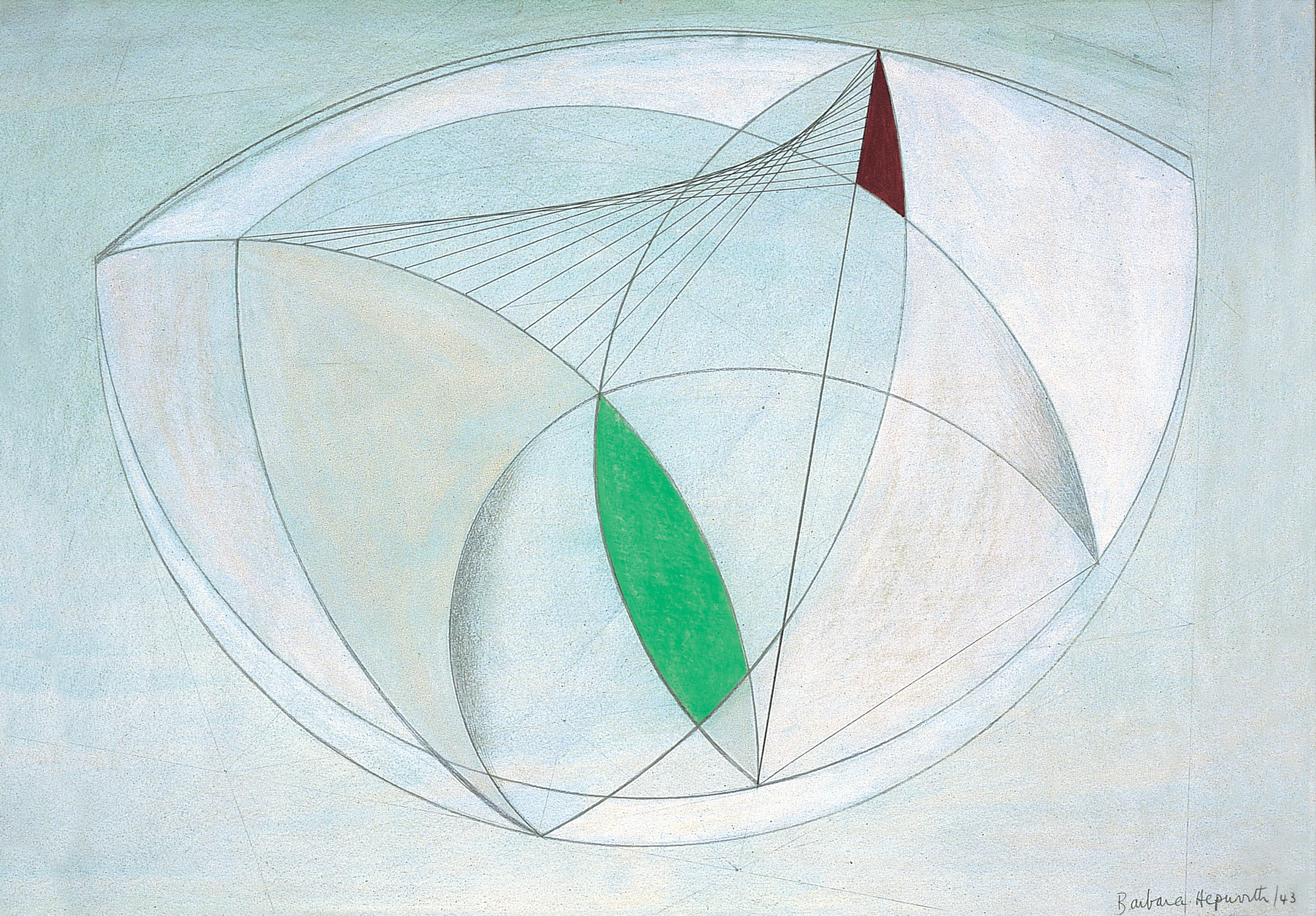
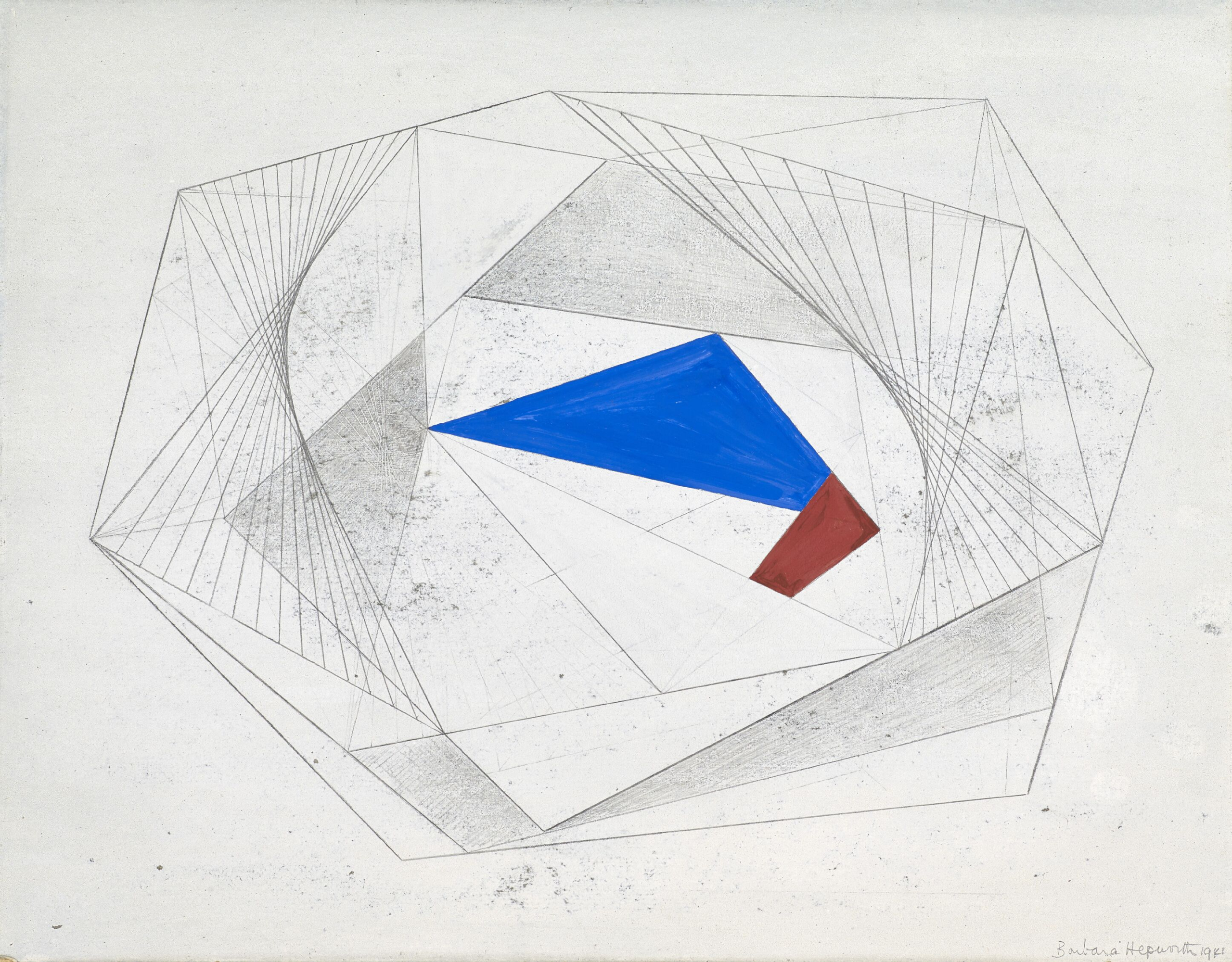
Alongside sculptures, the exhibition features a rich selection of Hepworth’s drawings with colour. Hepworth lacked the materials, studio space and time to produce much sculpture during the first years of the war but her drawings allowed her to continue to explore and develop her ideas. She recalled, ‘In the late evenings, and during the night I did innumerable drawings…exploring the particular tensions and relationships of form and colour which were to occupy me in sculpture during the later years of the war.’ These drawings, usually entitled ‘drawing for sculpture’ are striking for their intricate crystalline forms, punctuated with strong blues, greens, reds and yellows.
The exhibition extends into the 1950s and 1960s to reflect how colour continued to occupy Hepworth in new ways, including in her expressive paintings of the mid and late 1950s, and in her work with patinated bronze and painted marbles.
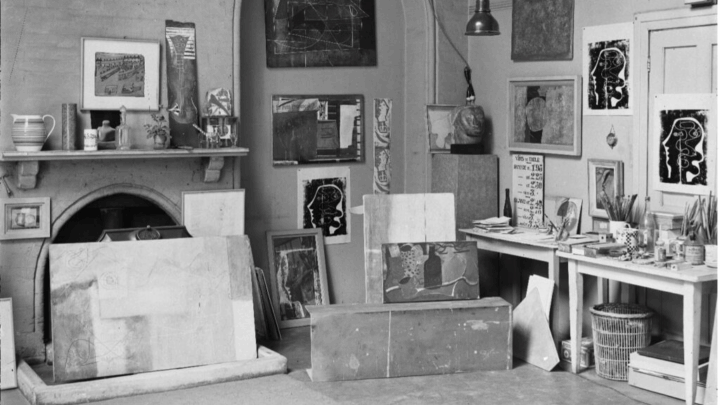
To coincide with the exhibition, a display of photographs of Barbara Hepworth and Ben Nicholson’s shared London studio at No. 7 the Mall Studios in Hampstead will be presented in the Project Space. Taken between 1932 and 1936 by Paul Laib (1869–1958), these are among the most evocative studio images to emerge in Britain during the 20th century and show the fascinating interrelation of their practices at this time. Hepworth and Nicholson: The Hampstead Studio Photographs is open in the Project Space from 6 June – 4 October 2026.
The Joseph Hage Aaronson & Bremen Exhibition: Hepworth in Colour is accompanied by a new catalogue, edited by Dr Alexandra Gerstein, Curator of Sculpture and Decorative Arts at the Courtauld and Stephen Feeke, with essays by Alexandra Gerstein, Stephen Feeke, David Batchelor, Eleanor Clayton and Kirstie Dootson.
The exhibition’s Title Sponsor is Joseph Hage Aaronson & Bremen LLP. The exhibition’s Lead Supporter is the Huo Family Foundation, with Support from Art Mentor Foundation Lucerne.
The Joseph Hage Aaronson & Bremen Exhibition: Hepworth in Colour
12 June – 6 September 2026
Denise Coates Exhibition Galleries, Floor 3
Book now
Hepworth and Nicholson: The Hampstead Studio Photographs
6 June – 4 October 2026
Project Space, Floor 2