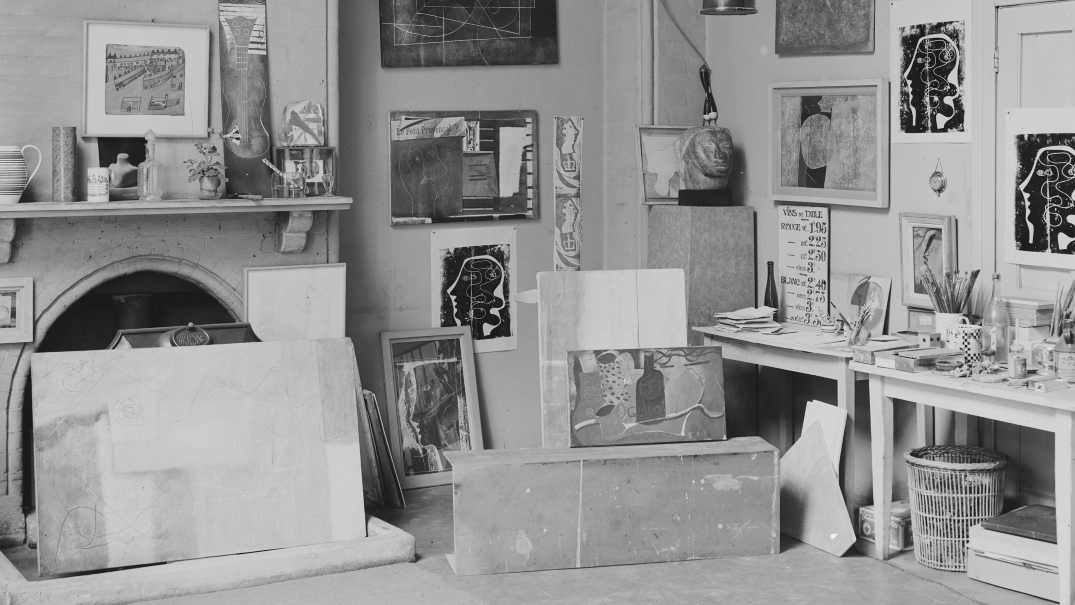
By Gerlind May and Chloe Nahum, co-curators of Hepworth and Nicholson: The Hampstead Studio Photographs.
Hepworth and Nicholson: The Hampstead Studio Photographs (6 June – 4 October 2026) brings together a remarkable group of photographs of their shared studio, taken in the early 1930s by the fine art photographer Paul Laib (1869-1958). The display coincides with The Joseph Hage Aaronson & Bremen Exhibition: Hepworth in Colour (12 June – 6 September 2026).
Read on to discover the stories behind some of the photographs on display.
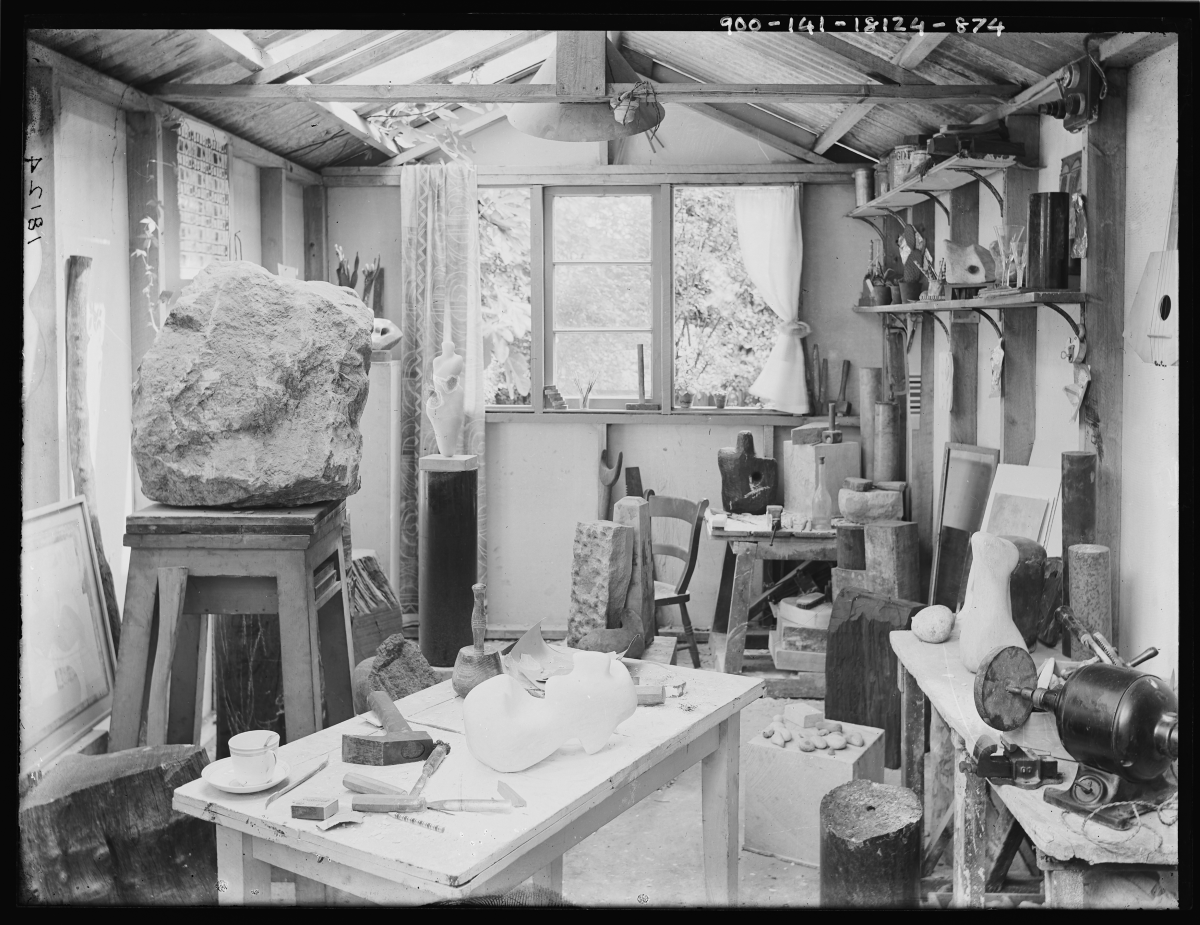
We look into a garden studio populated with tools and sculptures. Unruly foliage grows through the roof. A large block of stone on a modelling stand competes for our attention with sculptures placed on tables and plinths. A teacup and saucer have been left beside carving tools and utensils, and we wonder if the artist was here just moments ago.
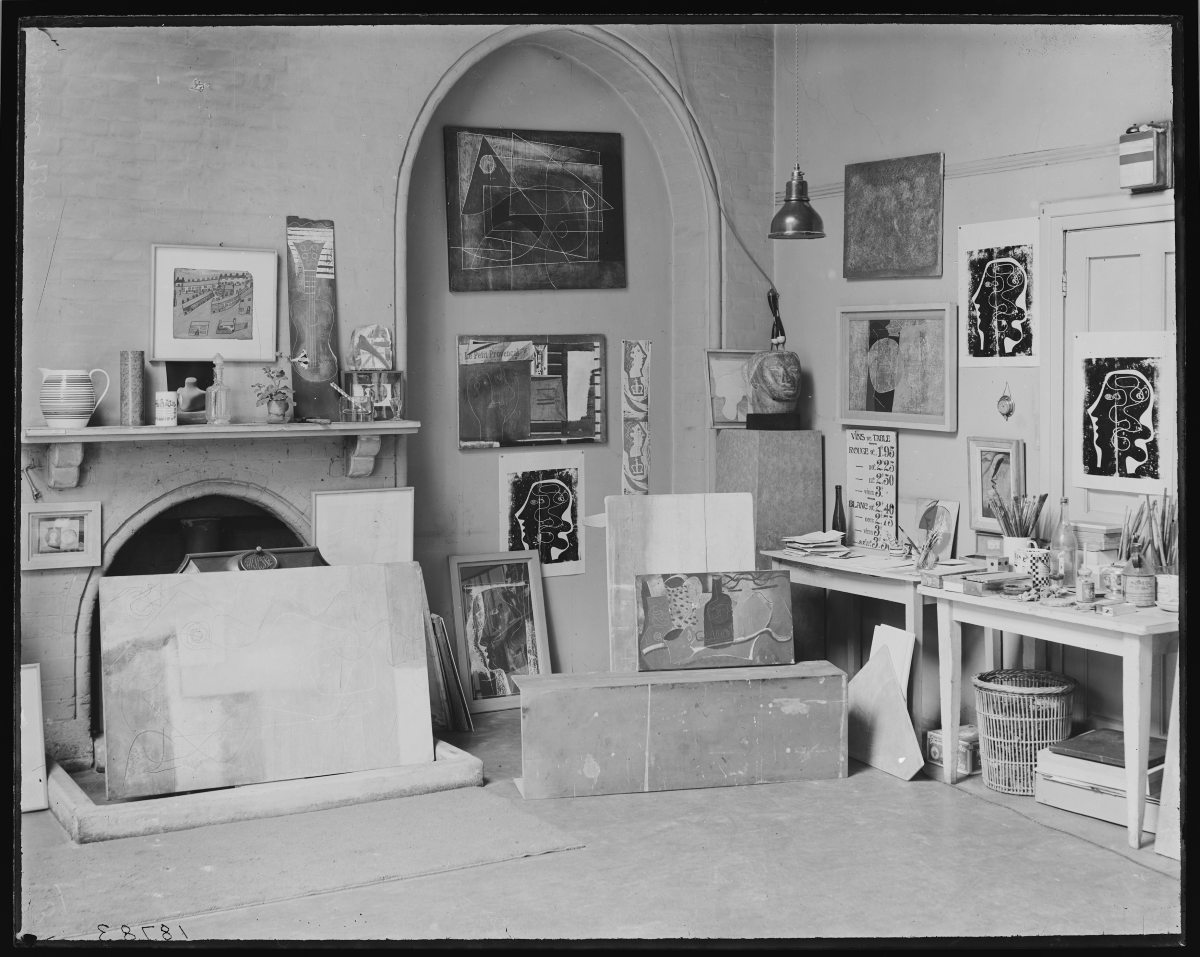
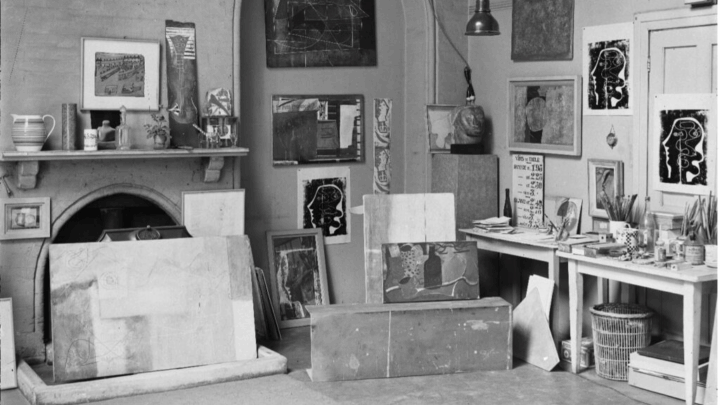
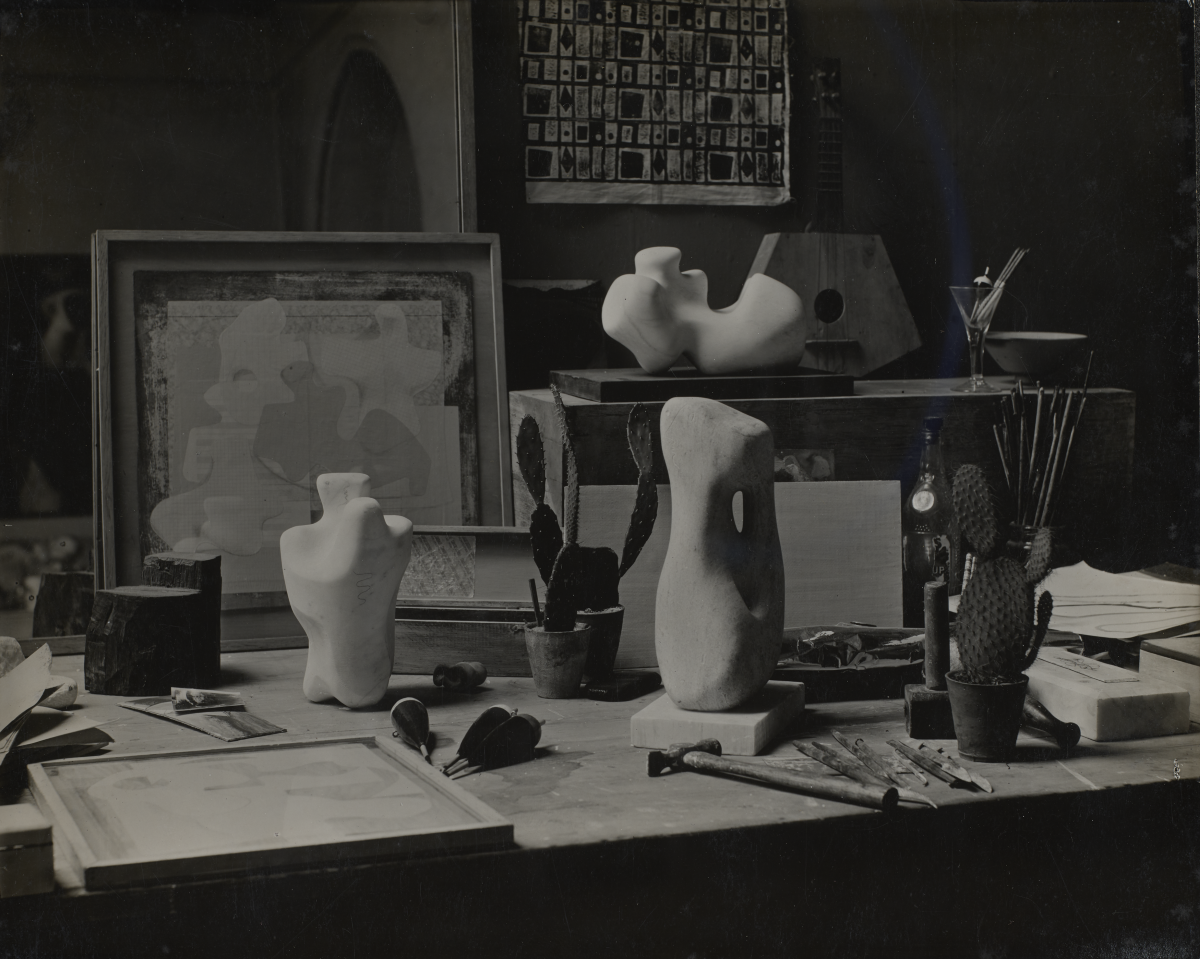
From the garden studio we step into the main building. Artworks are strikingly arranged, side by side with artist’s tools, plants, and glassware. It is the summer of 1933, and we are in the studio of the artists Barbara Hepworth and Ben Nicholson at 7 The Mall, Hampstead.
A 'nest of gentle artists'
The Mall (later known as Mall Studios) was a purpose-built terrace of artist studios that had been erected in 1872. It comprised of a terrace of eight studios that provided residents with a double-height space, amply lit by an enormous window and skylight. Hepworth moved into 7 The Mall with her first husband, the sculptor John Skeaping, in 1928, and was joined after their separation by her partner Ben Nicholson in the spring of 1932. The two artists lived and worked there until 1939, when they left London for Cornwall shortly before the outbreak of the Second World War.
In Hampstead, their community of artists included pre-eminent figures of international modernism such as Naum Gabo, László Moholy Nagy, Piet Mondrian, Henry Moore and Paul Nash, some of whom had fled fascism on the continent. Herbert Read, one of the leading advocates of modern art in 20th century Britain and a resident of 3 The Mall, would later recall this group as a ‘”nest” of gentle artists’, united by a ‘vital intimacy and enthusiasm’.
Art and life
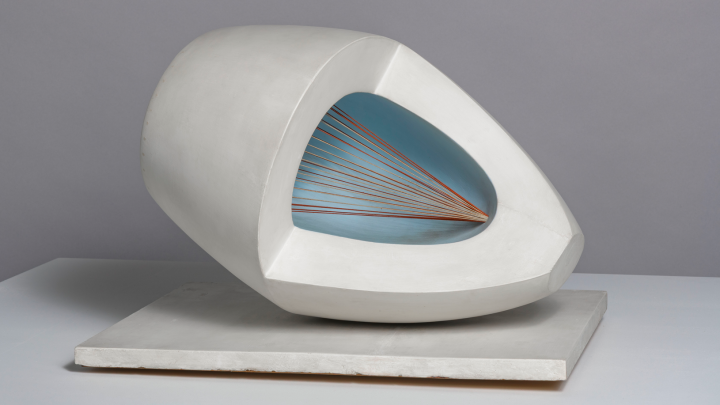
The years spent at The Mall were a period of intense collaboration and experimentation for the artists. Nicholson stated in 1932, ‘we can live, think & work & move & stay still together as if we were one person’. This symbiosis is vividly apparent in their works of this period, which demonstrate many shared fascinations, such as the tactile qualities achieved through scrubbing, sanding, or incising the surface of a painting or carving, or the face seen in profile, which uniquely recurs across works by both artists in this period. In 1933, Nicholson would carve his first relief, thus bridging the divide between two- and three-dimensional art.
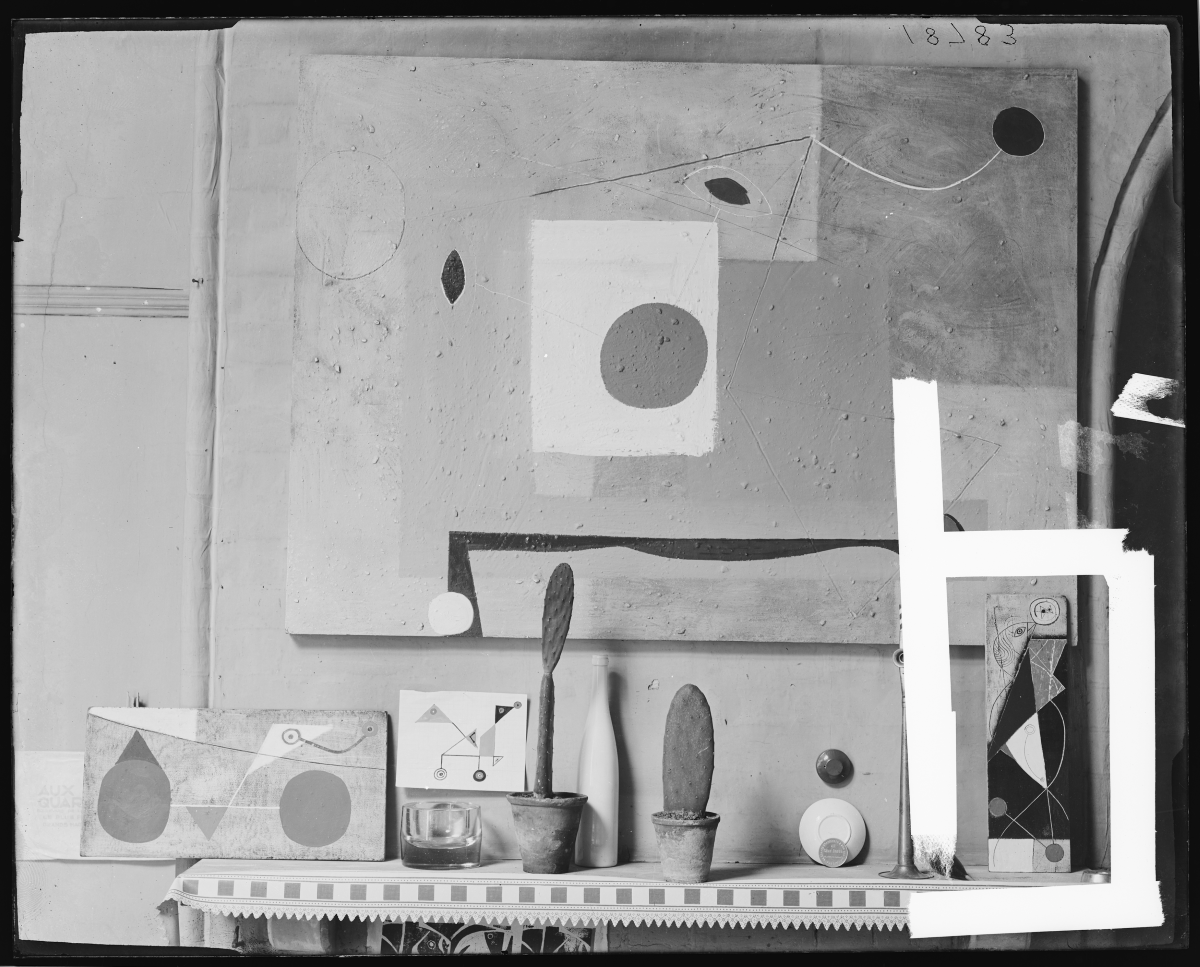
As much as it was a space dedicated to making, the studio at 7 The Mall also served as a place in which the artists could experiment with methods of display, with decorative items such as fishing floats, striped pencils and even a kazoo prized almost as highly as the artworks themselves. The mantelpiece provided a particularly rich opportunity for these undertakings, with artworks and objects constantly rearranged upon it. As Hepworth reflected in 1934, ‘Objects that we place near to each other, in their different aspects and relationships create new experience’.
'Where does art end and decoration begin?'
Hepworth and Nicholson’s belief in the significance of the domestic space led them to produce a number of hand-printed fabrics and rugs in this period. At their joint exhibition at Alex. Reid & Lefevre Ltd. in 1933, these were exhibited beside painting, sculpture and collage. Observing the consternation caused by modern art in some quarters, one critic wrote, ‘it is curious to think that many who will appreciate the delightful rugs and fabrics designed by these artists will take exception to the framing as pictures of precisely similar arrangements of line and colour. Where indeed, does art end and decoration begin?’
Photographing 7 The Mall
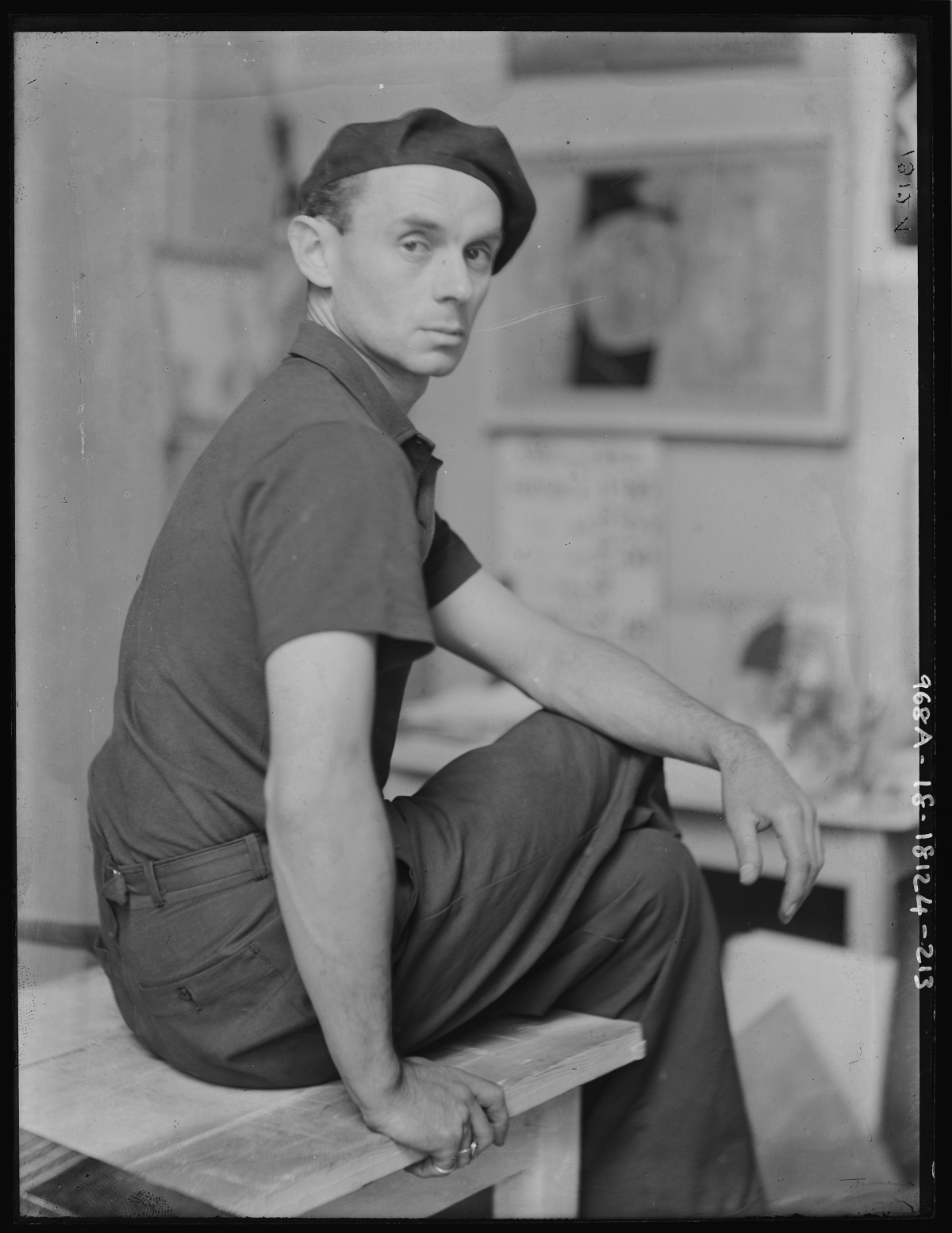
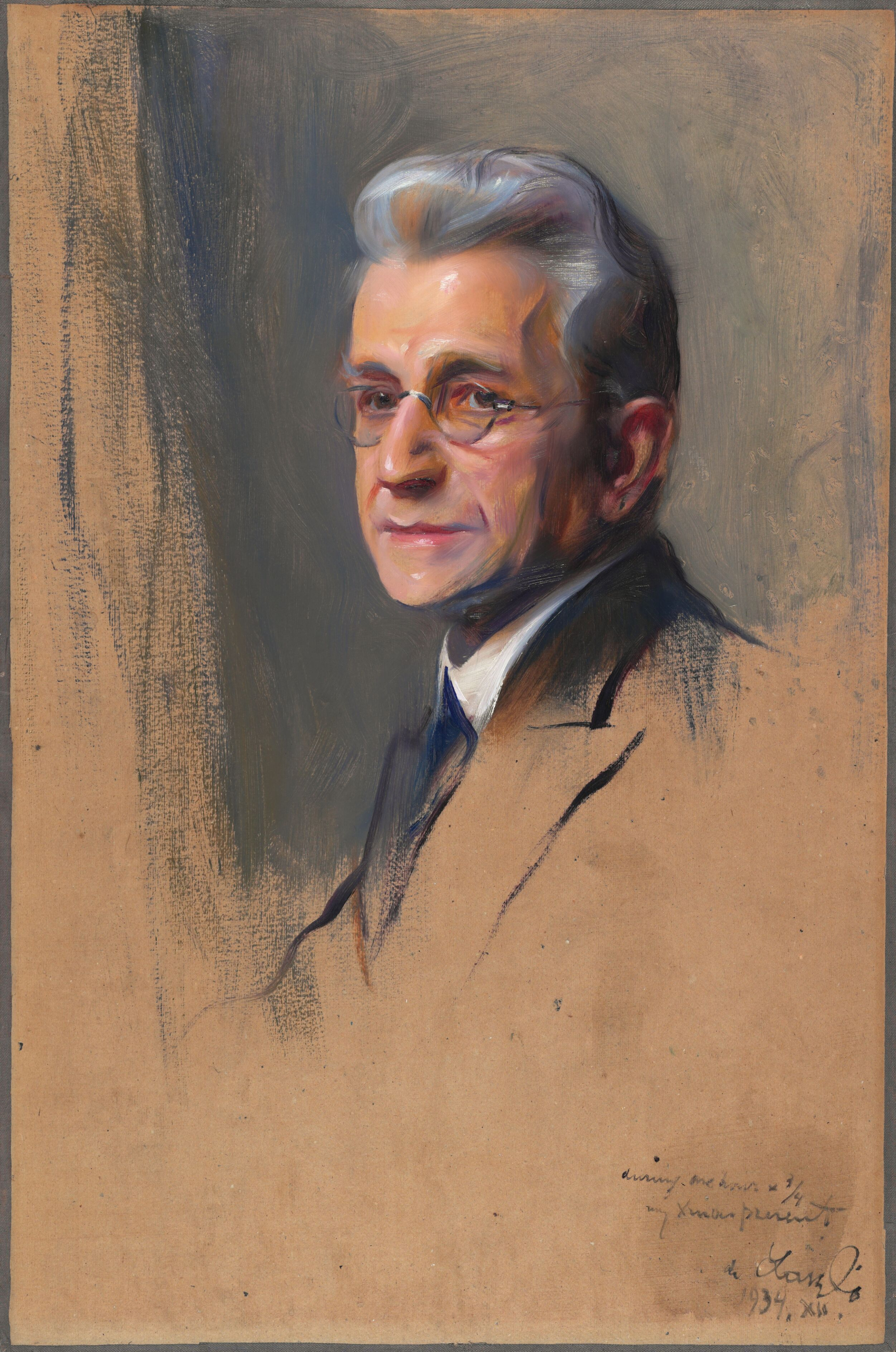
The photographs seen here were taken by the prolific but today little-known art photographer Paul Laib (1869-1958). Laib ran a busy photographic studio in Thistle Grove, South Kensington, between 1901 and 1958. The studio photographed the work of eminent painters such as John Singer Sargent and Philip de László (who painted the only known likeness of Laib, now in the Courtauld collection), as well as a younger generation of artists that included the sculptor Jacob Epstein and John Piper. Laib’s entire archive of around 22,000 glass plate negatives joined the Courtauld’s extensive photographic collections in 1974 as a gift from the descendants of de László, who had acquired it shortly before.
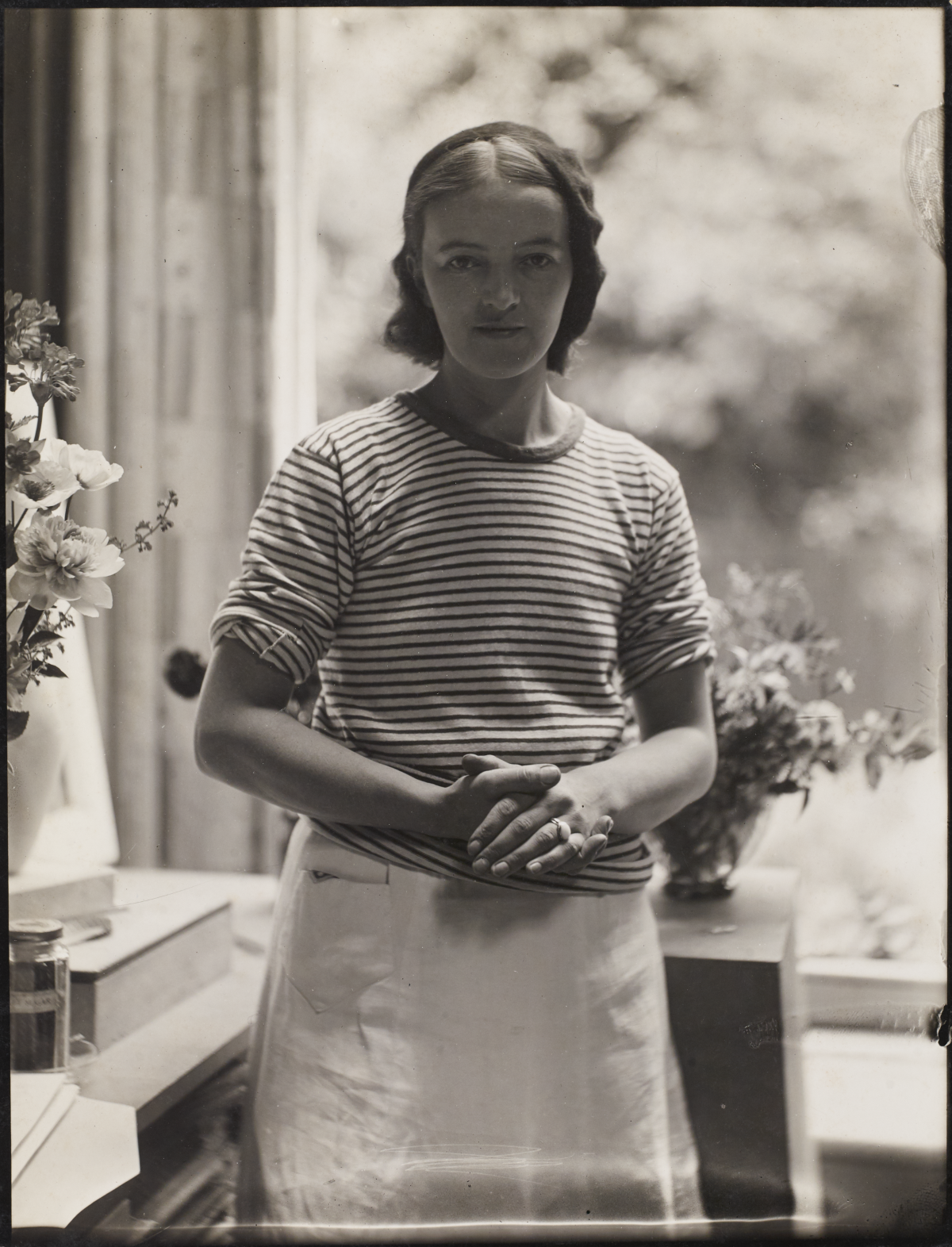
Laib was commissioned by Hepworth and Nicholson to produce not only photographs of artworks, which were his specialism, but also portraits and photographs of the studio. Taken over several visits to 7 The Mall between 1932 and 1936, the total number of known photographs from this period amounts to around 130. Hepworth and Nicholson were fastidious about photography but regarded Laib highly, with Nicholson describing him as an ‘expert in modern paintings’. The photographs that resulted from their collaboration are among the most evocative and iconic studio images taken in Britain during the 20th century, and record a celebrated episode in the history of modern art.
Hepworth and Nicholson: The Hampstead Studio Photographs is on display in the Project Space, Floor 2, from 6 June – 4 October 2026.