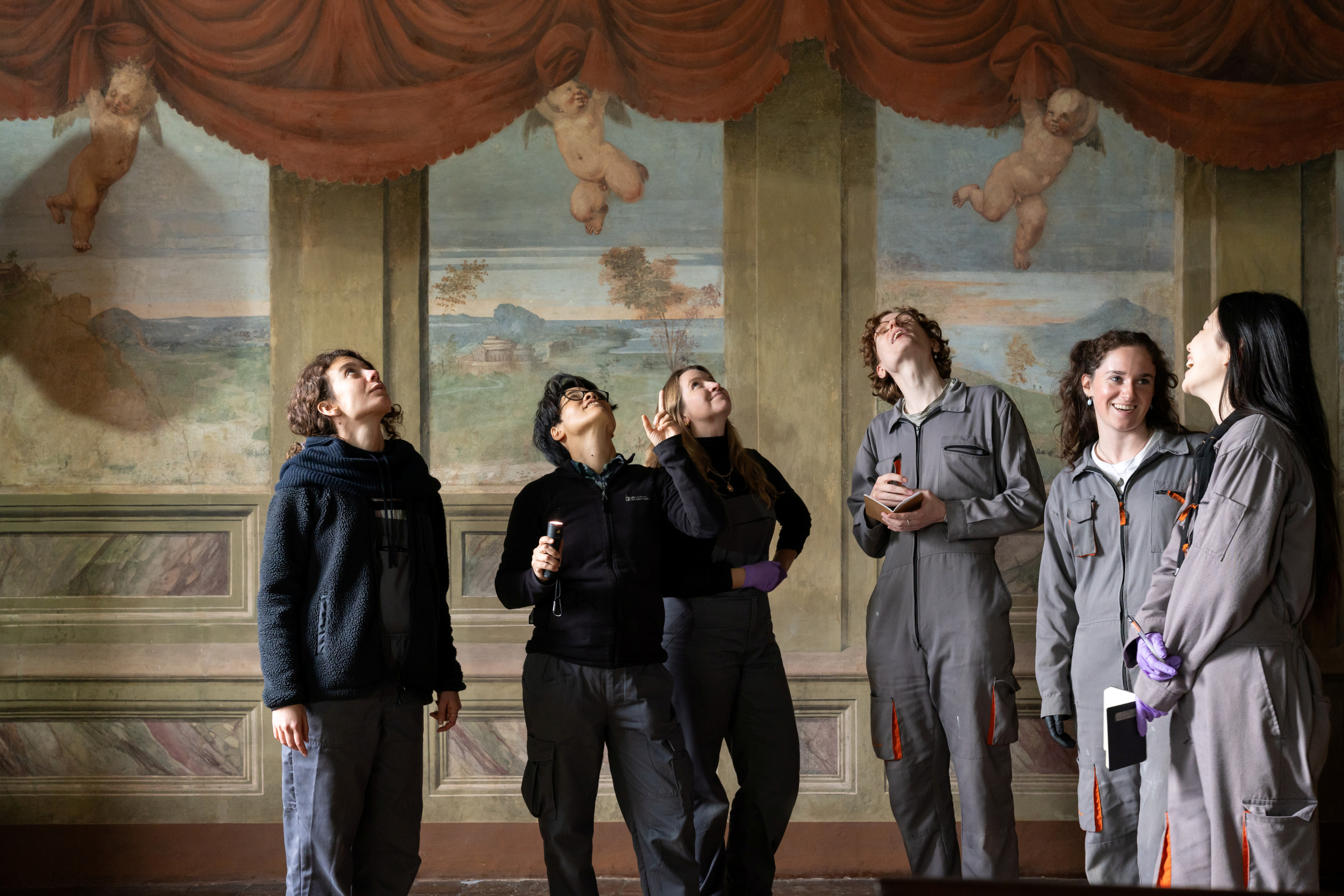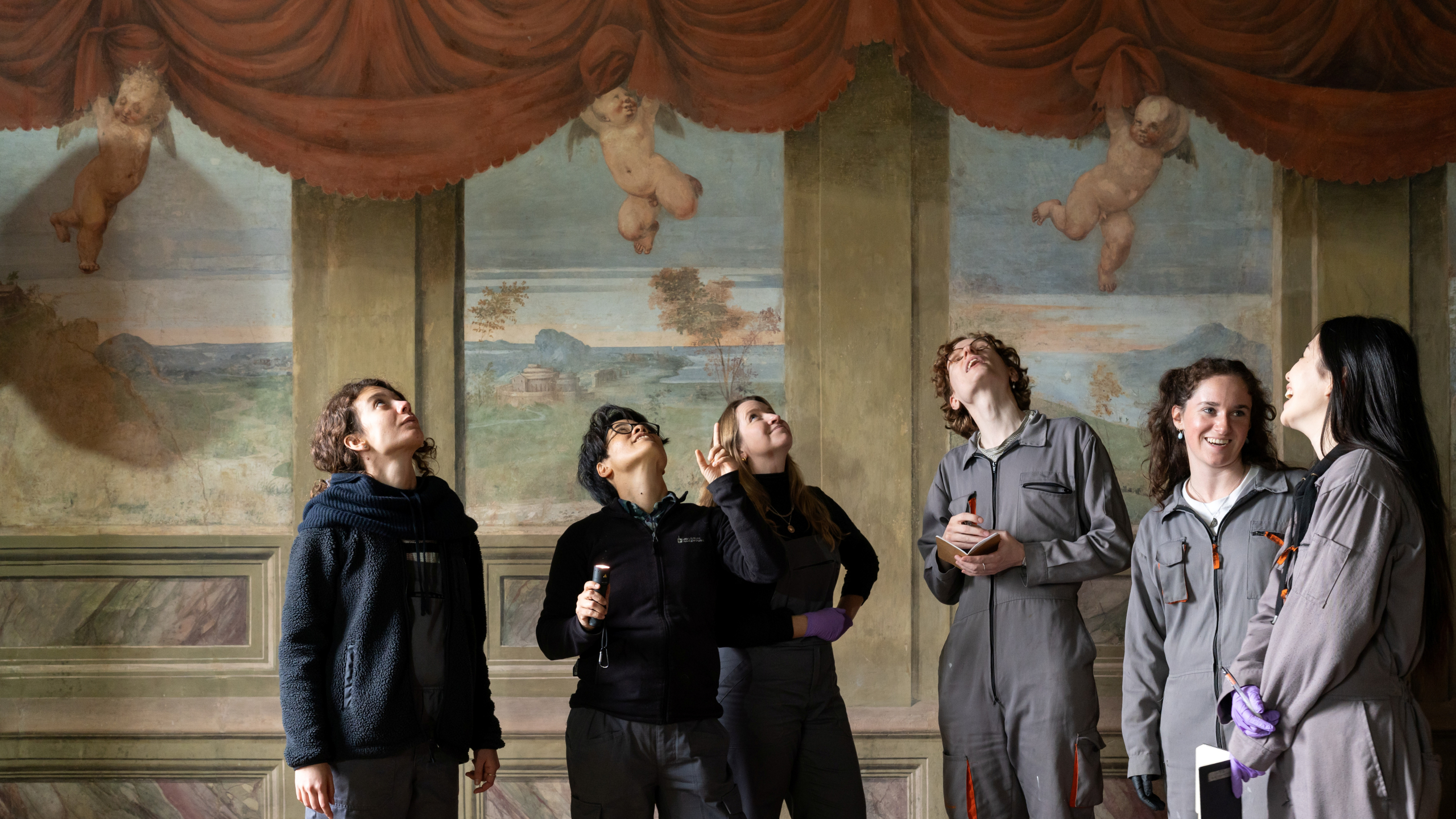
This autumn, students from the Courtauld Institute’s MA Conservation of Wall Paintings undertook fieldwork at Villa Imperiale in Pesaro, Italy, working alongside students and staff from SUPSI (University of Applied Sciences and Arts of Southern Switzerland).
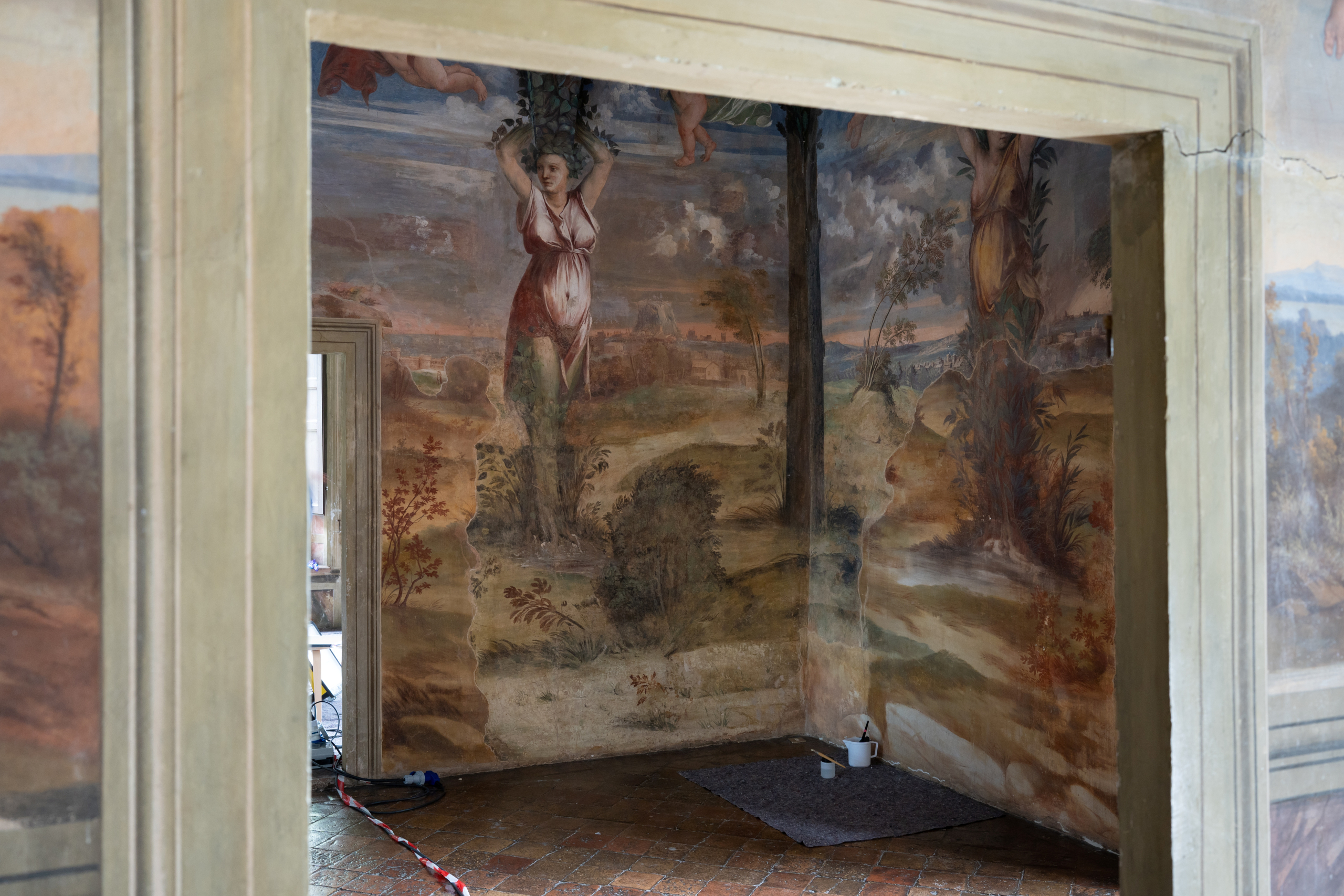
The late Renaissance villa houses a significant group of painted rooms whose complex physical history and conservation challenges provide an exceptional setting for training and research. The paintings were executed in the 1530s under Girolamo Genga’s supervision by several leading artists of the period, including Francesco Menzocchi, Raffaellino del Colle, Camillo Mantovano, Dosso and Battista Dossi, and Agnolo di Cosimo, known as Bronzino.
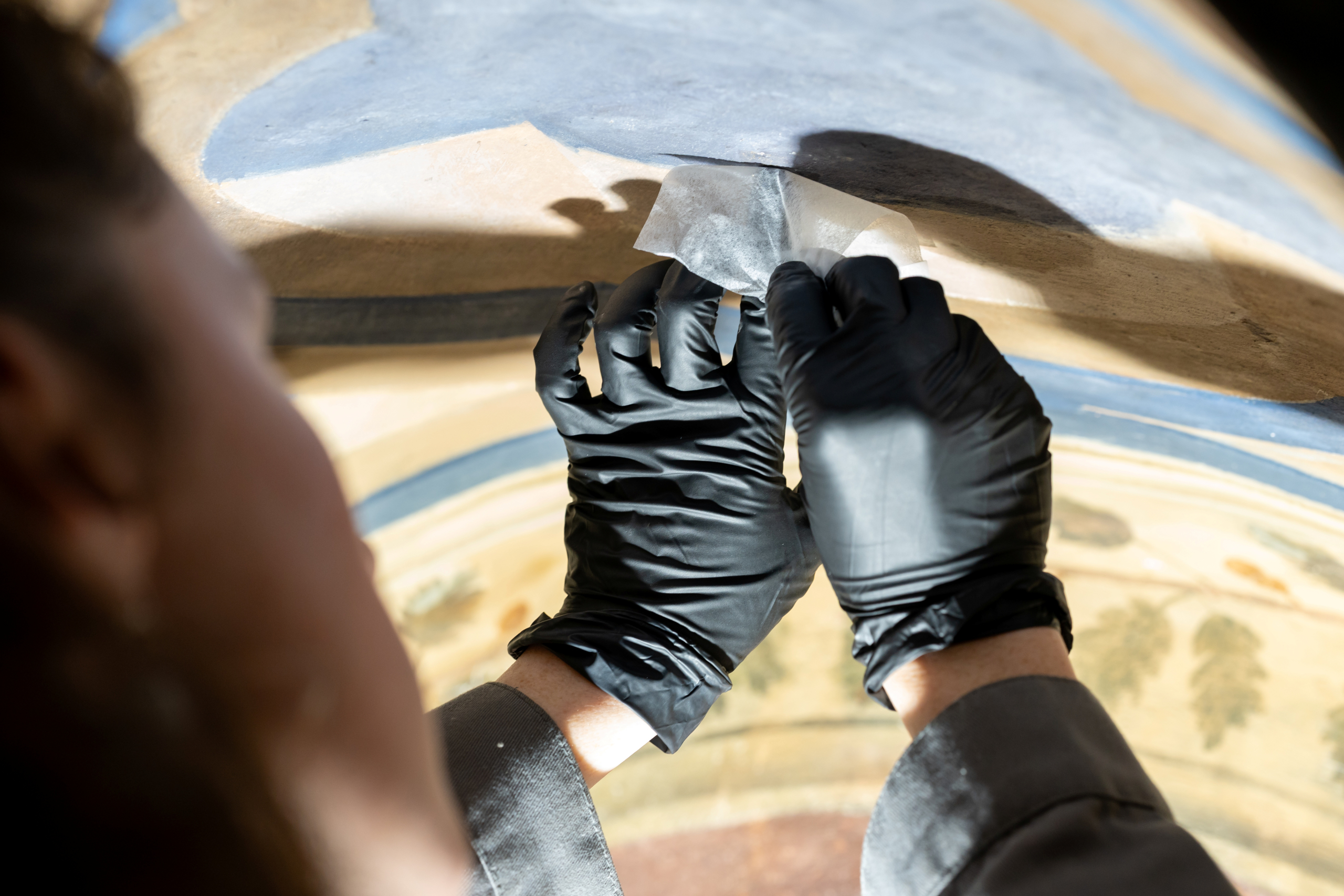
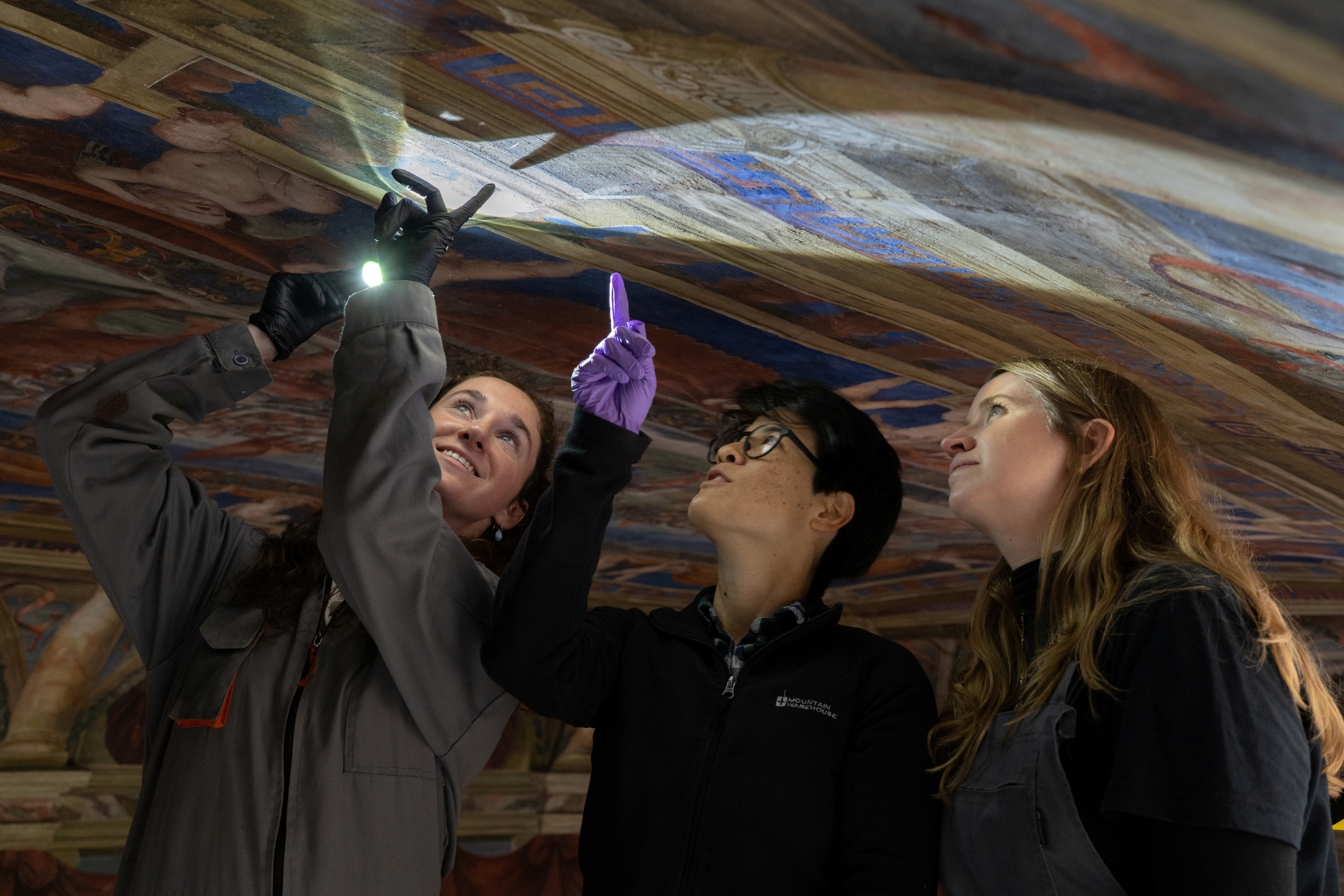
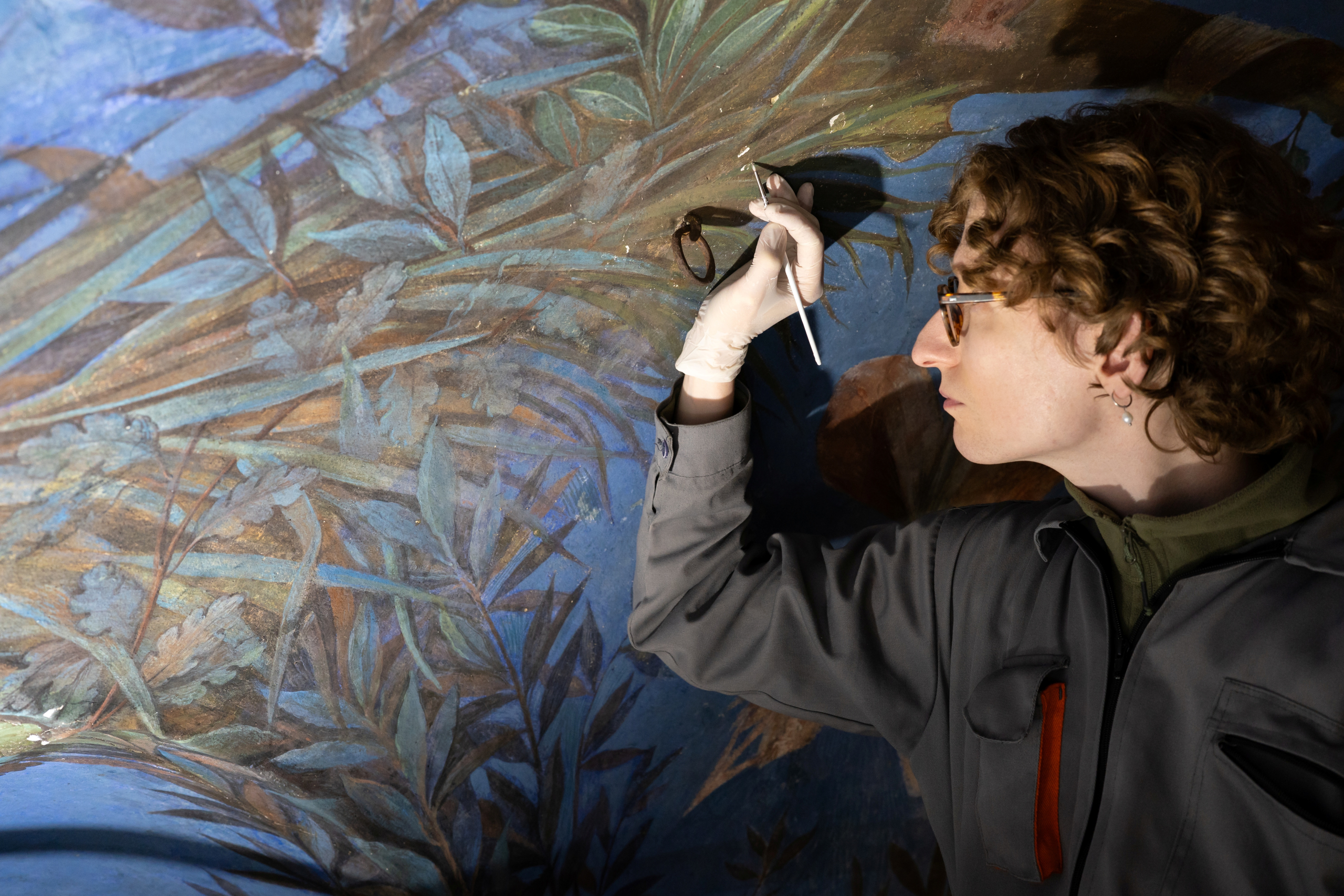
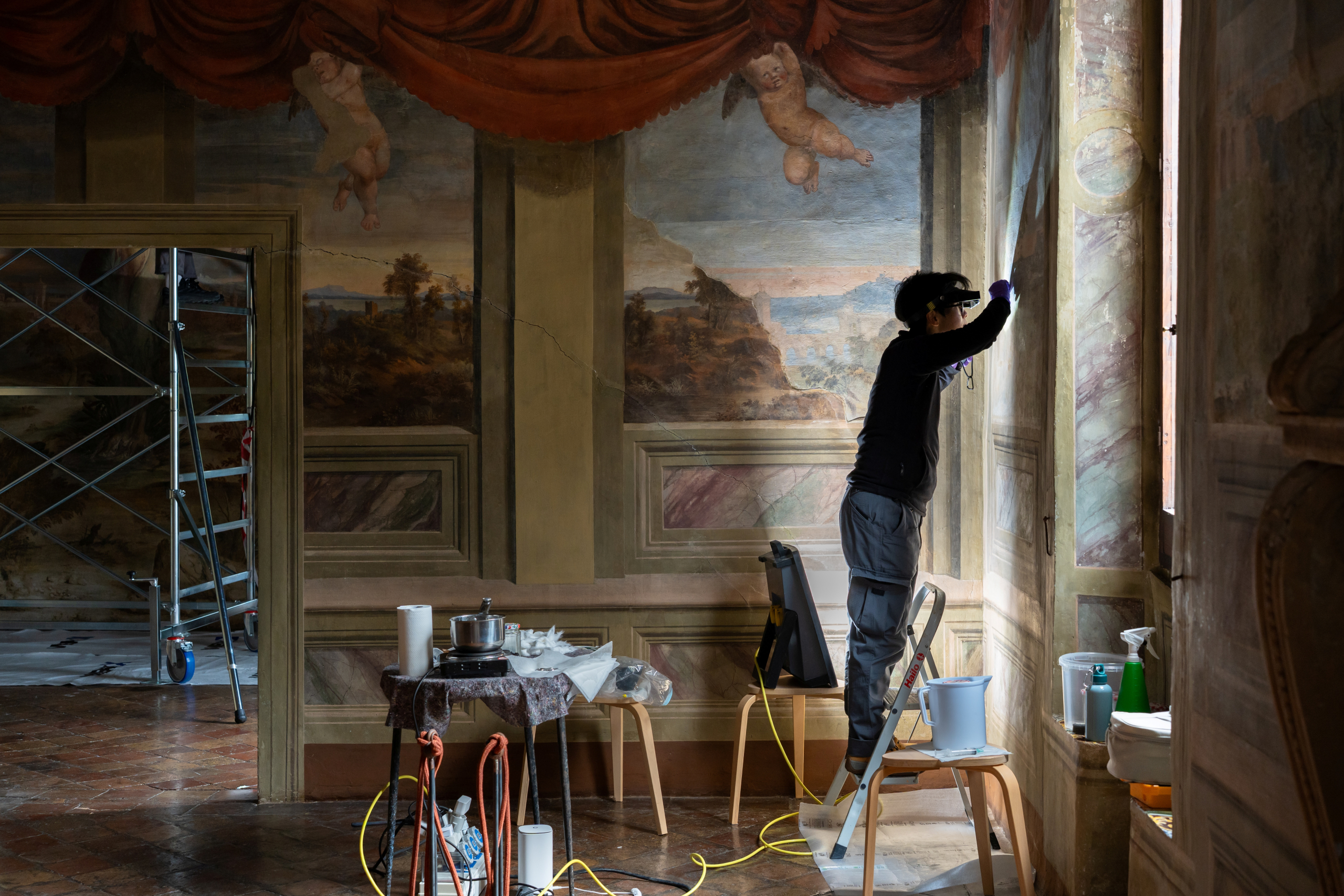
The 2026 fieldwork marks the third phase of the collaborative training programme between the Courtauld and SUPSI. During this phase, Courtauld students worked on two of the painted spaces Sala del Giuramento and Sala dei Cariatidi. They investigated painting technology and physical history, reviewed and updated condition assessments, and developed, tested and implemented conservation treatments. These activities bring together research, close examination, and conservation decisions to inform treatment methodology.
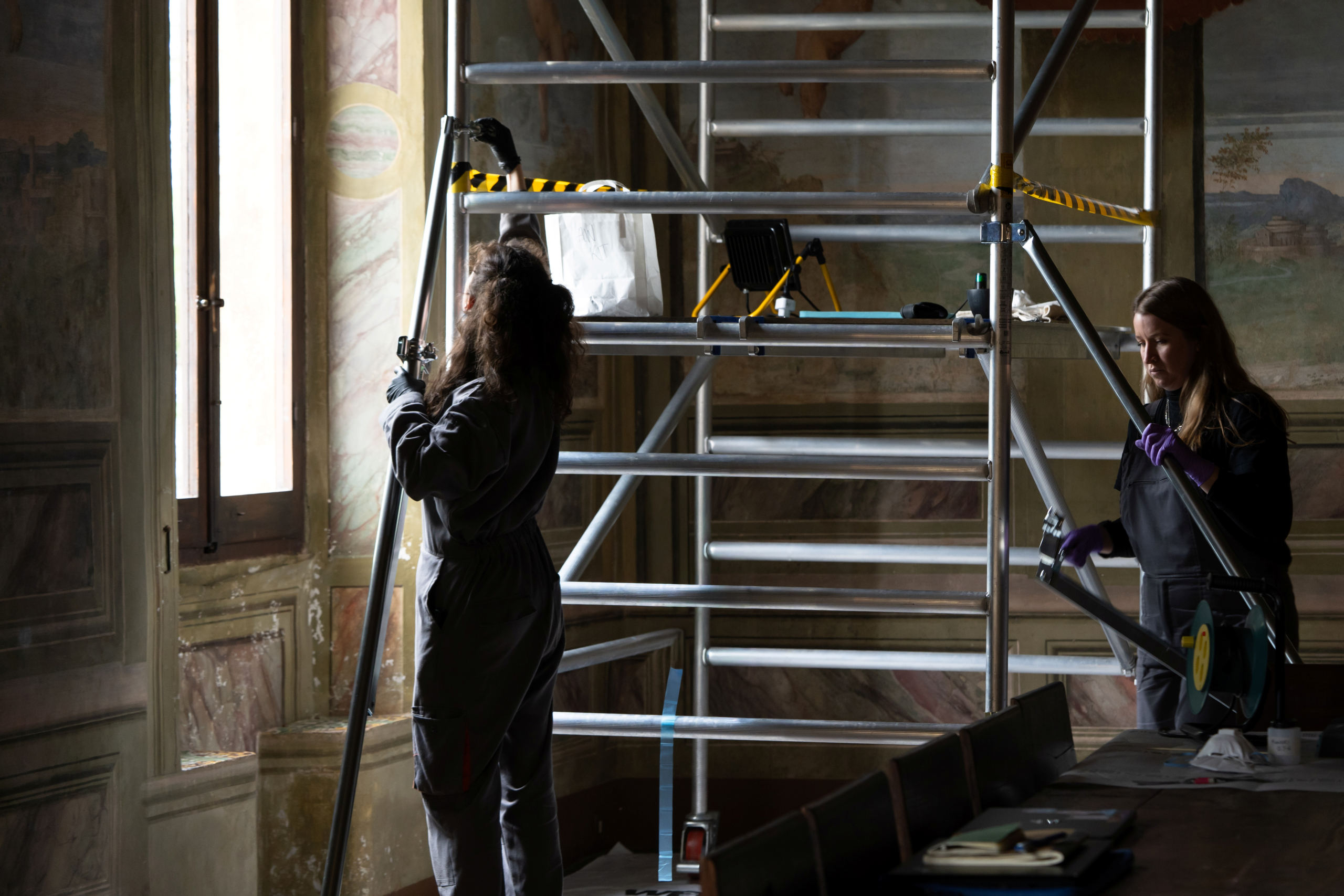
Supervised by conservators from both institutions, students developed their practical skills, exercising critical judgement, and gaining confidence in their decision-making. The partnership also provides opportunities for students and staff to exchange knowledge, approaches and experience. This exchange is an important part of the programme, supporting conservation education through shared investigation and practice.
Denise Invamoto, Lecturer and Fieldwork Supervisor in Conservation of Wall Paintings, Courtauld, said. “It was rewarding to see the students finding out in practice why a methodologcal approach to treatment matters. At Villa Imperiale, painting technology and condition vary significantly across the walls. The students had to think critically about treatment options in each area, and they carried out the chosen treatment with care and confidence.”
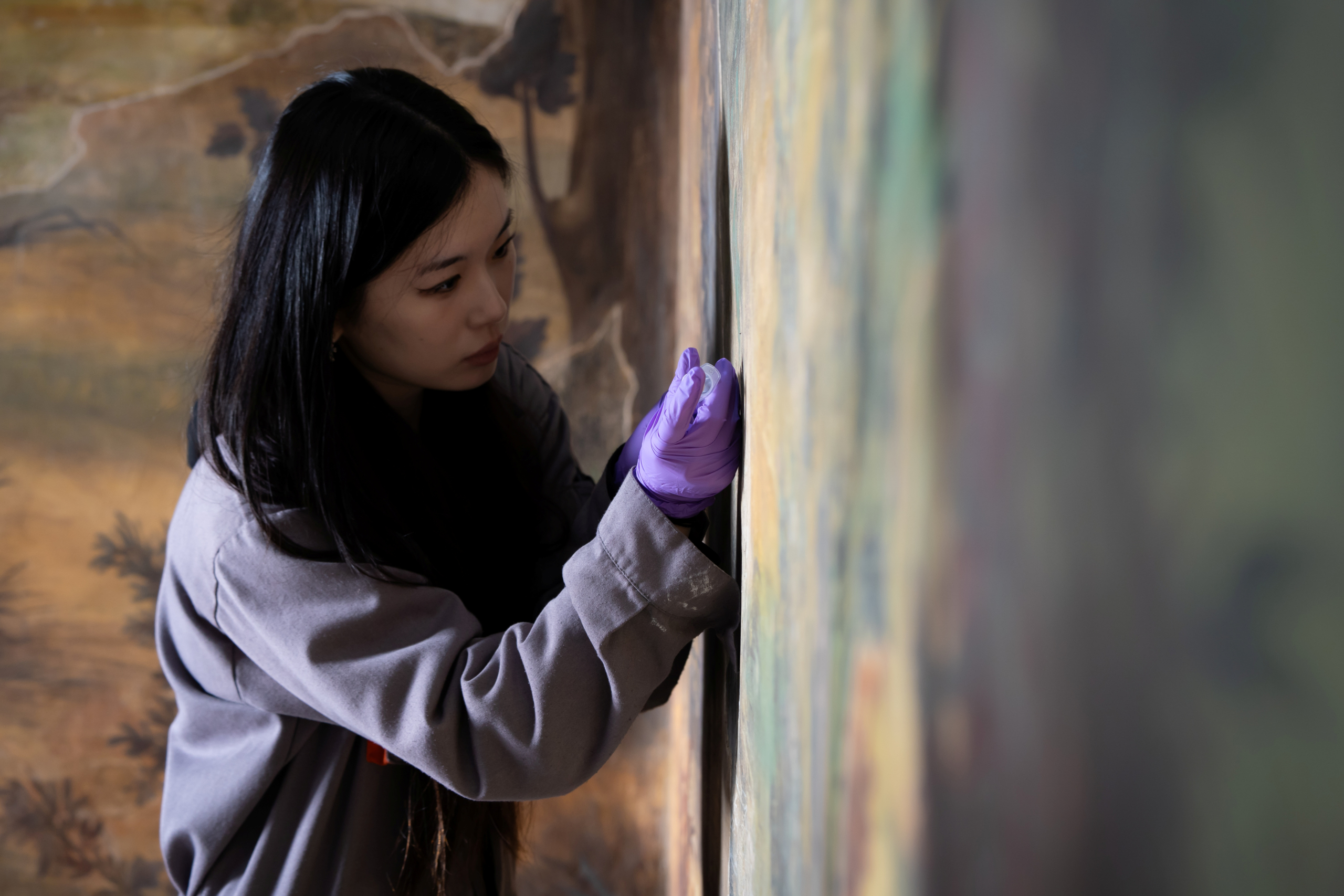
Serena Brooks, a student on the programme, said: “Working on the wall painting schemes at Villa Imperiale offered new challenges to us in our third year of the MA. This phase of the project involved reviewing the condition of the paintings, confirming the efficacy of treatments in earlier phases, and continuing with treatment interventions. We were particularly focused on re-adhesion of flaking paint, which could present very differently across the schemes and required careful and precise treatment to re-lay. It was a real privilege to develop our professional experience on such a beautiful and significant site.”
Students on the MA Conservation of Wall Paintings work directly on conservation projects throughout the three-year programme. Previous fieldwork projects include Longthorpe Tower in Peterborough, Tamzhing Monastery, Bumthang, in Bhutan and Mogao Grottoes, Dunhuang, China.
The next intake for the MA Conservation of Wall Paintings programme is in September 2028. Learn more about the programme here.