By Shuitian Yu
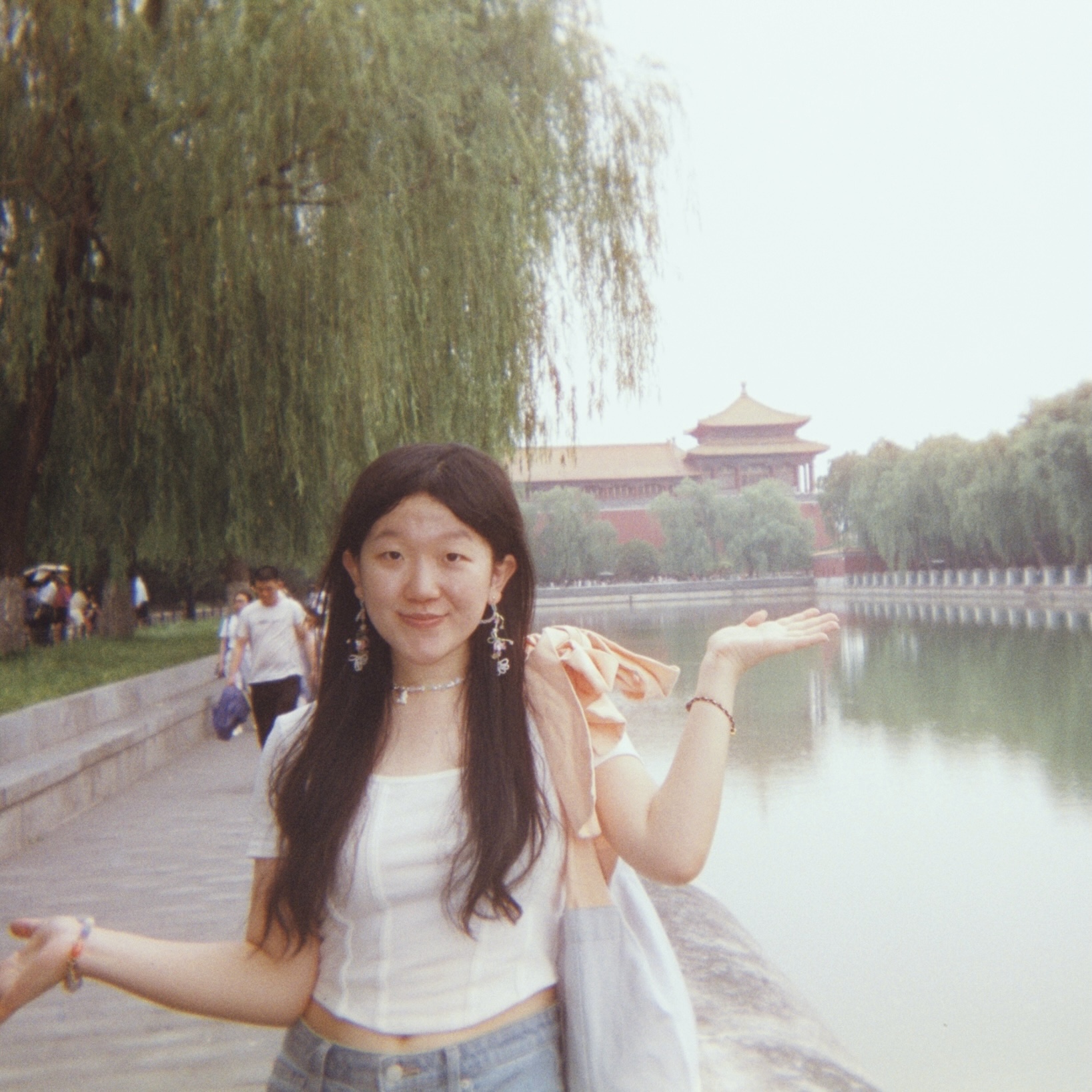
After graduating with an undergraduate degree in History of Art from the University of Edinburgh, Shuitian joined the Courtauld Institute in September 2025. Wanting to move away from European art history and interested in the cultural exchanges along the Silk Road, she chose to study MA Art History and Conservation of Buddhist Heritage.
While spending time in China, Shuitian developed a strong fascination with visiting Buddhist grottoes and pagodas. She intends to expand her understanding beyond Chinese contexts, to explore how different cultures perceive and engage with Buddhist heritage, and study conservation. Shuitian’s current research interests focus on Mahayana Buddhism, with an emphasis on how Buddhist material culture was regionally adapted and reinterpreted across Silk Road contexts.
As an interdisciplinary course, MA Art History and Conservation of Buddhist Heritage invites its students to engage with Buddhist material culture, to understand diverse perspectives on its meaning, and to examine how different stakeholders come together to preserve Buddhist heritage.
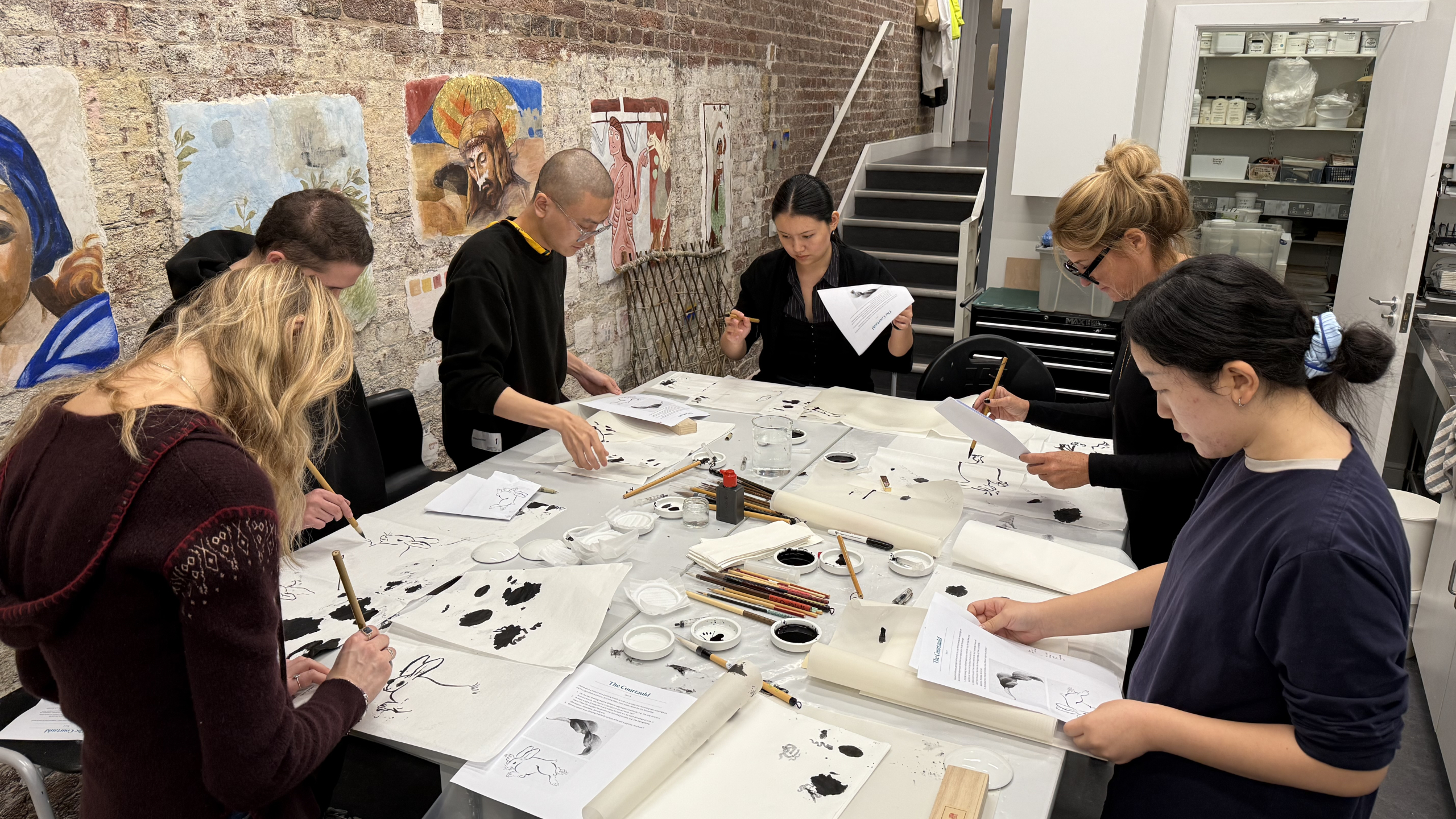
In the Autumn semester, we studied Conservation in a Buddhist Context – one of two foundational modules. This featured practical sessions led by Dr Lan Pu. Over four weeks, we created replicas of Buddhist murals in the workroom. Each student selected a section from a Buddhist site and experimented with its historic materials and techniques, guided by scientific and conservation reports. This process gave us a deeper understanding of the paintings’ characteristics, many of which are not visible to the naked eye.
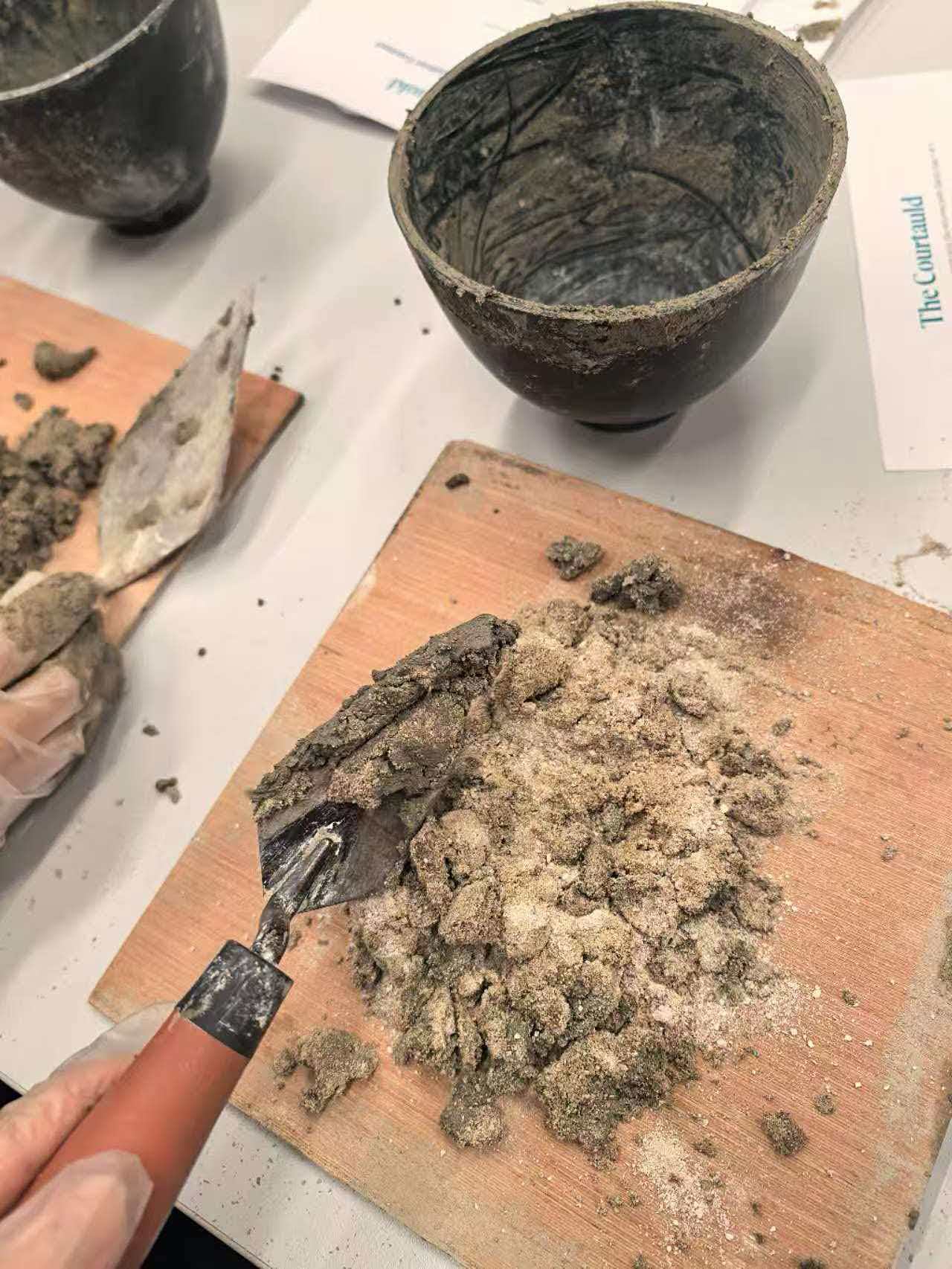
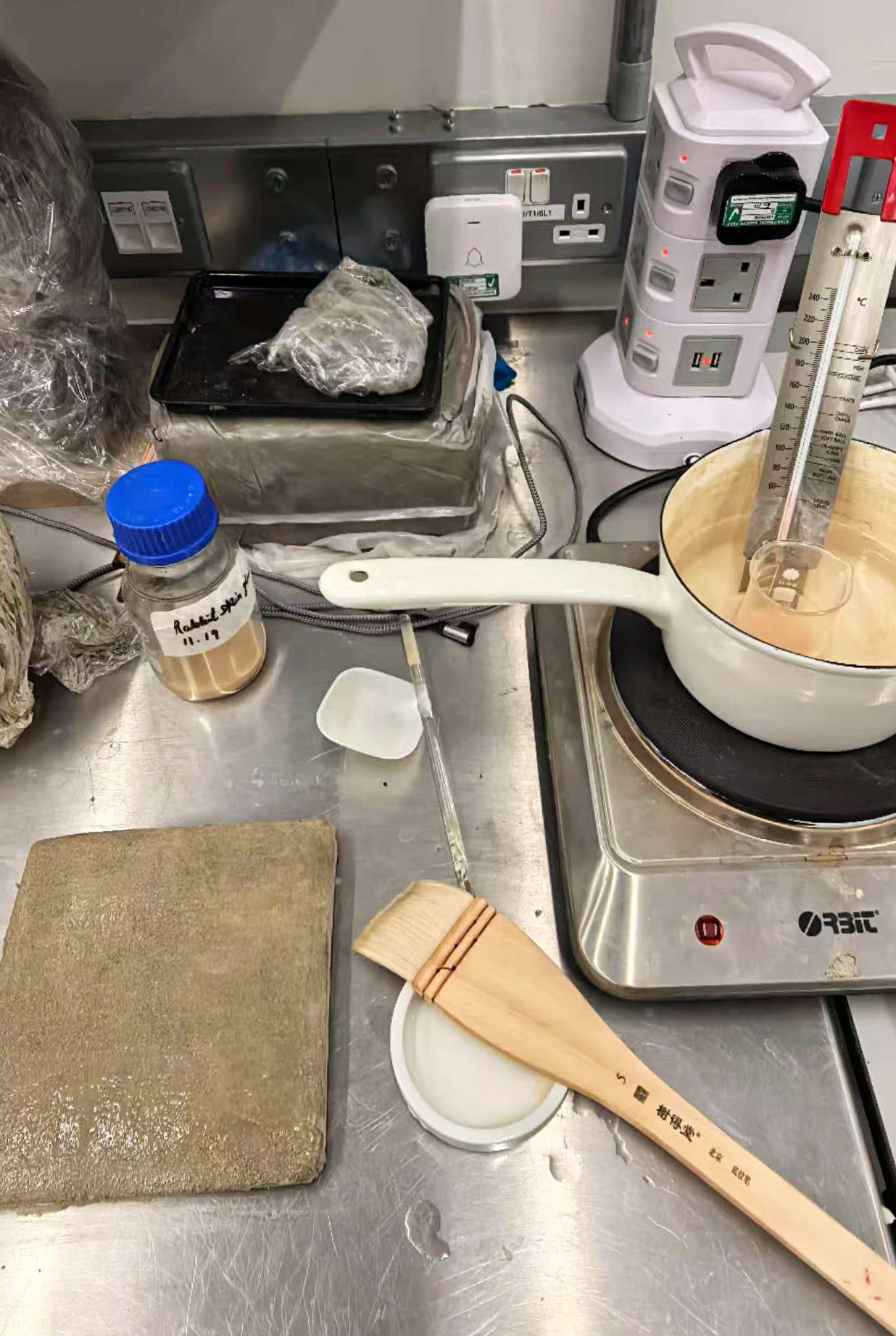
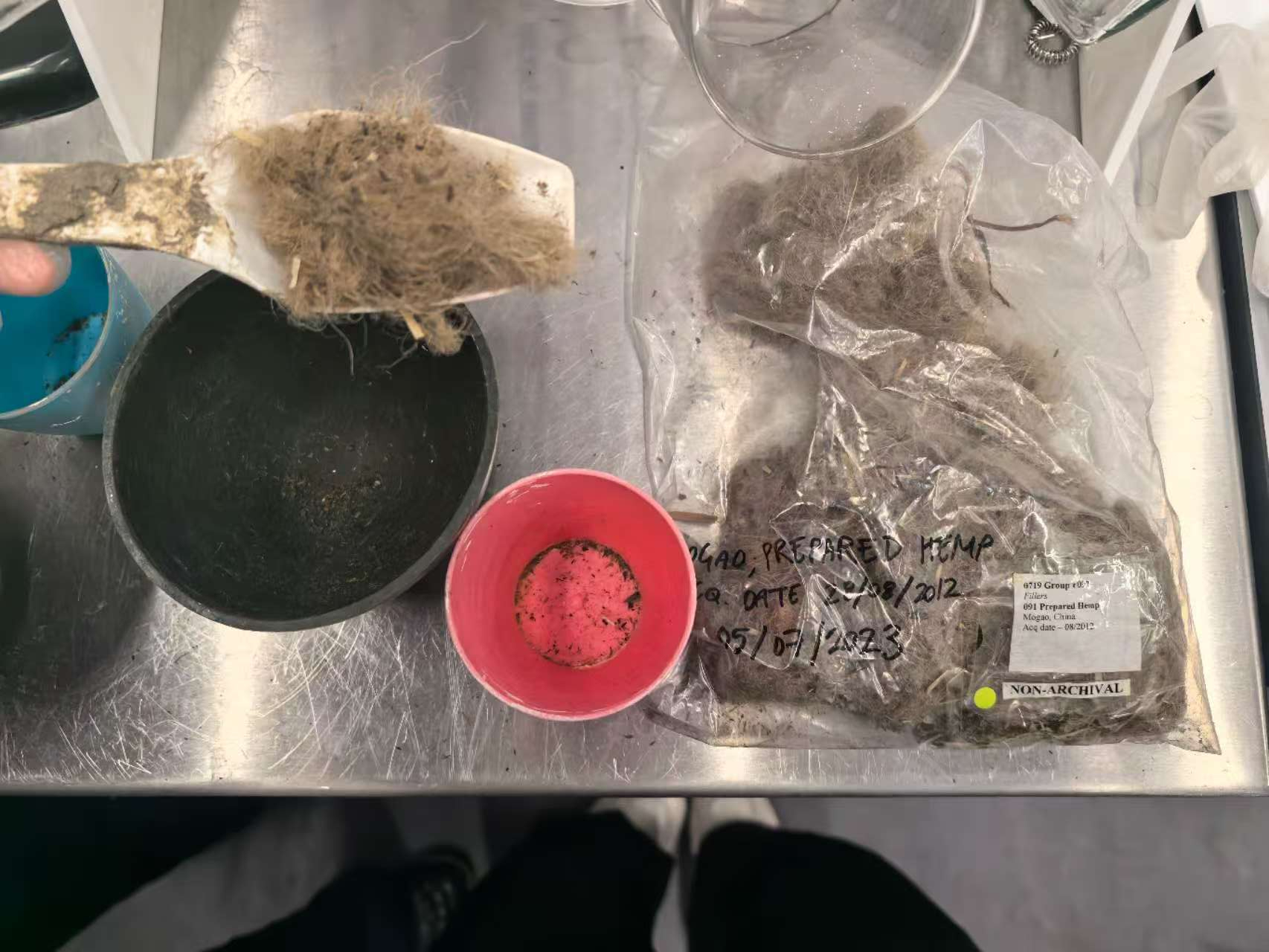
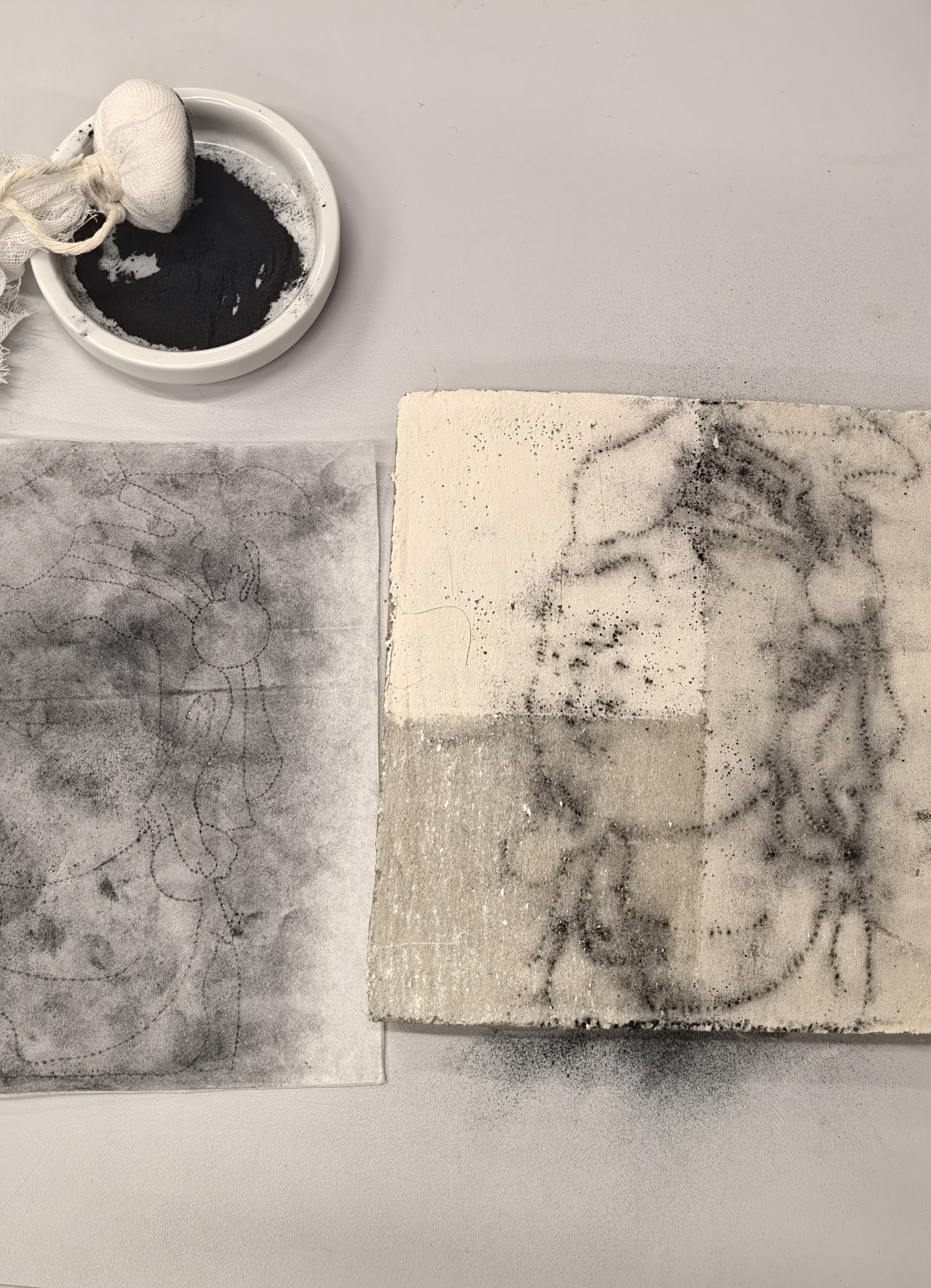
My experience in these sessions allowed me to explore the stratigraphy and materials of wall painting through my replica. I prepared an earthen plaster by mixing clay with hemp and aggregates such as stone dust and paving sand to reduce shrinkage, then applied it to a tile. Once set, I added a protective sealant—an alum solution with adhesive—to prevent pigment penetration. My replica was based on the Mogao Grottoes in Dunhuang, where animal glue is commonly used. I prepared rabbit-skin glue by soaking it in water and heating it until it melted. During pigment mixing, I observed that as the temperature dropped, the glue quickly gelled and required reheating to liquefy.
Moreover, artists of Buddhist wall paintings employed a range of planning techniques at different sites. These planning techniques refer to the preparatory methods used to organise composition and proportion before painting, and they ensure accuracy. A key stage is the under-drawing; the preliminary design applied directly onto the plaster surface to guide the final image and iconography. Under-drawings could have been produced using incision lines, compasses, pouncing (transferring a design through a pricked pattern), or freehand sketching. Therefore, we each adopted different approaches to under-drawing in relation to our chosen site.
This replica-making process mirrors how conservators test materials to guide which preservation techniques to use, to minimise damage and deterioration to an artwork. It encourages us to learn through mistakes and reflection; issues such as cracking and paint flaking in my replica may have resulted from uneven plaster application or incorrect adhesive ratios. Overall, hands-on experimentation proved more effective than relying solely on reports or lectures.
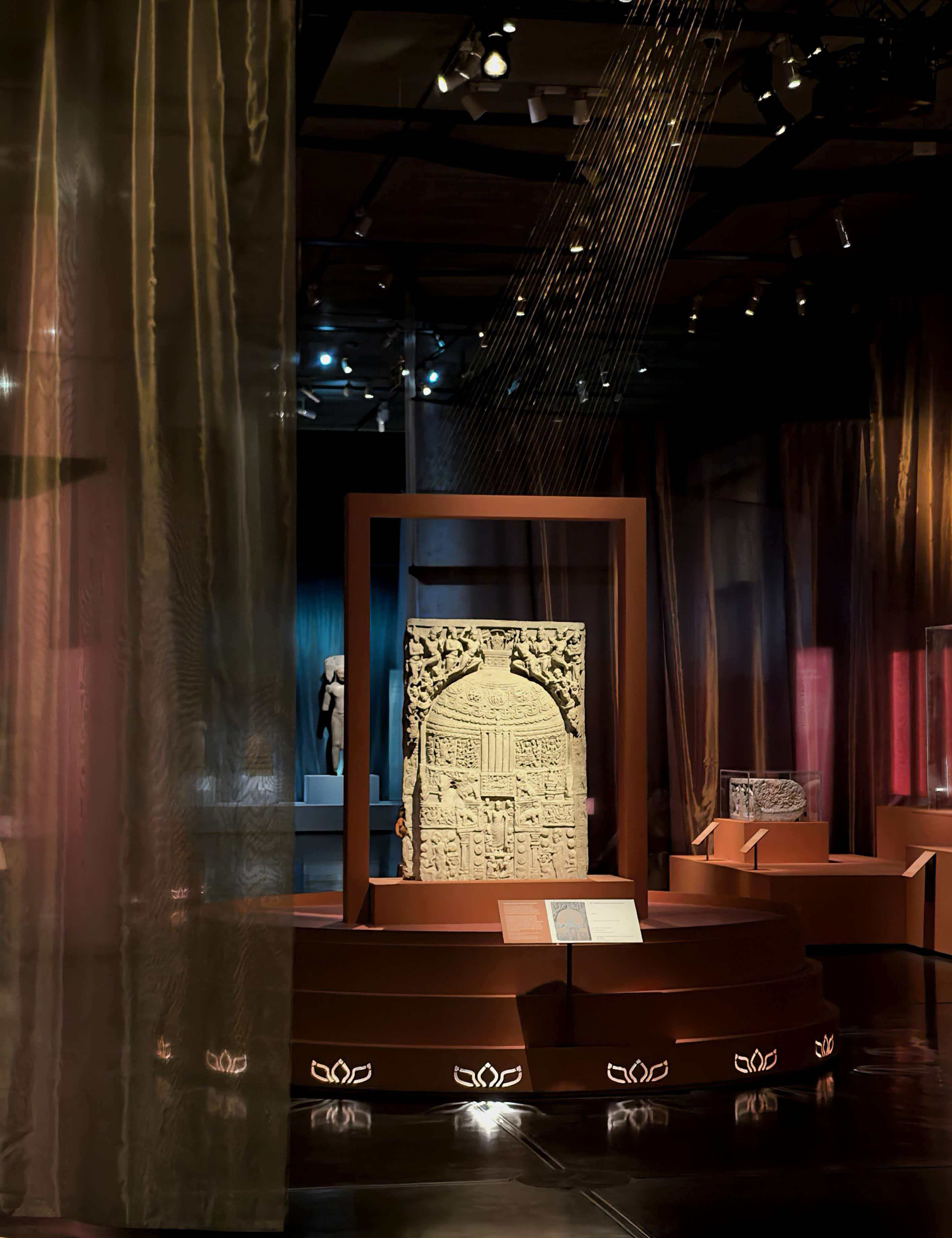
The second module we took in the Autumn semester was Buddhist Art Worlds. The most intriguing part of this module was the off-campus visits led by Dr Sujatha Meegama. Meeting curators and conservators across institutions was enlightening. In October, we visited the Ancient India: Living Traditions exhibition at the British Museum, which explores connections between Hinduism, Jainism and Buddhism through shared roots in local traditions, including nature spirits and similarities in visual representation. A key takeaway was the need to respect cultural values in religious exhibitions by consulting religious communities when making curatorial and conservation decisions. For instance, as Jainism prohibits harm to living beings, animal glue is avoided in conservation, and synthetic materials like polyester are used instead of cotton.
Another inspiring session was our visit to the Sainsbury Centre at Norwich, where objects are treated as living representations. The conservator highlighted ethical challenges in pest management for Buddhist objects. For instance, woodworm damages the structure of a sculpture, yet pest removal may conflict with Buddhist teachings. This requires careful consideration of appropriate treatment. The conservator also discussed the ethics of cleaning. Dirt on significant Buddhist objects may be left and not cleaned off, as it reflects a history of worship – such as exposure to incense on shrines – even though smoke can cause damage. These cases show the need to balance different perspectives when conserving Buddhist heritage.
Throughout the semester, I learned to see Buddhist heritage beyond iconography and historical significance – as something lived and continually reinterpreted. I realised working with Buddhist objects is a collaborative process, shaped by curators, conservators and the communities who value them. Most importantly, an object’s meaning does not reside within it alone. Its significance emerges through the people who engage with it – through use, belief and care. Buddhist heritage is therefore not just about the past, but about ongoing relationships and how these objects continue to live within communities today.