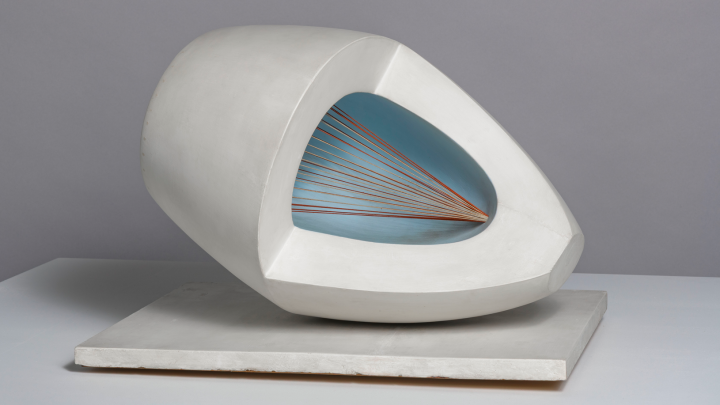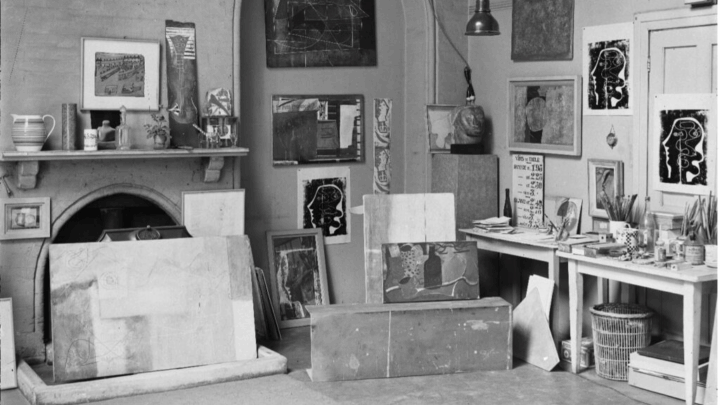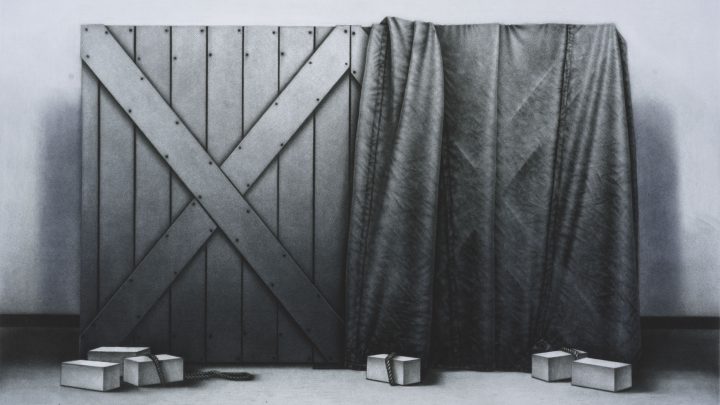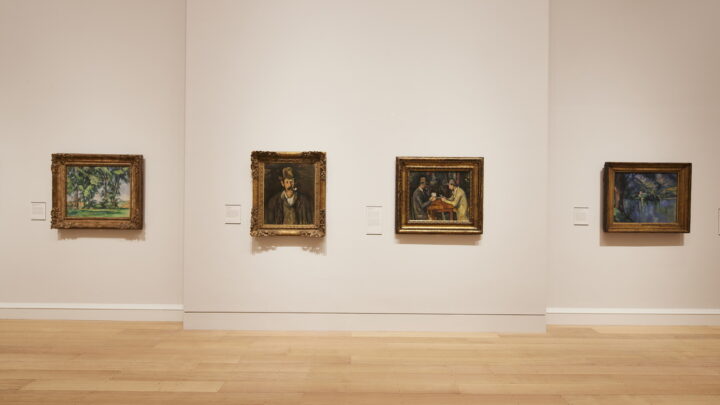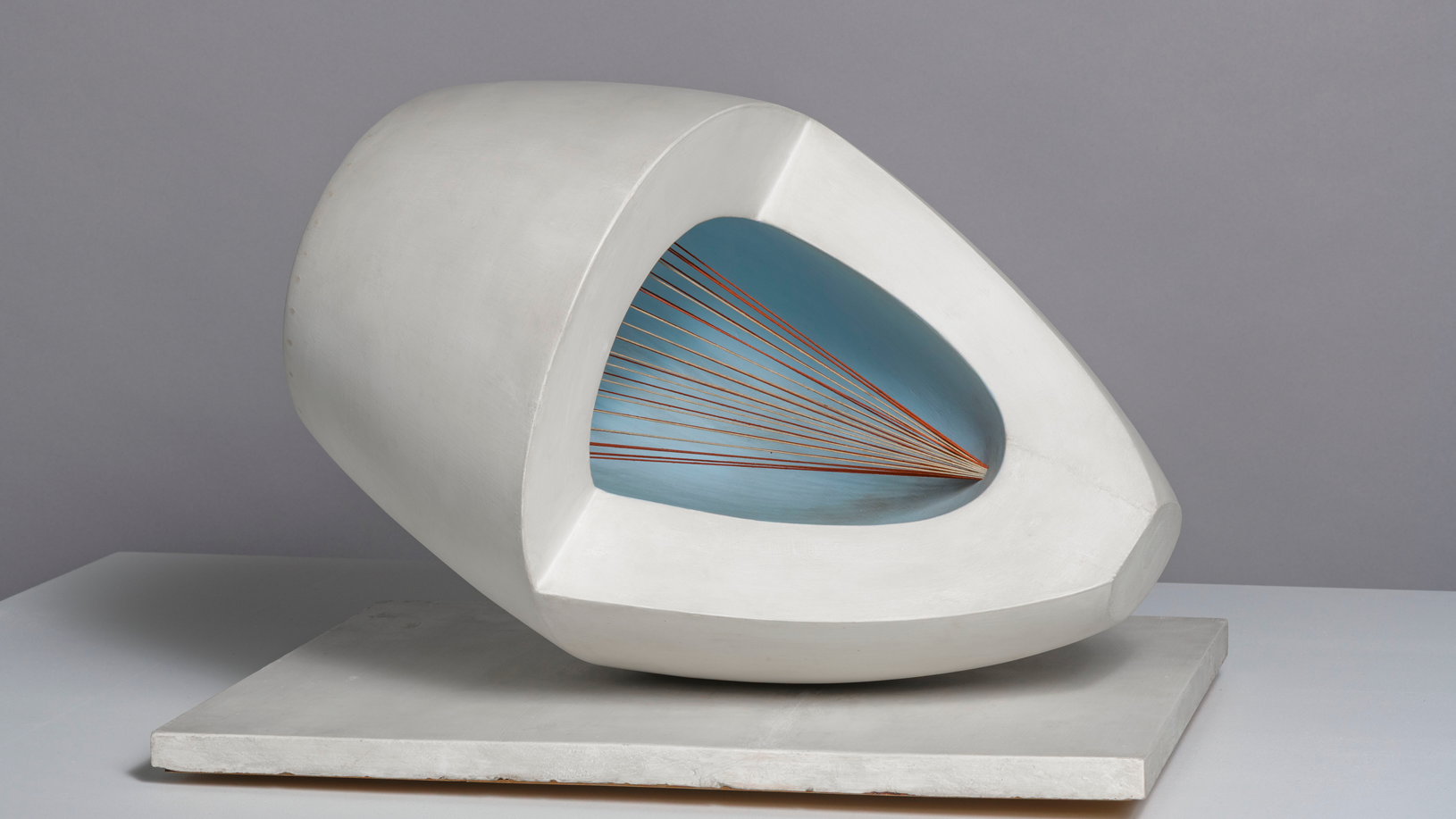
The Joseph Aaronson & Bremen Exhibition: Hepworth in Colour at the Courtauld Gallery is the first ever exhibition devoted to the artist’s lifelong fascination with colour, which she used in highly original and unexpected ways. This focused, research-driven exhibition is comprised of around 18 sculptures and 26 exceptional drawings and paintings, showing sculpture in dialogue with her painted and graphic works.
Here are 5 things to know about of one of the most celebrated artists of the 20th century and what you can look forward to in the exhibition.
She was dedicated to her craft from an early age
Born in Wakefield in 1903, Hepworth spent her childhood among the undulating hills and roads of Yorkshire during trips with her father, a civil engineer. She won a West Riding of Yorkshire County Art Scholarship to study at the Royal College of Art, where she enrolled in 1921, aged 18, and was one of only two students to graduate from the Sculpture course in 1923, alongside Henry Moore.
After leaving the RCA, she won a scholarship to continue her studies in Italy, where she spent time in Florence and Rome learning the Italian tradition of direct stone carving; an experience that would prove foundational to her work.
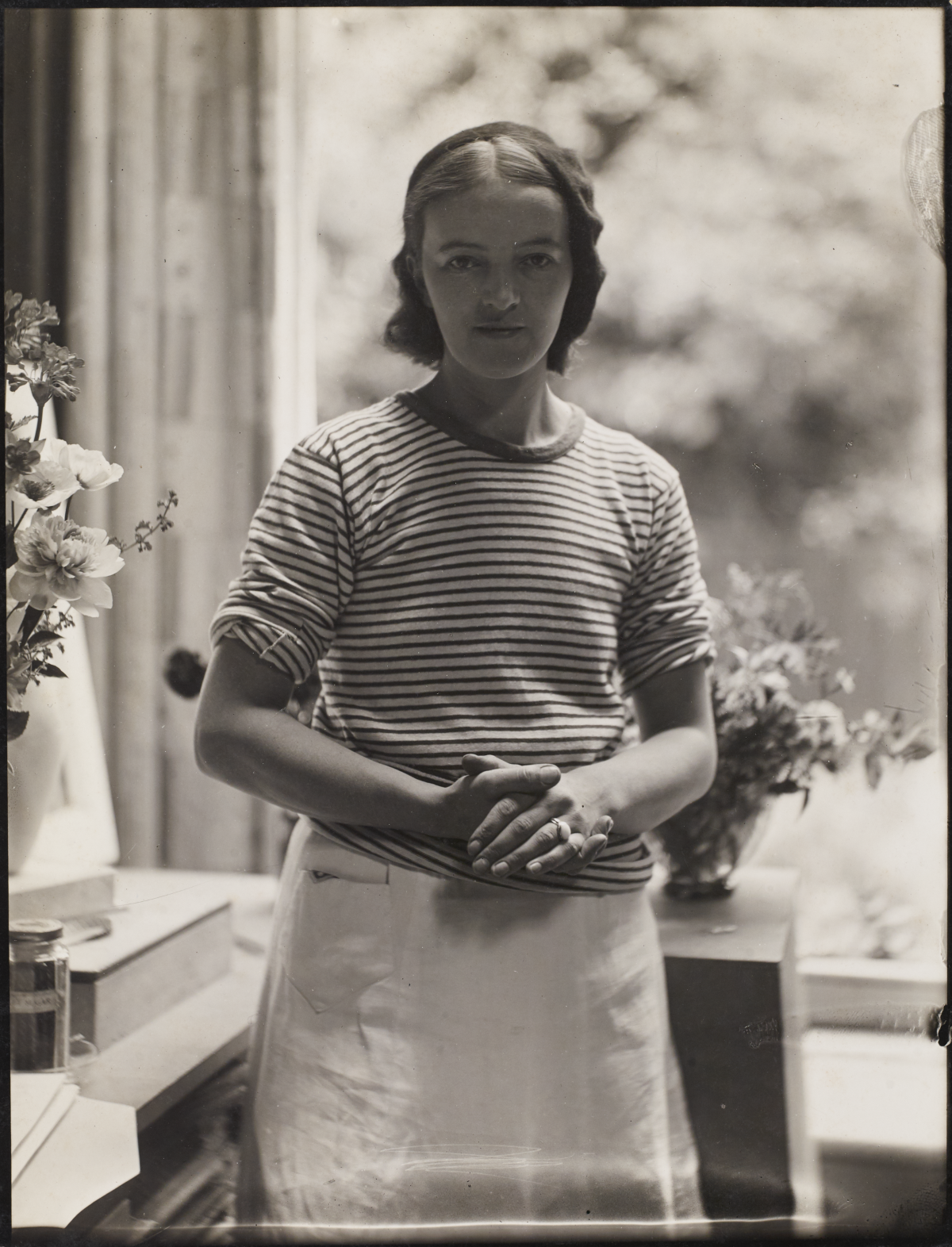
Obsessed with colour
Her colourful sculptures and drawings aren’t what most people think of when they think of Barbara Hepworth. But, as Hepworth in Colour demonstrates, she was captivated by colour.
As early as 1933, she was writing about colour as a mode of expression that possesses a ‘pure, eternal and all-powerful beauty’. In 1940, she wrote to the architect Leslie Martin, ‘I actually think I have discovered how to use both [colour and form] together to achieve a new power & experience & I have discovered certain laws. I don’t think anybody has done it before ..’.
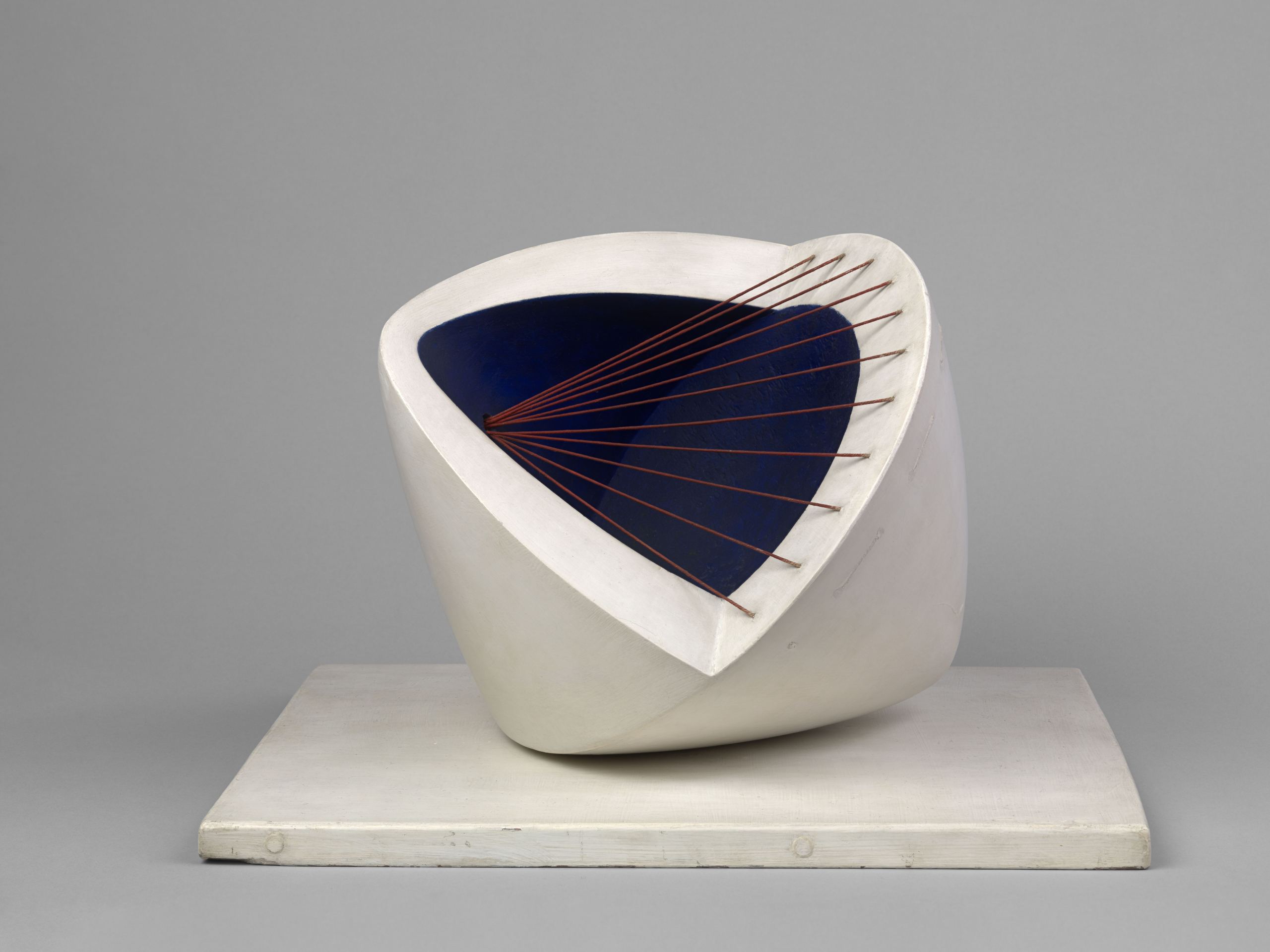
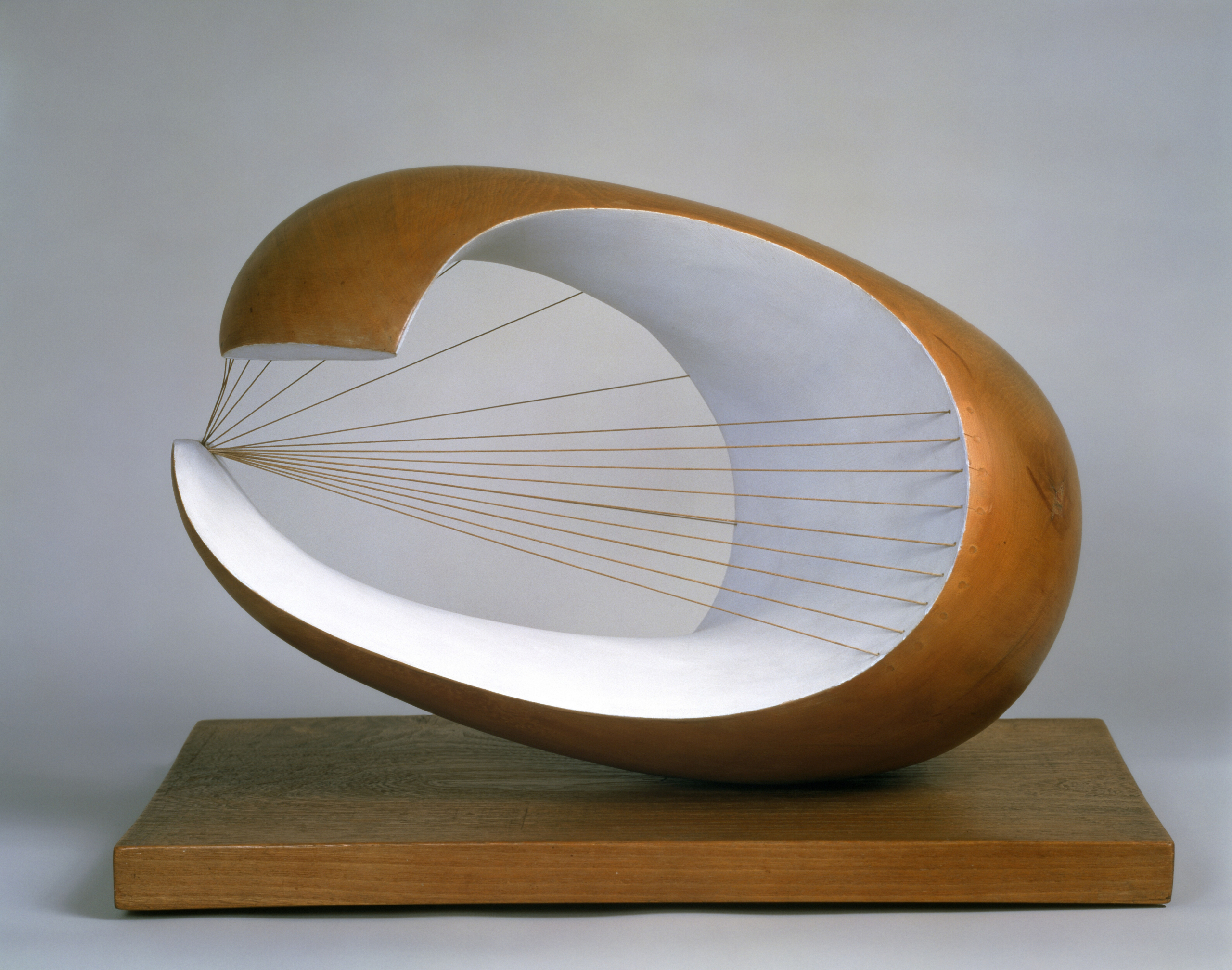
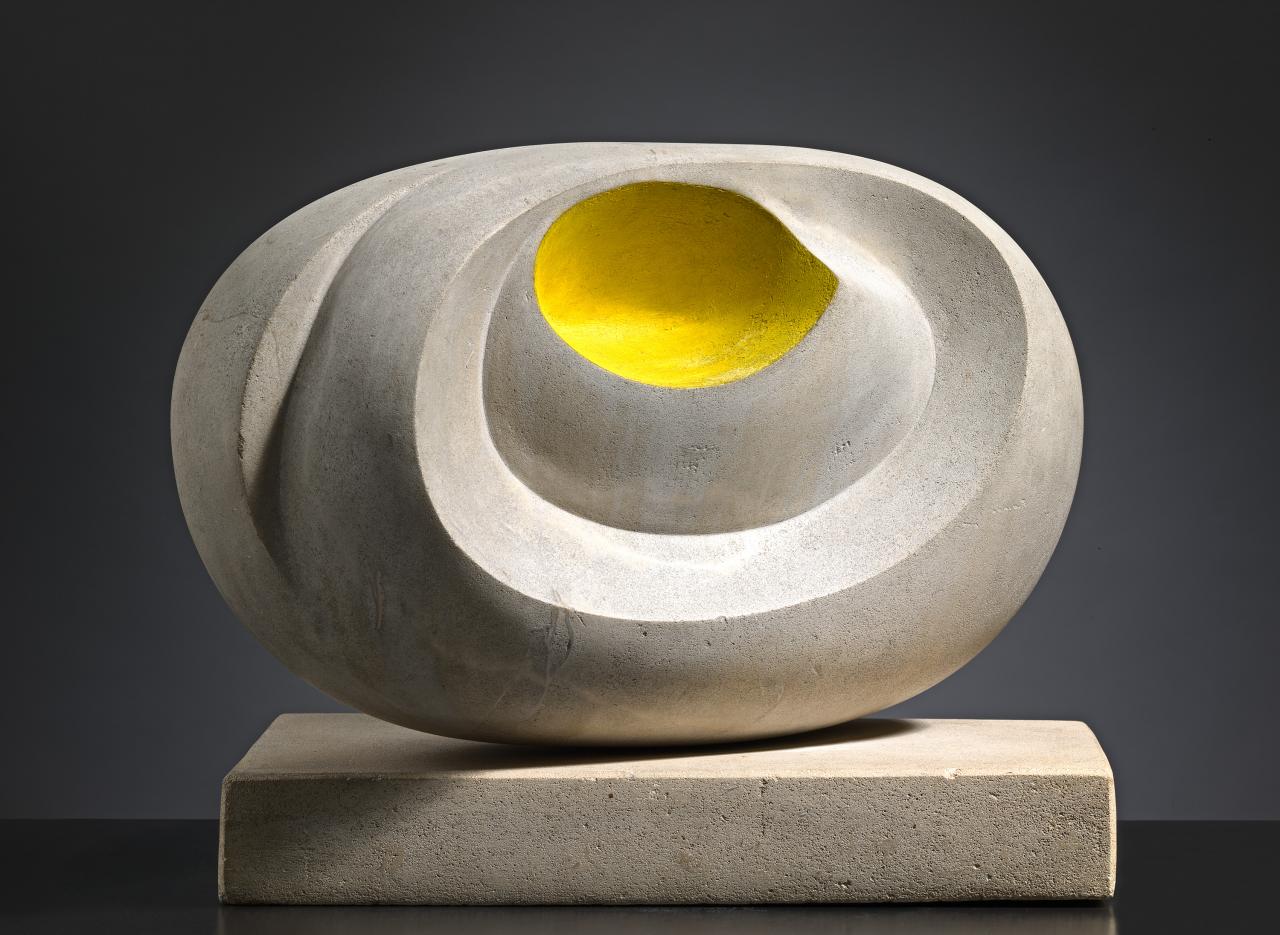
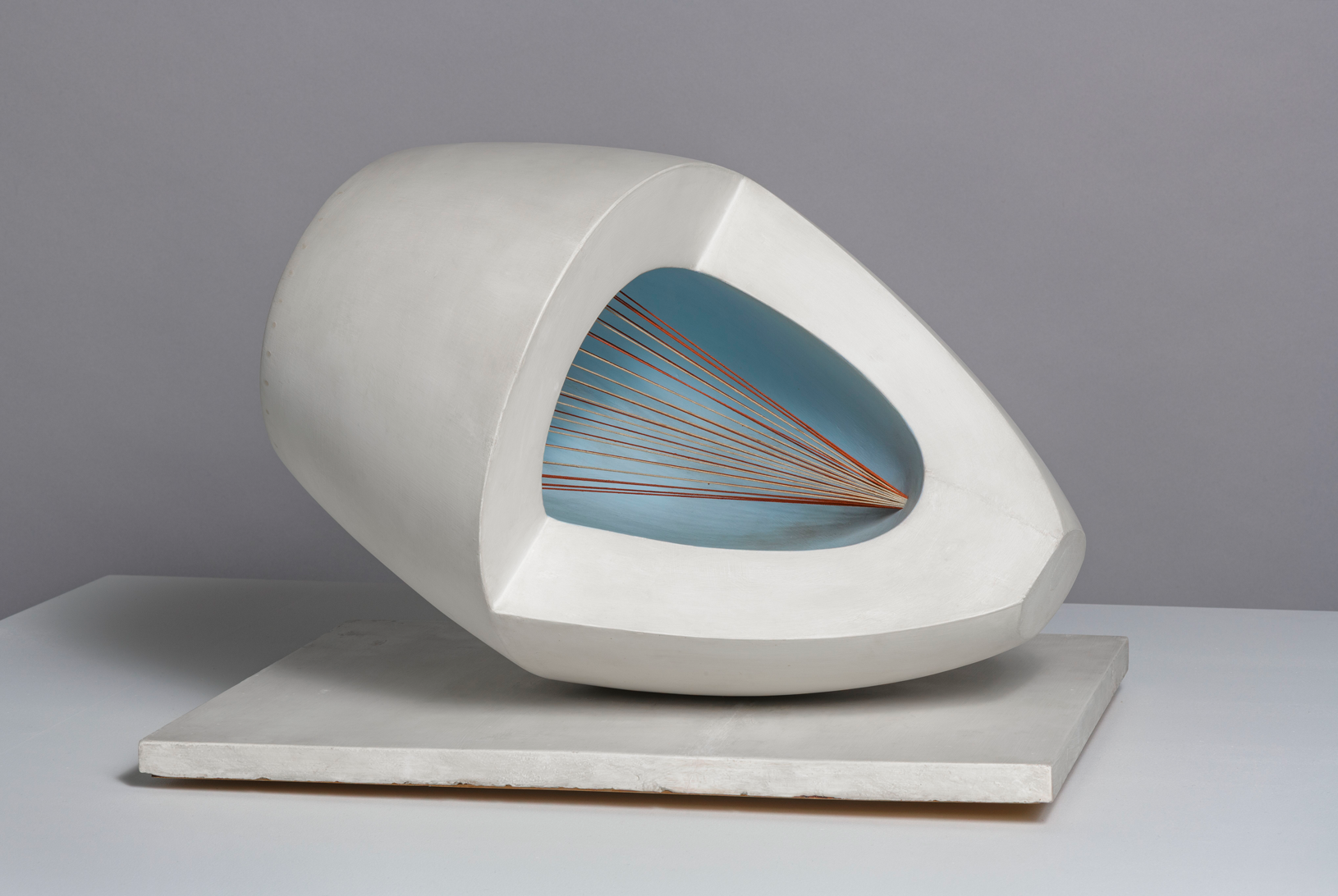
Colour to Hepworth was more about just adding bold pops of paint. Long before her initial Sculpture with Colour (Deep Blue and Red) series (1940-1943), she had been drawn towards the natural colours of her favourite materials (wood and stone), and also to strikingly coloured materials. Meticulously documented in her sculpture records, for instance, is an extensive array of colourful stones: blue Armenian marble, blue Hornton stone and blue Ancaster stone; brown Hornton stone; green marble; grey Cumberland stone with grey alabaster; black, pink and white alabaster; green and white onyx; and white marble.
Cornwall changed everything
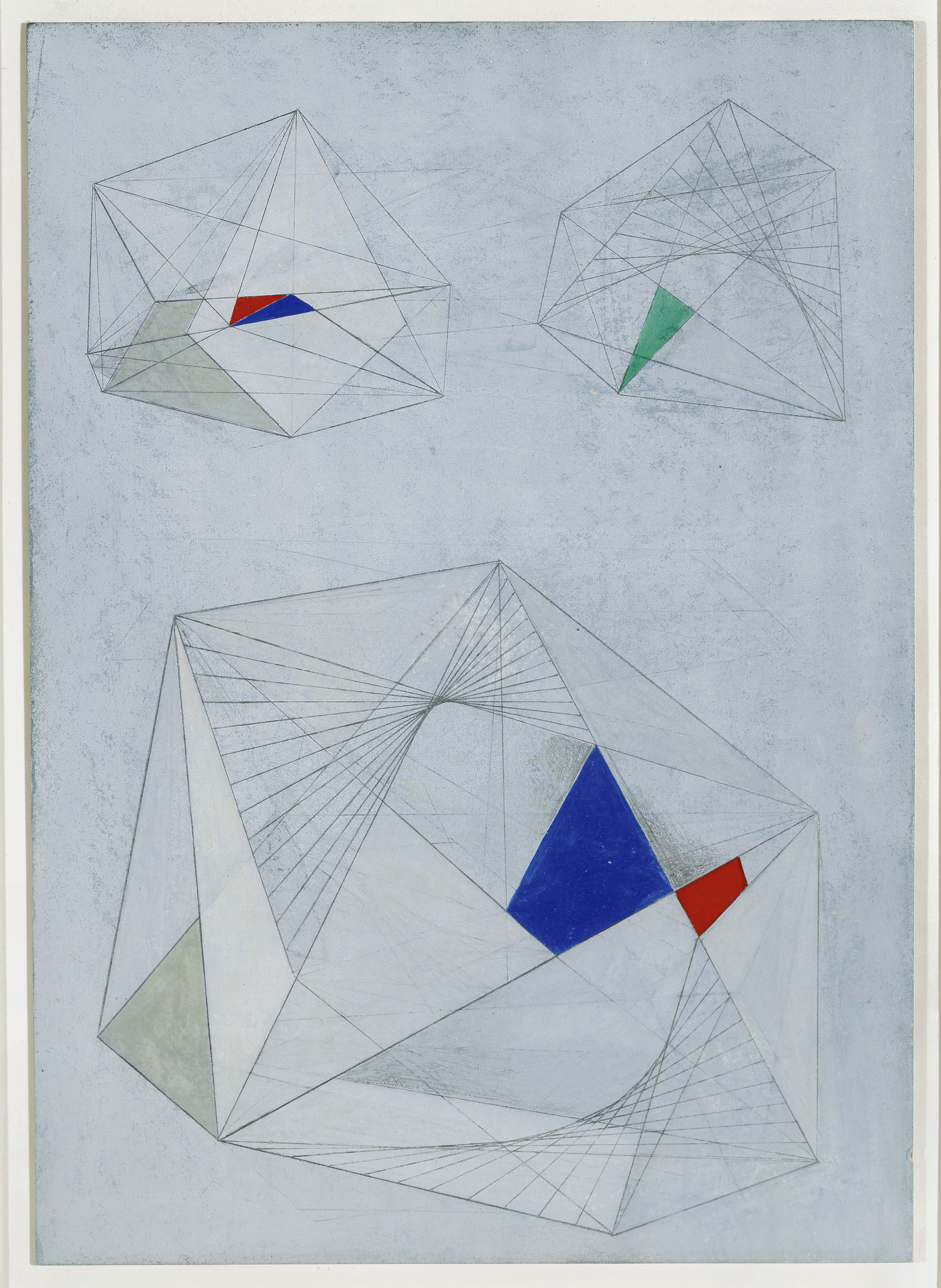
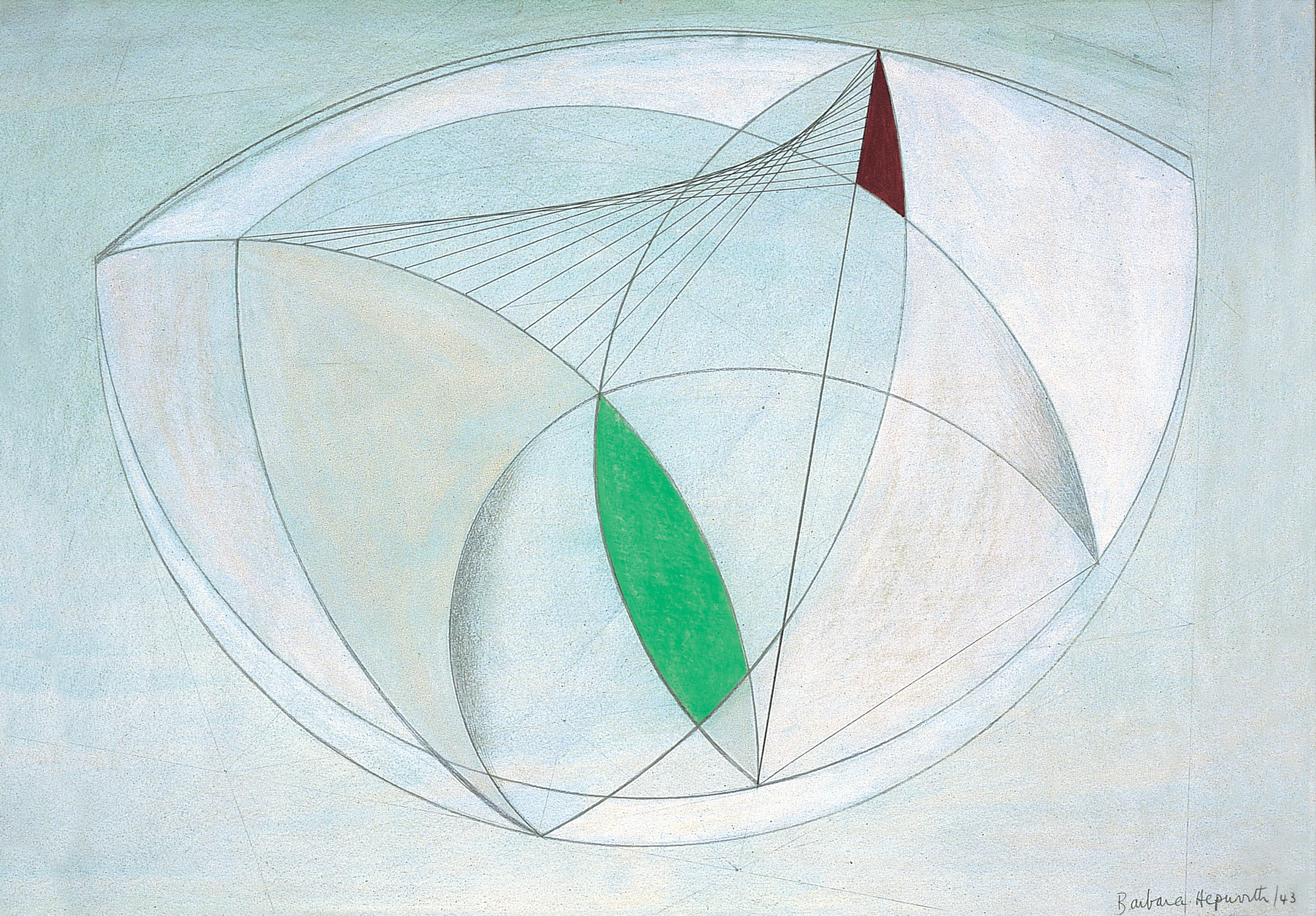
When the Second World War was declared in 1939, Hepworth and her husband Ben Nicholson left London for St Ives, Cornwall with their young children. It was a precarious and difficult time, but one that would be transformative for her colour practice. Working in the evenings and at night, she produced many abstract drawings exploring, as she later recalled, ‘the particular tensions and relationships of form and colour which were to occupy me in sculpture during the later years of the war’.
The landscape itself reshaped how she saw things: ‘The colour in the concavities plunged me into the depths of water, caves, or shallows deeper than the carved concavities themselves’. The blues, greens and greys of the sea and sky appear frequently in her work.
Explore Hepworth’s drawings and paintings in our exhibition, alongside her sculptures from the 1940s through to the 1960s.
Her biggest influences might surprise you
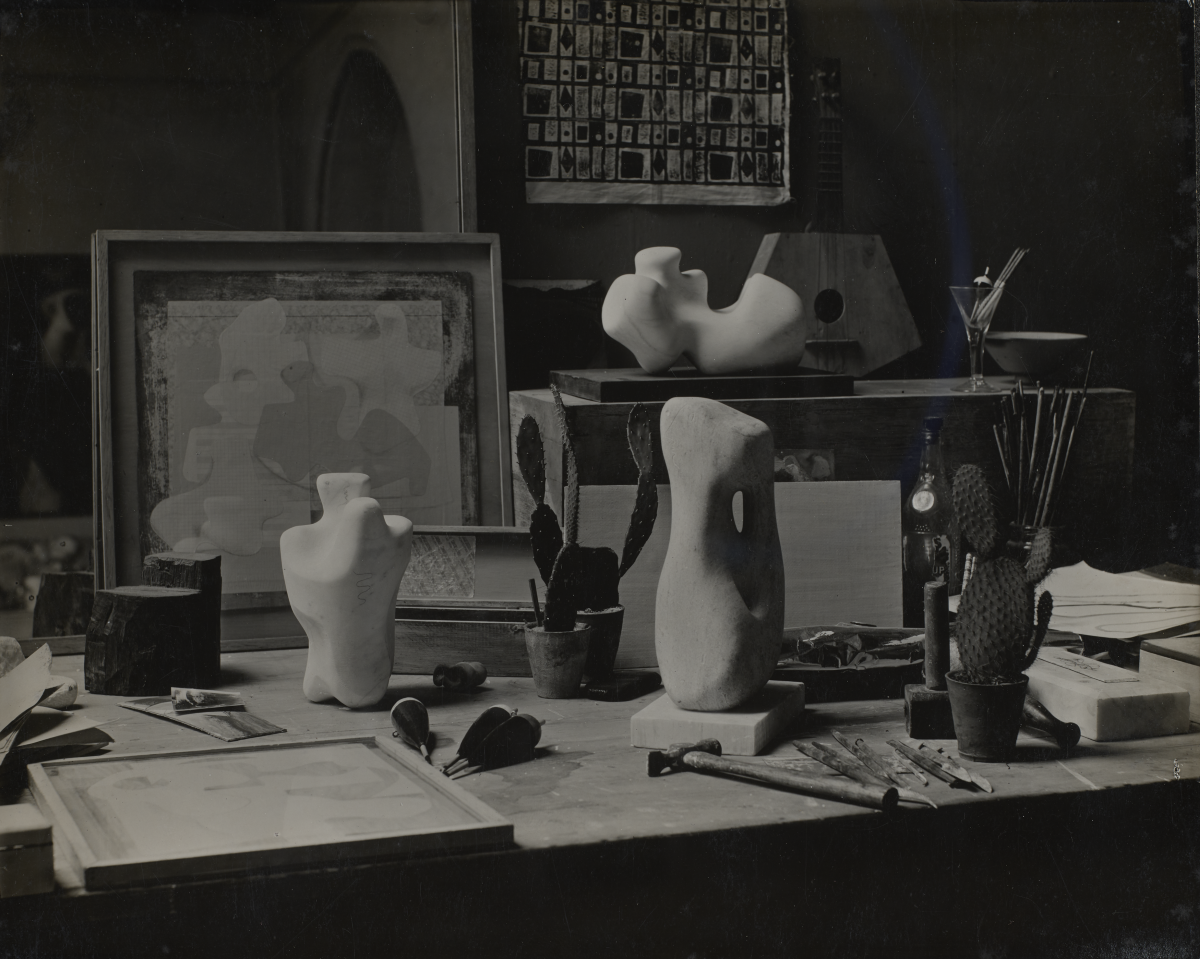
Hepworth’s colour language was shaped by a rich web of relationships and encounters with artists and architects of the modernist movement that she was part of. Living and working alongside the painter Ben Nicholson, with whom she shared a studio in London in the 1930s, as she later acknowledged, sharpened her colour sense.
On 1 January 1935, Hepworth visited the Parisian studio of Piet Mondrian which, as she later recalled, had ‘gleamed with whiteness’. When she returned back home, she painted her own studio walls white. He would later become their next-door neighbour in London, and gave Hepworth and Nicholson one of his paintings. Hepworth’s Sculpture with Colour (Deep Blue and Red) series (1940-1943) can be understood as a reworking of his spatial colour effects into three dimensions.
In 1933, Hepworth and Nicholson travelled to Meudon on the outskirts of Paris to visit the artist Jean Arp; since he was away, his wife, the painter, Sophie Taeuber-Arp showed them round. This must have had a significant impact on Hepworth, as her earliest wartime gouaches sharing a striking synergy with Taeuber-Arp’s paintings.
Want to learn more? Read Stephen Feeke’s essay, Barbara Hepworth: The Language of Colour and Form, in the catalogue for Hepworth in Colour.
Her most misunderstood contribution
Throughout her career, critics tended to focus on Hepworth’s mastery of form and her colour was barely noticed. In an interview with the art historian Alan Bowness in 1975, she reflected that:
‘My colour has been accepted, but never understood’.
Hepworth in Colour sets out to change that, and to show for the first time just how central colour was to the work of one of the greatest sculptors of the 20th century.
Hepworth in Colour is open at the Courtauld Gallery from 12 June – 6 September.