Bringing together significant works from the Courtauld and Reuben Collections, featuring Paul Cézanne, Juan Gris, Fernand Léger, René Magritte, Amadeo Modigliani, Pablo Picasso, Man Ray, and Chaim Soutine, our current display traces the bold experiments that reshaped painting in the early 20th century.
From Post-Impressionism to Surrealism, explore some of the artworks central to this period of dramatic artistic and cultural change.
Paul Cézanne, the 'father of modern art'
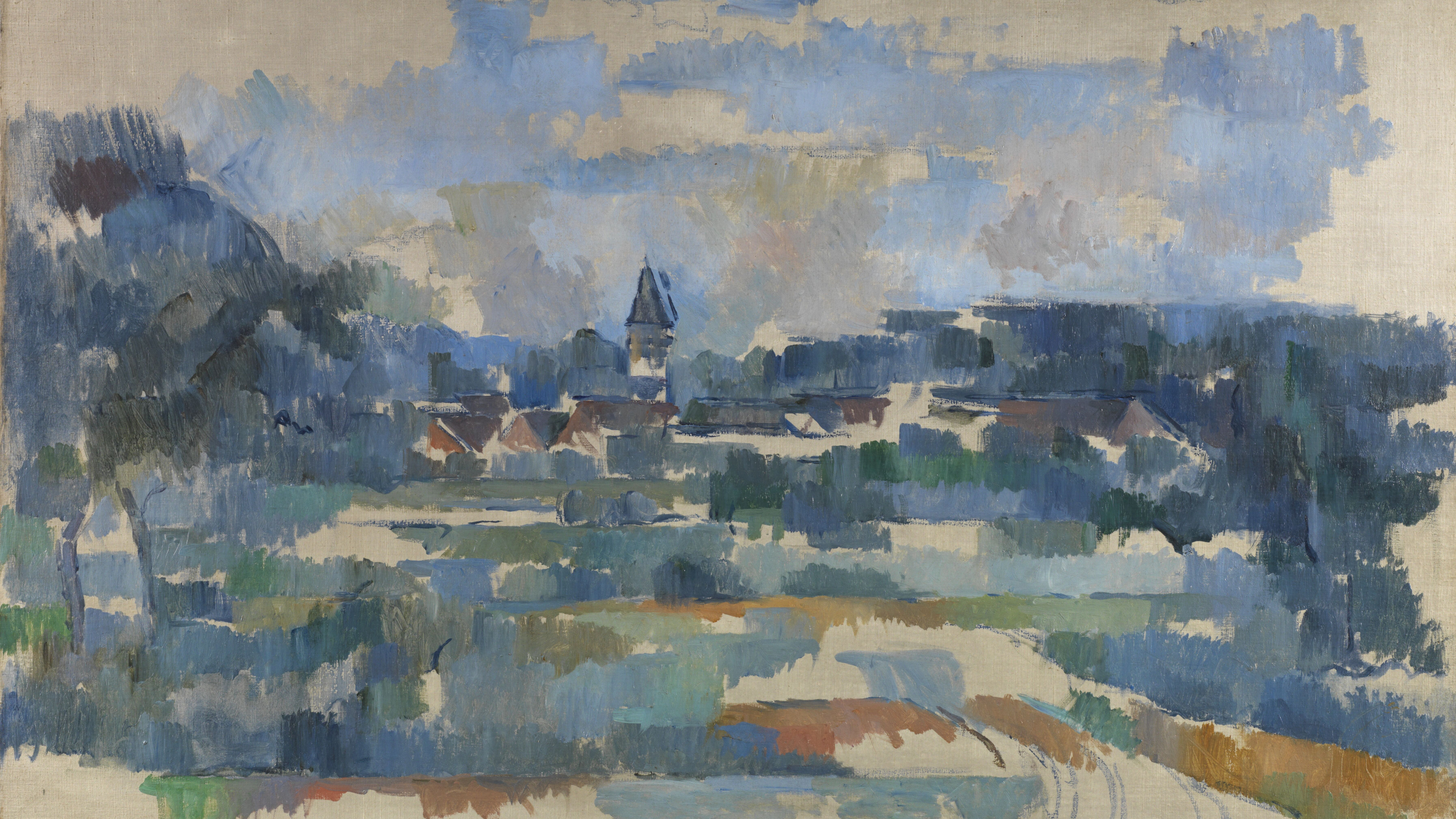
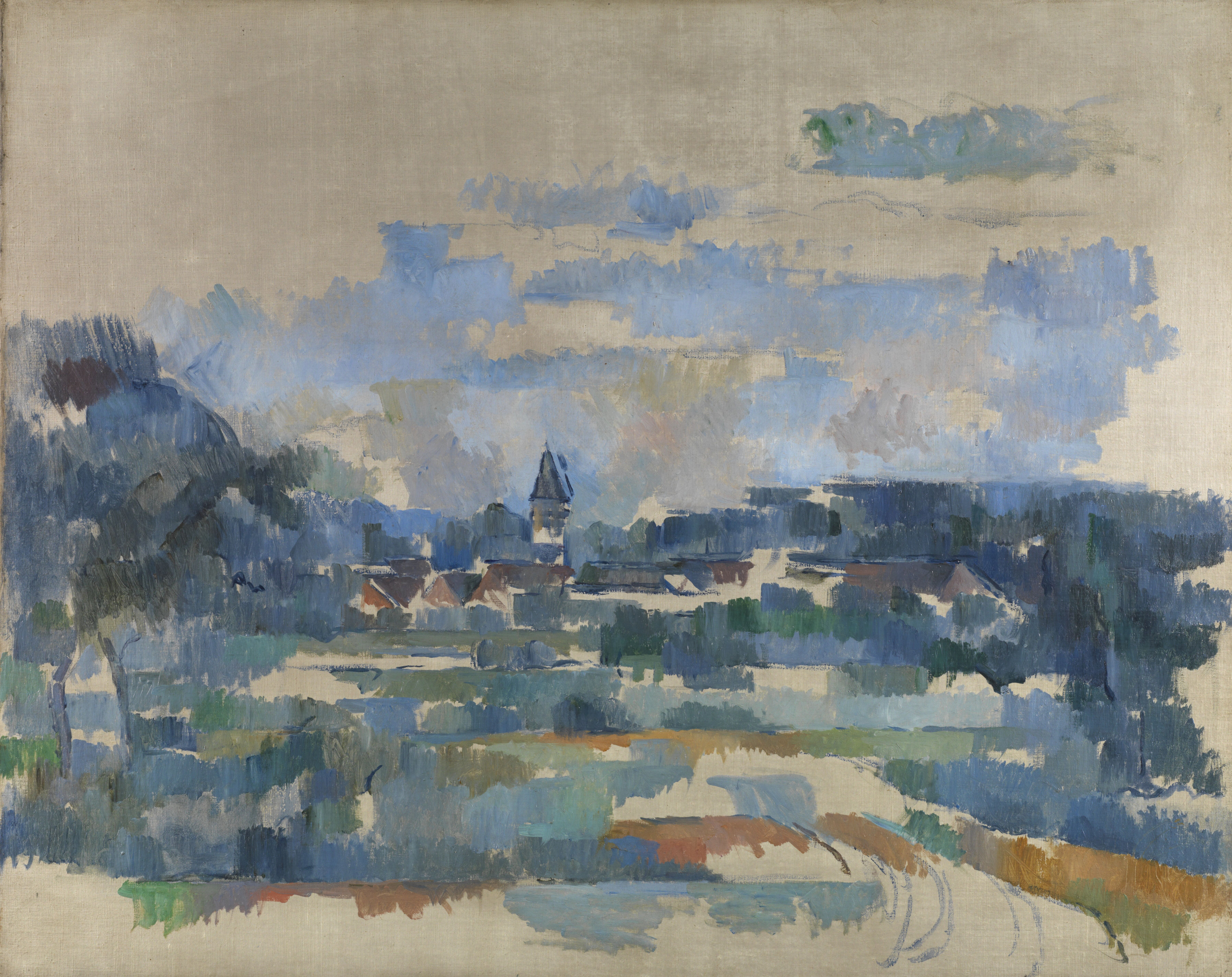
The beginning of the new century is marked here by Paul Cézanne’s Turning Road (c. 1905) at the very end of his life. Described as the ‘father of modern art’, Cézanne depicted the natural world through near-abstract patches of colour, pushing the boundaries of representation, explaining how his use of colour to render light compelled him to ‘produce abstract passages that stop me from covering my whole canvas’.
His work opened a door for a younger generation of artists to paint the world differently, not as a seamless whole but deconstructed and reassembled.
Cubism and the early 20th century
Moving on from Post-Impressionism, the early 20th-century art movement Cubism was a major expression of this same tendency. Originating in France, artists like Juan Gris and Fernand Léger, who believed the modern world, ‘fragmented and faster moving than life in previous eras’, required a new way of painting, would revolutionise painting with geometric shapes and multiple viewpoints.
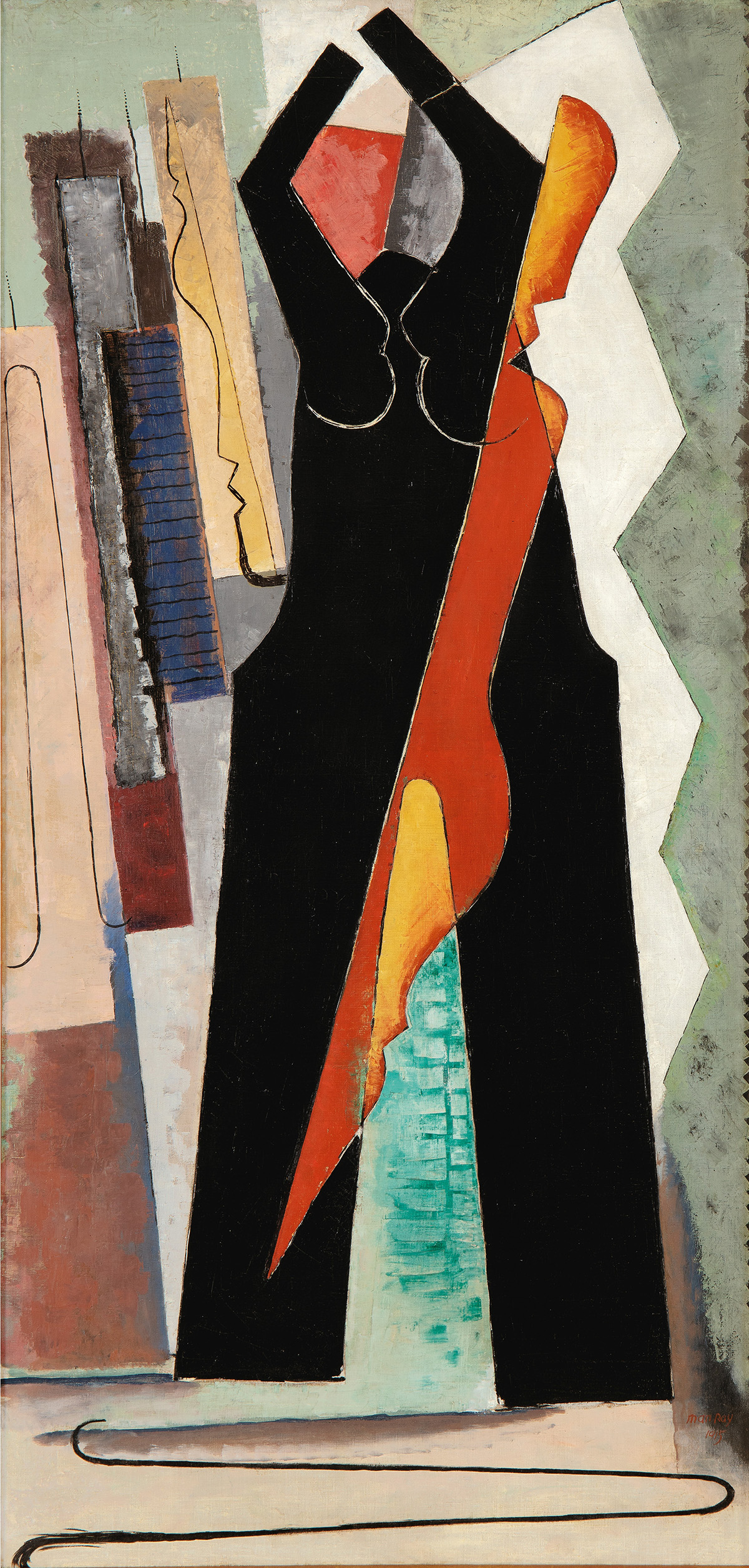
In a remarkable Cubist-inspired canvas painted by Man Ray in New York in 1915, the silhouette of a figure arises from an array of abstracted coloured forms. This enigmatic work declares a distinctly modern language of painting.
Upending conventional painting
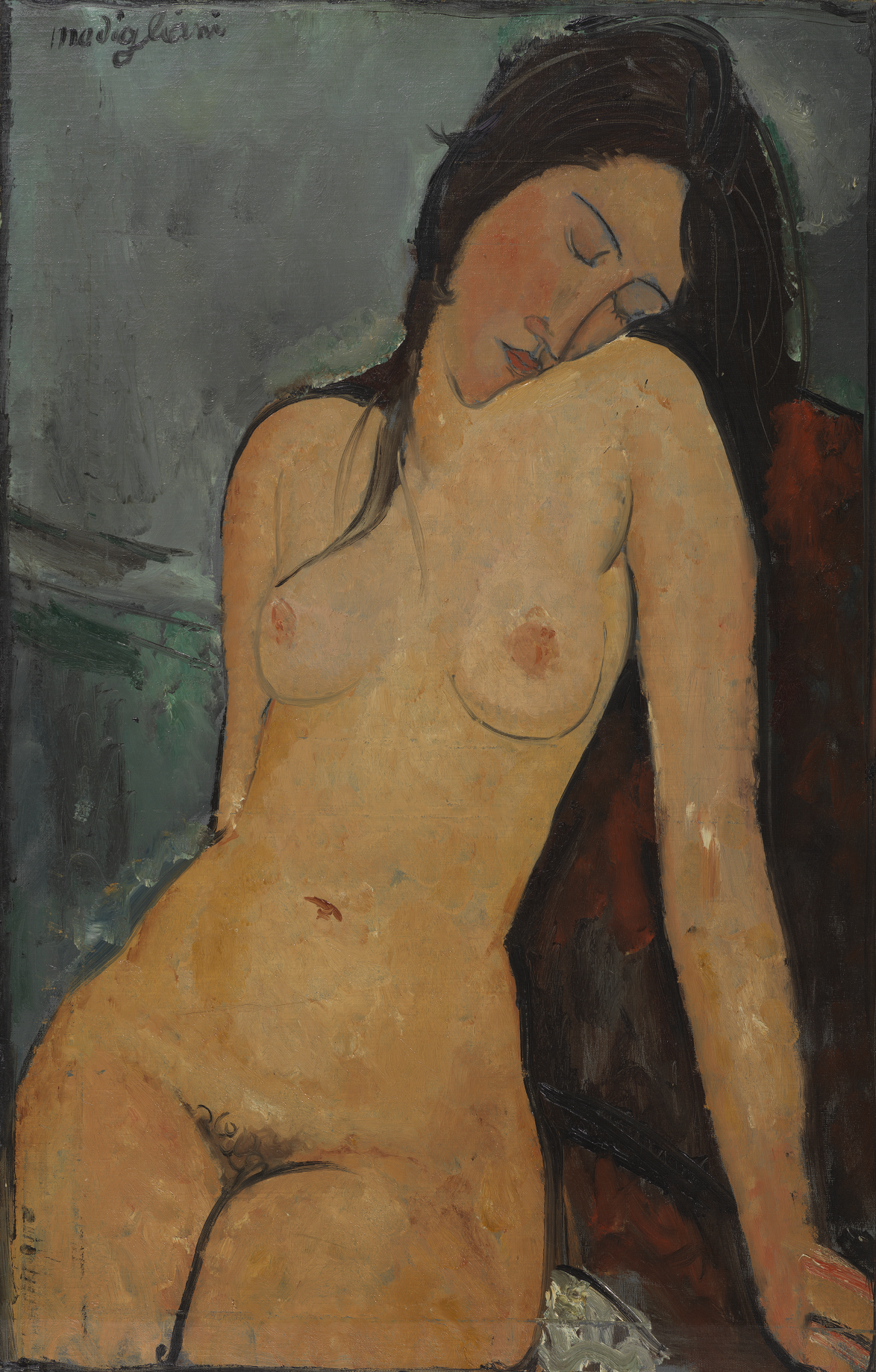
While some modern artists moved closer to abstraction, representational painting remained a strong presence. Amedeo Modigliani’s Nude (around 1916) upended conventional approaches to the subject of the female nude, while Chaim Soutine’s Young Woman in White Blouse (around 1923) is typical of his approach to the figure, shaping her expressively to convey heightened emotional and psychological tension.
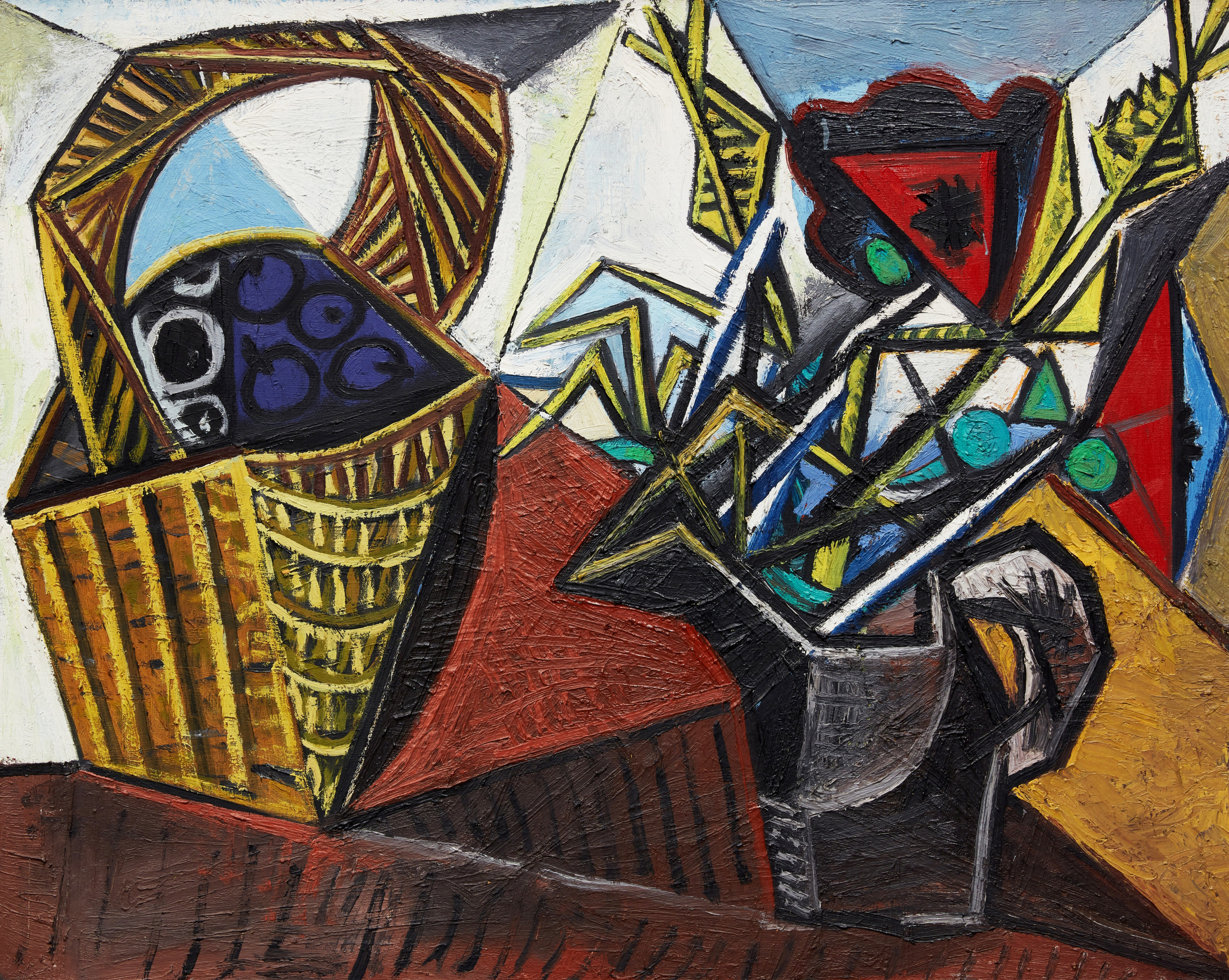
Similarly, Pablo Picasso’s art upended classical conventions of portraiture, as seen in his portraits of his partners, model Marie-Thérèse Walter and photographer Dora Maar. Picasso recast another traditional genre in his Still Life with Basket of Fruits and Flowers (1942); its spiky and discordant depiction of humble objects express the fraught tenor of life during the Second World War.
From Cubism to Surrealism
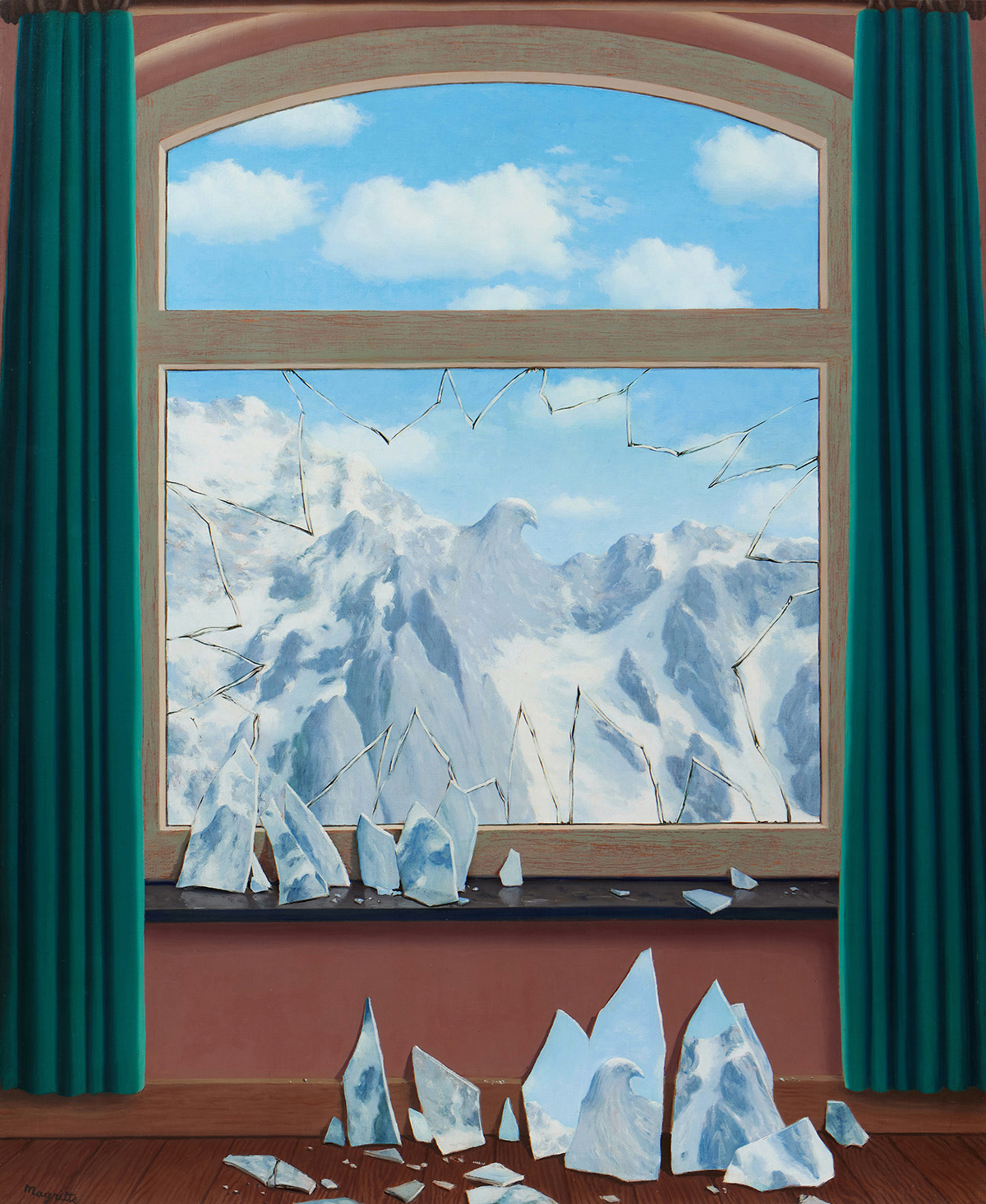
Post-war paintings by Belgian artist René Magritte conclude this display. A prominent figure of one of modern art’s most distinctive movements, Surrealism, Magritte used beguiling combinations of different motifs to rupture everyday reality and offer unexpected new meanings. His striking landscape seen through a shattered window, Le Domaine d’Arnheim (1949) stands as an encapsulation of the startling reinventions of modern painting since the time of Cézanne.
Explore all the works on display in Modern Painting from the Courtauld and Reuben Collections, open now in the Katja and Nicolai Tangen 20th Century Gallery.
This display is made possible by the long-term partnership between the Courtauld and the Reuben Foundation, launched in 2025. It enables the Courtauld Gallery to extend its displays of Impressionist and Post-Impressionist art into the modern period, with works on loan from the Reuben Collection.