Evening Study
Dr Matteo Chirumbolo and Tamsin Lewis
5 evening seminars on campus at Vernon Square over 5 weeks at 18:30 to 21:00, from Wednesday 4 November to Wednesday 2 December 2026, with an integral course visit on Saturday 28 November 2026.
Course Description
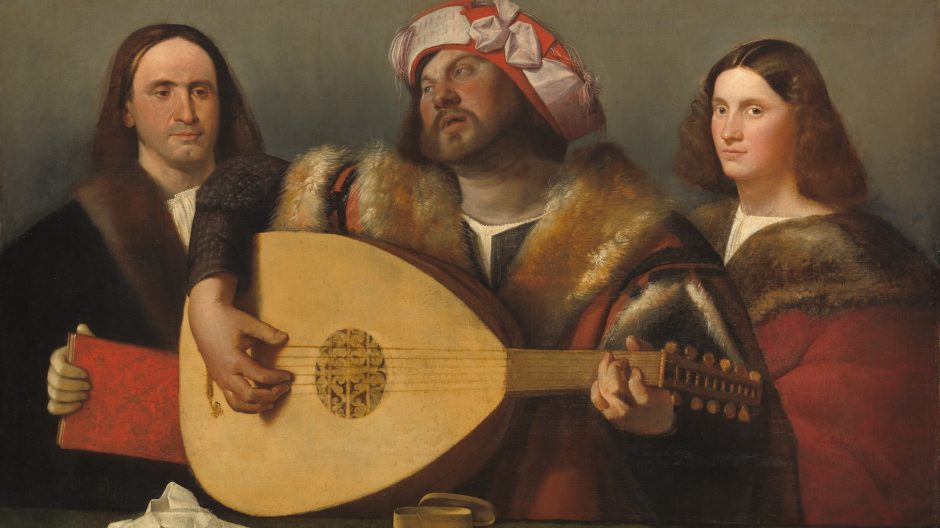
Music and the visual arts were related disciplines throughout the Renaissance period. While practitioners often moved freely between both art forms, audiences could experience visual and musical spectacles simultaneously in both ecclesiastical and courtly or domestic settings. The disciplines themselves often moved in complementary directions, whether making use of parallel frameworks for composition, or even borrowing characteristics from the other to stimulate the senses, and thereby enhancing the persuasive qualities of a work. Renaissance theoreticians were fascinated by the similarities and divergences between art and music, debating their relative merits and building on classical traditions that posited a hierarchy of the senses.
This course will explore the cultural contexts of music and artmaking, and of aural and visual experience, in the Renaissance. It will examine parallel themes in both art forms and the ways in which these were consumed. How was the theme of love treated in art and music? In what ways did painters, architects and musicians contribute to the staging of such magnificent courtly weddings as that of Cosimo I de’ Medici to Eleonora of Toledo in 1539? How did art and music come together within the Basilica of San Marco in Venice? And can the emergence of triangular forms in art and the triad in music be considered parallel phenomena with the mutual goal of producing harmony? We shall look at marriage chests, drawings, illuminated choir books, mosaics and paintings; we shall examine madrigals, consort songs, canticles, and musical techniques such as word painting. Collections visits and live musical performances will allow course participants to ground classroom learning in first-hand experience.