Between 1776, the year of the Declaration of Independence, and May 1788, fourteen months before the Fall of the Bastille in France, Edward Gibbon published the six volumes of his Decline and Fall of the Roman Empire.
An immediate success, the books were quickly translated into Italian, French and German. Over the next two centuries, the work was disseminated via multiple translations and in many formats. By 1900, you could read versions of Decline and Fall in Hindi and Punjabi; and Gibbon remains the most widely translated historian active during the 18th century.
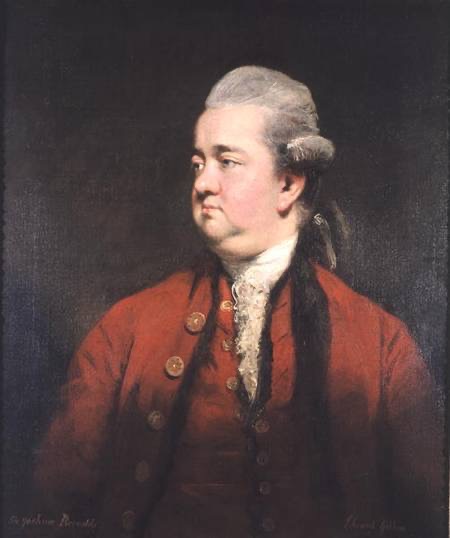
Yet, despite this wide and protracted acclaim, Gibbon remains imperfectly seen. One aspect of this, is his patchy representation in art. There are barely any authenticated full-length images; and, as late as the 1950s, the National Portrait Gallery was criticised for not exhibiting the very few portraits of Gibbon in its holdings.
One reason for this visual neglect was that – in his lifetime and subsequently – Gibbon was ridiculed for his visual appearance / physical difference, due to his severe Hydrocele condition. In this paper, Linda Colley explores these failures to see and represent Edward Gibbon; and how his physical appearance and ailments influenced his writing.
Content note: this event will include the use of language from the 18th Century to discuss disability.
This event is organised by Professor Steve Edwards, Manton Professor of British Art and Director of the Manton Centre for British Art, The Courtauld.
With contributions from:
Dame Linda J. Colley, Shelby M.C. Davis 1958 Professor of History, Princeton University, is one of the most distinguished historians working today. She is the author of six books, including Britons: Forging the Nation 1707-1837 (original edition 1992); Captives: Britain, Empire and the World 1600-1853 (originally published 2002) and The Gun, the Ship, and the Pen: Warfare, Constitutions, and the Making of the Modern World (2021). Her scholarly studies have been translated into numerous languages and she is the recipient of numerous, awards and prizes. Linda Colley has made an outstanding contribution to our knowledge of Britain and its place in the world. She is currently writing a study of Edward Gibbon.