Tom joined the Courtauld Institute in 2023. Prior to that, he was a Leverhulme Fellow at the University of Warwick, the project curator of the British Museum’s exhibition Tantra: Enlightenment to Revolution, a curator at Lakeland Arts, and a lecturer at the University of Warsaw. He completed his undergraduate, MPhil, and PhD degrees at the University of Cambridge, and has held research fellowships at the Kunsthistorisches Institut in Florence, the Huntington Library, the British School at Rome, and the Yale Center for British Art.
He was elected a Fellow of the Royal Historical Society in 2023, and a Fellow of the Royal Asiatic Society in 2024. In 2026, he was elected a Trustee and member of the Governing Council of the Royal Asiatic Society.
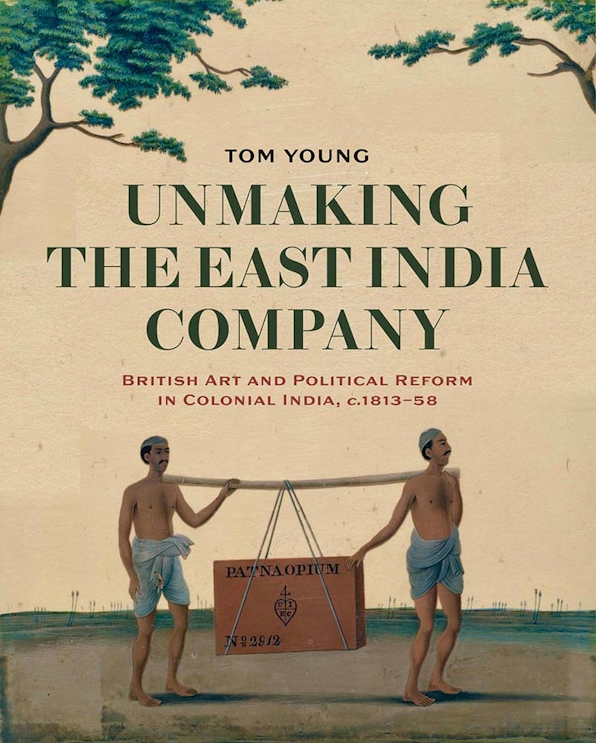
His first book, Unmaking the East India Company: British Art and Political Reform in Colonial India, c.1813–1858, was published in June 2023 by the Paul Mellon Centre, Yale University Press. The book was awarded the 2024 Berger Prize, was shortlisted for the British in India Book Prize, and was acknowledged as exemplary scholarship by the Historians of British Art society. It explores how art shaped the nationalisation of the East India Company between the loss of its primary monopoly in 1813 and the British state’s direct assumption of colonial rule in 1858.
His second book, Lithography and the Modern World, c.1796–1914, is in preparation. Lithography’s global artistic impact has never previously been charted, despite the technology enabling the first truly international decentralisation of popular media. The book will explore how the technology’s invention catalysed dramatic cultural and political upheavals across the globe, giving rise to modern ideas and institutions. With societies reeling from the impact of contemporary social media technologies, the book would form the first attempt to map how this earlier revolution in popular media stimulated novel identities, religions, and ideas. Recent work on this project has been published in Art History, Cultural History, and The Polish Review.
He is currently writing about corporations in art history, nineteenth-century Polish art, and the artistic histories of free ports and special economic zones.
Teaching:
MA:
‘Empires of Art: Early Modern Asia, 1500–1900’ (MA History of Art Special Option)
‘Art, Oceans, and the British Empire, c.1750–1900’ (MA History of Art Special Option)
‘Art and Empire in the Indian Ocean World, c.1800–1900’ (Previous MA History of Art Special Option)
BA:
‘Connecting Nineteenth-Century Art Histories’ (BA1 Foundations)
‘Approaches to Global Art History’ (BA2/BA3/GradDip Approaches)
‘Approaches to British Landscape: Turner and Constable at 250’ (BA2/BA3/GradDip Approaches)
‘Academic Literacies’ (BA1 Core Module)
PhD Supervision:
Tom is interested in supervising on such topics as:
- Art in eighteenth- and nineteenth-century Britain and South Asia
- Print culture, particularly lithography
- Corporate cultures, particularly maritime trading companies
- Art as a force for globalisation
- Romantic nationalism
- Nineteenth-century Polish art
Current PhD Researchers:
Upmanyu Magotra (Imperial Intimacies: Portraiture and the East India Company, c.1757–1857), in collaboration with Alice Insley, Tate Britain
Clara Shaw (Lithography and Britain 1880–1920)
Current PhD Advisees:
Gianna French (The Haunted Surface: The Material Conditions of Spectrality in Victorian Drawing)
Zoe Mercer-Golden (Whose Arthur?: The Arthurian Legends and Visual Culture in a Trans-Atlantic Context, 1860–1918)
Sasha Morse (Decolonising Female Missionary Photography)
Publications:
Books:
Unmaking the East India Company: British Art and Political Reform in Colonial India, c.1813–58 (London and New Haven: Paul Mellon Centre, Yale University Press, 2023).
Prizes: Winner of the Berger Prize 2024; shortlisted for the British in India Book Prize 2024; acknowledged as exemplary scholarship by the Historians of British Art society.
Praise:
‘Unmaking the East India Company is an important and rich contribution […] it amply demonstrates the ongoing need for British art history to expand its self-definition and for those working in all areas of history everywhere to take careful note of artistic production and consumption, their technological and material infrastructure and social and political impact.’
Deborah Swallow, Print Quarterly
‘This impressive monograph is a testament to how far the study of British imperial art has come in recent decades…it is a visual and intellectual feast deserving of praise for its sophistication, depth of analysis, and blending of history and art history, metropolitan Britain and colonial India, politics and culture. It adds enormously to our understanding of early nineteenth-century British India.’
Jeffrey Auerbach, Victorian Studies
‘The book’s interdisciplinary scope, which links together economics, politics, and colonial culture through an art historical lens, ensures that it will be of interest to graduate students and scholars working in and across various disciplines. Moreover, the attention that Young pays to the broader global context in which local acts of art making are shown to be entangled offers a model for the rich possibilities afforded by the global turn in the humanities.’
Sarah Carter, Journal of Modern History
‘This book will be extremely helpful to art historians who are keen to decolonise their discipline. More generally, this study of popular print culture is helpful to anyone who is interested in new ways of examining Britain’s imperial history. By showing how printed artworks influenced popular definitions of “Britishness”, Young has made an important contribution.’
Jennifer Howes, Journal of the Royal Asiatic Society
‘Unmaking the East India Company is theoretically engaged but eminently readable and beautifully illustrated […] Although it has a great deal to tell us about the Company […] Unmaking the East India Company goes beyond this to make a broader argument about British art as “a global, corporate and imperial phenomenon”.’
John McAleer, H Soz Kult
‘This reassessment of the role of colonial art as a reflection of identity and power – indeed of the concept of Britishness across the globe – is long overdue and Tom Young has risen to the challenge brilliantly […] Every facet of this book is admirable.’
Charles Greig, Chowkidar
Articles and Book Chapters:
‘The Picturesque in Practice’, in The Indian Picturesque, 1800–1850, ed. Giles Tillotson (New Delhi: DAG Publications, 2026), pp. 77–103.
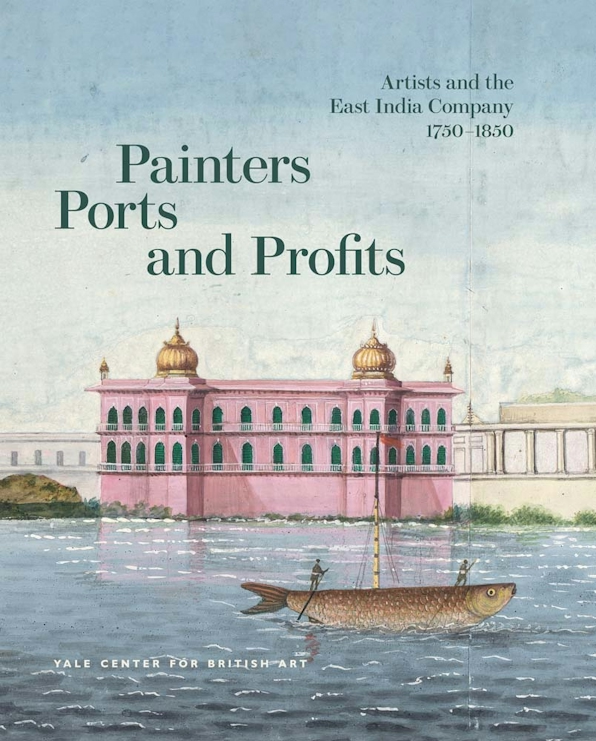
‘Summer and Winter Rooms’, in Painters, Ports and Profits: Artists and the East India Company, 1760–1830, ed. Holly Shaffer and Laurel Peterson (New Haven: Yale University Press, 2026), pp. 121–24.
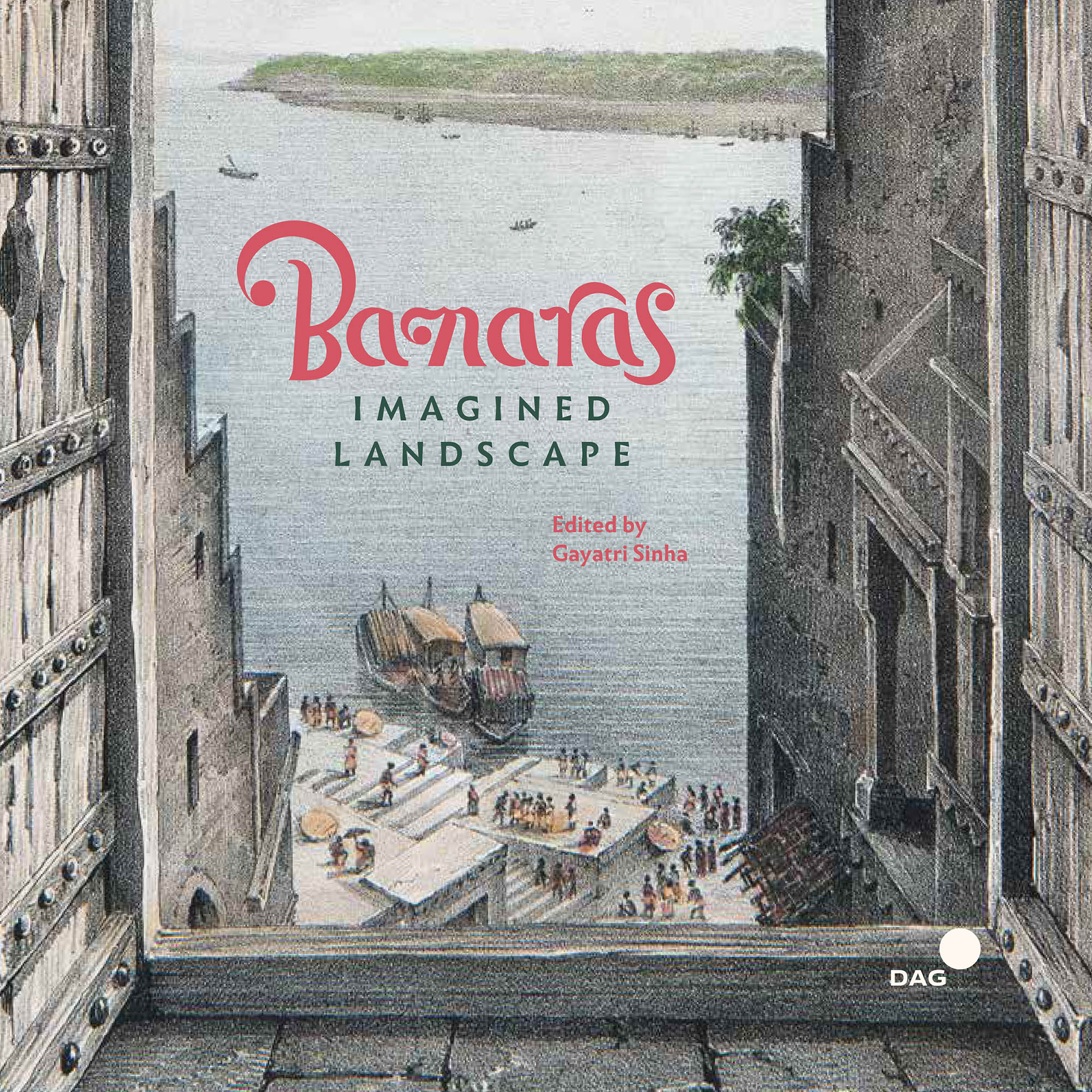
‘Benares through Foreign Eyes’, in Banares: Imagined Landscape, ed. Gayatri Sinha (New Delhi: DAG Publications, 2025), pp. 37–55.
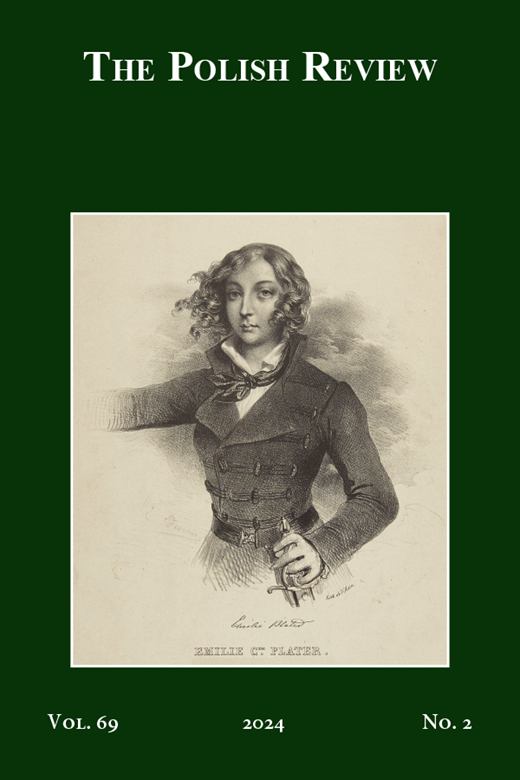
‘Picturing Novembrists in Paris: Gender and Diasporic Politics in Józef Straszewicz’s “Historical Gallery of Contemporary Poland”, c.1832–1837’, The Polish Review, 69:2 (2024), pp. 5–35.
‘The “Autographic Self”: Facsimile Signatures and Lithographic Portraiture at the Crossroads of Liberalism, Romanticism, and Nationalism, c.1800–60’, Cultural History, 12:2, (2023), pp. 168–200.
‘Colesworthy Grant’s Portraits of Colonial Society in India: Lithography, Liberalism, and the Global Making of Middle-Class Culture, c.1833–57’, Art History, 45:4 (2022), pp. 712–43.
‘The Behar Amateur Lithographic Scrapbooks: Art and Sociability in Colonial India’, in Reading Objects in the Contact Zone, ed. Eva-Maria Troelenberg, Anna Sophia Messner and Kerstin Schankweiler (Heidelberg: Heidelberg University Publishing, 2021), pp. 188–95.
‘Agency’, in Reading Objects in the Contact Zone, ed. Eva-Maria Troelenberg, Anna Sophia Messner and Kerstin Schankweiler (Heidelberg: Heidelberg University Publishing, 2021), pp. 206–7.
Exhibitions:
Project Curator, Tantra: Enlightenment to Revolution, The British Museum, Sep 2020–Jan 2021.
Curator, Update of Permanent Display and Interpretation, Blackwell Arts & Crafts House, Bowness, 2020.
Project Curator, Rotation of South Asian Objects, Hotung Gallery, The British Museum, 2019.
Short Works:
‘Tom Young on “British Artists in India 1760–1820” (vol. 19)’, (2024), https://www.walpolesociety.org.uk/post/tom-young-on-british-artists-in-india-1760-1820-vol-19-1930-1.
‘Tantra at the British Museum – Collecting Histories’, (2020), (https://www.britishmuseum.org/exhibitions/tantra-enlightenment-revolution/tantra-collecting-histories).
Review Articles:
‘The India Museum Revisited, by Arthur MacGregor’, Antiquaries Journal, 104 (2024), pp. 420–1.
‘Delhi Durbar: Empire, Display and the Possession of History, by Swapna Liddle and Rana Safvi’, Chowkidar, 17:1 (2024), pp. 19–21.
‘Aquatint Worlds: Travel, Print, and Empire, 1770–1820 by Douglas Fordham’, Print Quarterly, 4, (2020), pp. 470–4.
‘The Anarchy: The Relentless Rise of the East India Company by William Dalrymple’, The Journal of the Royal Asiatic Society, 30:4, (2020), pp. 771–4.
‘Picturing India: People, Places and the World of the East India Company by John McAleer’, The Journal of the Royal Asiatic Society, 28: 2, (2017), pp. 395–7.
Media Contributions:
Interview for British Art Matters podcast (2024).
Interview for BBC HistoryExtra podcast, and additional filmed resources for the website (2023).
Interview for the New Books Network podcast (2023).
Interview with Fiona Bruce, Antiques Roadshow, Series 43, (March 2021).
Forthcoming Publications:
(Book Chapter) ‘Lithography, Illustration, and Transimperial Publics’, in The Routledge Companion to Global Victorian Literature and Culture, ed. Sukanya Banerjee and Fariha Shaikh (London: Routledge, forthcoming 2026).

https://youtu.be/MKLJqlHrSLA